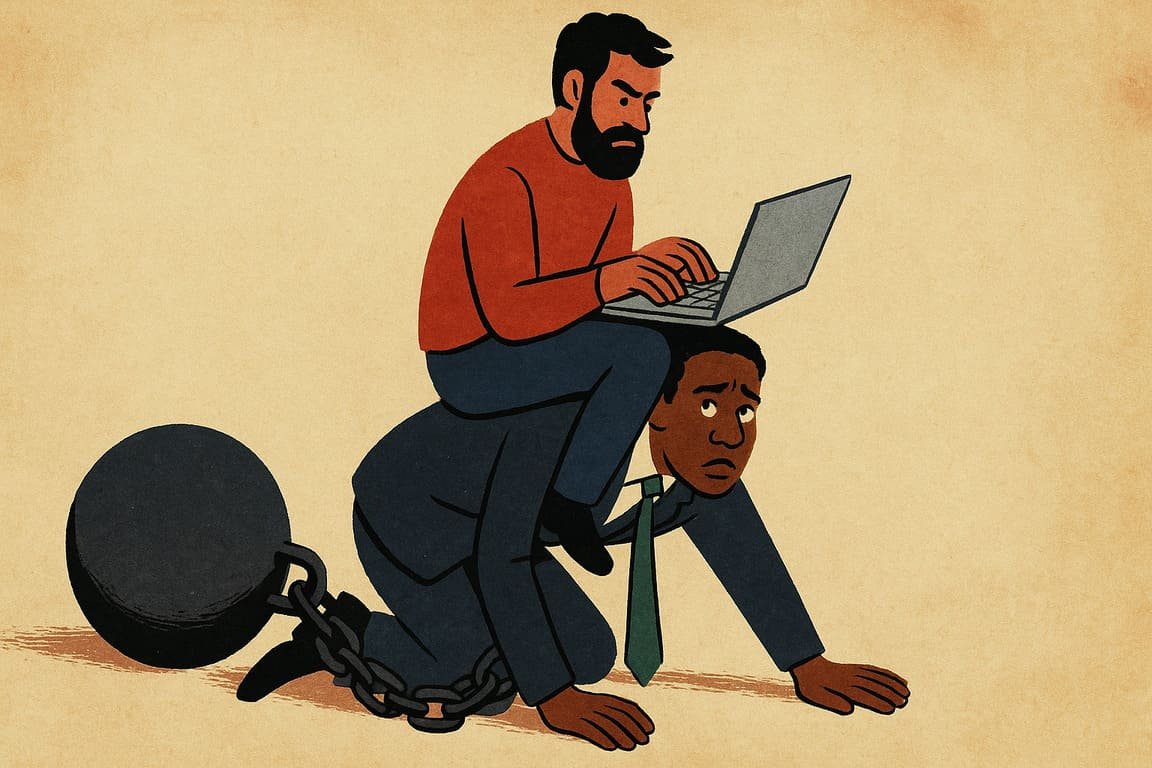
The flicker of blue light bounced off concrete as the hum of servers filled the silence. A lonely chair sat in the middle of the tech vault, wires snaking across the floor like digital veins. Security badges, caffeine-stained keyboards, and empty pizza boxes cluttered the workstation of a developer who, by all accounts, held the fate of the company in his code-stained hands. Far above, executives sat in glass offices, convinced the company’s growth engine thrived because of their own bold vision. In truth, one line of code, forgotten password, or silent protest could bring the business to a halt.
Hidden in every thriving startup and stumbling enterprise is a secret no boardroom dares to whisper: digital dependency is no longer a risk, it’s an existential threat. The morning after a trusted developer disappears, resigns, or is headhunted by a competitor, panic sets in. Dashboards go dark. Features stall. A CEO’s bravado dissolves with every email that bounces back, reminding all that power does not always reside at the top.
Silicon Valley is littered with cautionary tales. Some founders call it “the midnight switch,” the moment a team realizes their developer is both the architect and the jailer. Renowned businesses have lost entire client bases overnight when code could not be salvaged, credentials went missing, or updates failed. The smell of burnt circuits and cold coffee clings to the memory of every leader who ignored the warning signs.
Two floors below, a systems analyst named Gwen tries to salvage a release gone wrong. Her hands shake as she calls a freelance developer who last answered texts with cryptic memes. The stakes aren’t just uptime or app crashes—they’re trust, money, and survival. Somewhere outside, rain pools under neon lights, washing the city in a sense of vulnerability that tech alone can’t solve.
Quick Notes
- Single Points of Failure Are Hidden Time Bombs: Relying on one developer or a tiny team creates silent bottlenecks that will detonate when you least expect it.
- Documentation Is an Insurance Policy, Not a Boring Task: Every shortcut in process or record-keeping is a trap waiting to spring when your “rockstar” goes missing.
- Ownership Must Be Distributed: If no one else can deploy, fix, or update your digital infrastructure, your business is at the mercy of a single inbox or ego.
- Vendor Lock-In Is a Modern Cage: Third-party platforms promise scale and speed, but the wrong dependencies turn freedom into handcuffs.
- Culture Eats Code for Breakfast: Teams that share knowledge and collaborate beat “hero” developers every time in the long run.
Digital Genius or Bottleneck? The Rise of Code Kings
A business launches with a developer who seems to work magic. Every glitch gets a fix, every idea turns to feature, and the team breathes easy knowing “Alex” has it covered. As growth surges, dependencies multiply—codebases balloon, integrations get tangled, and technical debt becomes a ghost that haunts every new sprint.
The irony is brutal. The very person who drives progress also becomes the biggest risk. Alex becomes indispensable, his habits woven into every system. When he’s happy, the company flies. When he gets bored or burned out, the whole operation grinds. Founders often brag about their “10x developer,” only to realize later they are trapped in a golden cage of their own making.
Countless stories surface across tech’s underbelly. One streaming company watched revenue vanish for weeks after a developer locked critical scripts behind personal cloud accounts. Support staff scrambled to piece together legacy systems with duct tape and late-night pizza, but customers noticed and vanished.
Meanwhile, teams who invested in cross-training and shared responsibility navigated similar storms with resilience. At CodePulse, for example, every developer rotated through support duty and peer reviews. When one leader left, the team grieved but never faltered.
The message is clear. Businesses built on heroic individuals instead of strong systems are living on borrowed time. The code king will not stay forever, but the debts he leaves behind might.
When Knowledge Hoarding Becomes a Business Killer
It starts as an innocent habit. A developer takes shortcuts, leaving process details undocumented, convinced he’ll “fix it later.” As pressure mounts, documentation falls further behind, and unique workarounds become tribal knowledge. Eventually, only one person truly understands how the system breathes.
Companies fall into the trap of “knowledge hoarding.” Meetings grow tense as managers realize no one else can ship updates or debug customer issues. Recruitment becomes a nightmare when new hires discover they’re lost in a maze of cryptic code and ancient plugins.
Consider what happened to MerchantSpring, a mid-sized ecommerce firm. Their lead developer, Tara, got a better offer from a global tech giant. Her goodbye lunch was bittersweet, but the aftershock was brutal. Suddenly, feature rollouts froze, customer service drowned in technical complaints, and months passed before the team regained its footing.
Meanwhile, businesses with a culture of knowledge sharing thrive. Weekly “show and tell” sessions at Sprocket Labs ensured every team member could step in when needed. The CTO, Jake, championed wikis and open code reviews, turning each handover into a celebration rather than a crisis.
Knowledge is a currency. Hoarded knowledge depreciates fast, while shared knowledge compounds over time. The strongest companies see process, not heroics, as the source of innovation.
Vendor Trap—Why Outsourcing Your Brain Can Backfire
Businesses love to move fast. Outsourcing development or plugging into third-party solutions feels like a shortcut to scale. At first, everything moves smoothly—apps launch, bugs get fixed, dashboards light up with metrics. But with every dependency comes a hidden cost.
A global retailer outsourced all their backend work to a boutique agency overseas. It worked well until the agency was acquired, and overnight, priorities shifted. The retailer found itself locked out of its own systems, unable to update features or protect customer data. Years of brand equity vanished in days as competitors pounced.
Vendor lock-in can be even more insidious when using popular “plug-and-play” solutions. Features you depend on today may disappear tomorrow. Changes in pricing, service terms, or even the disappearance of a single plugin can wreck a digital strategy built on someone else’s roadmap.
The alternative is harder but worth it. Teams that keep critical skills in-house and build with modularity in mind have options when things go south. Local bakery app Breadly, for example, kept its core payment logic in-house, switching payment vendors three times in four years without missing a beat.
Freedom requires vigilance. Every new tool, framework, or agency must pass the “What if they ghost us tomorrow?” test. The best digital leaders bake resilience into their tech stacks.
The Human Factor—Culture, Ego, and the Fragile Code of Trust
Tech is sold as rational, logical, and machine-driven. Reality is messier. Egos, miscommunication, and silent rivalries can shatter the best-laid plans. A developer who feels unappreciated may withhold knowledge out of spite. Teams with poor psychological safety avoid raising concerns, letting risk grow in the shadows.
One fintech startup, SwiftCoin, lost its CTO during a holiday break. No succession plan existed, and his hand-written deployment guide was found in a locked desk. Investors panicked, and a viral social post from a frustrated engineer became a cautionary meme in industry Slack groups.
Trust is a double-edged sword. Too much trust in one contributor breeds dependency. Too little trust leaves everyone paralyzed, second-guessing each decision. Cultures that reward open communication, learning from mistakes, and transparency create a virtuous cycle. Feedback becomes the norm, not the exception.
At BrightFrame, an internal mantra—“No code left behind”—encouraged everyone to document, teach, and rotate responsibilities. Their annual “Bus Test” (could you get hit by a bus without taking the product with you?) was more than a joke. It drove home a truth: digital power is safest when shared.
Technology is never just about software. It is always about people, trust, and the willingness to face uncomfortable truths before they become company killers.
Building Resilience—How the Best Teams Future-Proof Their Digital Destiny
Survival in the digital age is a team sport. The strongest businesses build routines, not rescue missions. They know that resilience starts with humility—admitting that no one is irreplaceable, and every process can be improved.
Case in point: GreenWatt, a clean energy startup, nearly went bankrupt when a key developer left. Their comeback story began with “War Room Fridays,” a weekly practice where every system was stress-tested, every assumption challenged, and every process documented. Over time, those rituals rebuilt trust and confidence.
Practical resilience means making sure backups work, documenting as you go, and rotating key tasks regularly. It means inviting outside audits and cultivating a healthy suspicion of “this is how we’ve always done it.” It also means rewarding teams for collaboration, not just for hero moments.
The real test comes when disaster strikes—a ransomware attack, a sudden resignation, or an unexpected vendor shutdown. Companies that survive are those who rehearsed failure and planned for the unexpected. Their customers never see the chaos because the team’s preparation absorbs every blow.
True digital strength is invisible until it matters. The businesses that last aren’t the ones with the smartest developer, but the ones where anyone can step in and keep the lights on.
Freedom or Fragility—The Last Stand Against Digital Dependence
Beneath a sky streaked with dawn, the last engineer flicks off the data center lights and steps into the silent corridor. Every server hums on autopilot, sustained by a web of documentation, backups, and quietly brilliant routines. Leadership paces above, reviewing contingency plans that—against all odds—never got dusty.
Somewhere, a former employee logs on to a new gig, carrying stories of both disaster and redemption. Memories of sleepless nights, near-misses, and miracle saves linger, but the business remains whole. Trust, once misplaced, is now distributed across the entire fabric of the organization.
The city awakens as screens everywhere flicker to life, each glowing with silent confidence. Customers click, orders flow, and life moves forward, powered not by a single genius but by an entire ecosystem determined never to be held hostage again.
A single truth waits, unblinking, at the end of the network cable: Only you decide if your company will be fragile or free.
