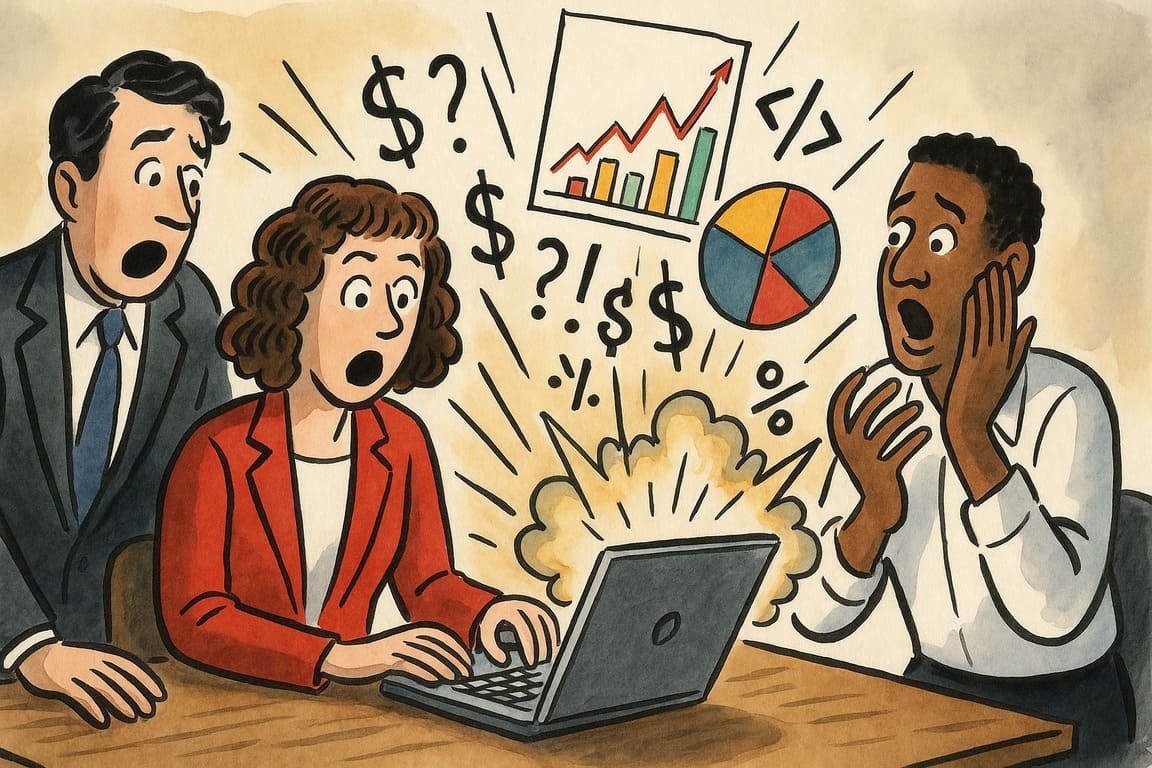
Neon reflections glimmer across the glass walls of a midnight co-working space, where restless founders and tired designers sit hunched over screens, chasing the next secret formula to crack the digital code. Their faces are cast in blue light, haunted by the promise that somewhere in this silent urban hive, a single website tweak might change their fortune overnight. Coffee cups line the tables, each one a testament to the sleepless optimism that fills the room. Outside, city lights blink with the quiet rhythm of a metropolis that never quite sleeps, echoing the dreams simmering behind every landing page. Inside, whispers swirl: What separates the ordinary from the viral? What spark transforms a pixel into profit? This is not just a quest for beauty but for survival, as if the entire digital economy were holding its breath, waiting for someone to finally uncover the real sales code.
You already sense the tension: a website is never just a brochure. It’s a living, breathing funnel where every image, every button, every headline conspires to either steal a click or lose a customer. Most sites die quietly, ignored, their owners blaming fate or budget. The truth? The ones that explode in traffic are engineered with precision and cunning. Every pixel has a job. Every color, a psychological trigger. If you think your last homepage redesign was enough, think again. This is a battlefield where the spoils go to those who obsess over details invisible to the untrained eye. Think about Airbnb’s infamous struggle—years spent testing shades of blue just to lift booking rates. Even the smallest tweak is a loaded dice roll.
Here’s the twist: your audience never arrives with trust. Every new visitor arrives suspicious, wary of scams, allergic to anything that smells of salesmanship. Your mission isn’t to impress. It’s to disarm. Those companies you admire? They don’t show off—they seduce. They understand that a hero image is a silent negotiator and that the real sales pitch happens before a word is read. Visitors scan, judge, and vanish in three seconds flat. Only sites with hypnotic clarity, like Glossier’s product pages or the New York Times’ digital covers, force the world to stop scrolling and pay attention.
Maybe you’ve stared at analytics in frustration, wondering why your bounce rates refuse to budge. The secret, often ignored, sits in the structure itself. Conversion happens when a website behaves more like a story than a store. Humans want adventure, not options. Great websites use a narrative arc—conflict, tension, resolution. That’s why Apple can launch a page with a black background and a single, floating product and still outsell everyone. Every scroll, a beat in the customer’s journey. Every scroll, a decision not to leave.
Consider the journey of Ava, a freelance graphic designer, whose site was buried on page five of search results until she replaced jargon-heavy sections with animated stories of her client transformations. Overnight, she began fielding three inquiries a day. Her trick wasn’t new tech. It was empathy, woven into her user experience. She made her visitors feel seen, not sold. This switch, from static pitch to interactive story, is the difference between obscurity and sales explosions.
Real trust is built with transparency. Too many brands hide behind stock images and recycled headlines. Modern buyers smell this a mile away. Look at Patagonia’s website: raw photography, real employee bios, even imperfections in the layout. Authenticity trumps polish, every time. When a visitor feels like they’re reading a note from a real person, they buy.
Here’s where most go wrong. They design for themselves, not their audience. Every successful site is a mirror—reflecting not what the company loves, but what the visitor fears, hopes, and needs. See how Canva quietly rewired the market by making their design tools feel effortless, as if made just for you. The best sales code isn’t an algorithm; it’s understanding psychology at scale.
Animation isn’t just for looks. Micro-interactions—tiny animations on buttons, hover effects on images—inject life and signal quality. Shopify’s store themes are loaded with these moments, not for fun but for conversion. They guide the user, reward curiosity, and make every action feel satisfying. You don’t remember static pages. You remember websites that felt alive.
Mobile is not an afterthought. Every year, sites lose millions in potential sales to clunky mobile layouts. The brands crushing it are those who see mobile as the primary stage. Case in point: Starbucks’ mobile order flow, designed for speed and delight, brought thousands of customers back, not just for coffee but for convenience. If your sales code breaks on a phone, it’s not a code—it’s a trap.
Copywriting is the invisible lever. Most founders waste fortunes on stunning visuals, then hide them behind bland, corporate language. The headlines that sell are those that speak with the urgency of a street vendor and the clarity of a poet. Dollar Shave Club exploded into the market by writing as if they were speaking to a friend at a bar, not an investor at a pitch meeting. You don’t need jargon. You need punchlines.
Data tells the truth. A/B tests, heatmaps, scroll depth—these tools are not just for data nerds. They are the lie detectors of the web. Successful companies do not guess. They measure and adapt. They treat each failed experiment as a clue, not a defeat. Netflix famously redesigned its landing page hundreds of times, not for fun but to maximize trial signups. The winners are those who listen to their numbers.
Personalization is the new frontier. Visitors crave recognition. When Amazon recommends products based on browsing habits or Spotify builds playlists from your listening history, it’s not magic. It’s design that listens. The websites leading sales today are those that feel like a custom suit—tailored, flattering, impossible to forget.
And finally, remember the one truth that everyone ignores: design is never done. The internet rewards those who evolve, who update, who refuse to rest on last month’s success. The sales code is not a static secret to be cracked once. It’s a living recipe, constantly rewritten by culture, competition, and customer expectation. As soon as you think you’ve figured it out, the game changes.
An empty browser window glows on a desktop as the city outside grows silent, and somewhere, a founder stares at their own homepage, wondering if the answer is hiding in plain sight. In that stillness, the real lesson settles: every website is an invitation to trust, a single moment for a human connection. The most explosive results never come from louder colors or faster animations, but from those rare sites that listen better than they shout. If you want to rewrite your story, the code is waiting, hidden in the pixels you’ve been ignoring. What are you willing to change before the next visitor arrives?
