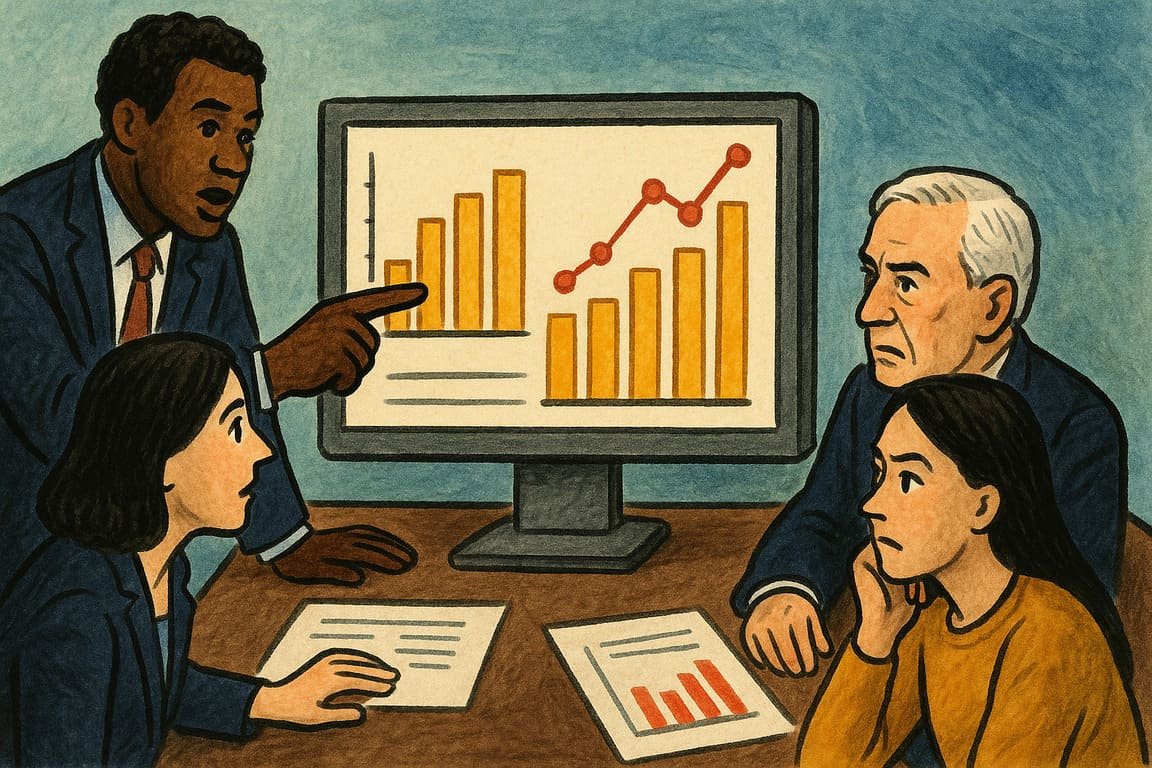
The boardroom is thick with anticipation. Tension vibrates beneath polished tables where a team of decision-makers waits for the day’s numbers to appear. Monitors flicker to life, each screen a window into the messy, beautiful reality of business. Outside, traffic flows, weather changes, and somewhere a competitor makes a move. Inside, a single dashboard—dense with live data—draws all eyes. This moment is sacred: a daily ritual in which instinct gives way to insight, and the right data points become the only true oracle. Here, intuition has a rival. Here, decision intelligence reshapes not only strategy, but fate itself.
Every professional knows the heartbreak of a gut decision gone wrong. Data-driven organizations do not gamble on hunches—they build futures on clarity. Imagine the relief in knowing that your latest marketing campaign actually resonates or that the forecasted demand is more than just wishful thinking. When teams embrace decision intelligence, they trade the anxiety of guesswork for the confidence of informed action. The difference? One relies on luck, the other on evidence.
The most inspiring stories come from teams who nearly lost everything. Consider the finance squad at a Nairobi retail chain. When old reporting habits failed them during a supply chain crunch, they switched to a real-time analytics suite. Instead of chasing missing numbers, they watched inventory trends unfold as they happened. A shipment delay that once meant disaster became a minor setback, simply because the data caught it early. The team saved millions—not with luck, but with smarter decisions.
Decision intelligence works best when it lives everywhere, not just in the C-suite. In one Los Angeles design agency, interns use project dashboards to pitch new ideas, salespeople run A/B tests in the wild, and the creative director rewrites budgets based on live feedback. The old hierarchy fades as the best answers bubble up, regardless of title or tenure. Data becomes the great equalizer, rewarding curiosity and agility over politics and pedigree.
Mistakes happen—what matters is how quickly you recover. With the right tools, teams do not waste days debating who’s to blame. They examine the numbers, spot patterns, and move on. At a manufacturing firm in Mumbai, one botched product launch nearly tanked morale until the team dug into the data. They discovered a hidden demand among a different customer segment and pivoted overnight. That shift, powered by decision intelligence, turned failure into a springboard.
Some resist, fearing that data will replace human judgment. But the best leaders know the opposite is true. Smart analytics free people to focus on big questions and creative leaps. Data does not dictate, it guides. Decision intelligence becomes a partner, offering context for every choice and revealing risks nobody saw coming. The greatest breakthroughs happen when bold intuition meets hard evidence.
Every business culture has its skeptics. In a Swiss pharmaceutical giant, a veteran scientist once dismissed real-time dashboards as a passing fad. Now he admits, “The numbers do not lie. They set us free.” His team uses decision intelligence to spot anomalies early, accelerating research and beating competitors to market. The skeptics often become the loudest advocates once they taste the power of better outcomes.
The paradox of modern business: with more information comes more pressure to act. Decision intelligence solves this by filtering noise from signal. At a Parisian luxury brand, leadership now ignores vanity metrics and tracks only what truly drives growth. The result? Fewer meetings, faster pivots, and a team aligned around what really matters. It is not about drowning in data, but choosing the right data.
Great outcomes are never accidental. The world’s most resilient companies obsess over feedback loops—tight cycles where decisions, results, and insights feed each other in real time. At a Sydney fintech startup, every product tweak is measured against user response within hours, not weeks. The company’s meteoric rise is less a fluke than a function of relentless decision intelligence.
Outcomes are only as good as the courage to act. Data gives you clarity, but leadership demands action. The most striking transformation happens when companies trust their insights enough to change direction, double down, or pull the plug. Fear fades, replaced by a contagious confidence that spreads from boardroom to breakroom. Decision intelligence is not a luxury—it is survival.
In the stillness after the numbers are tallied and the team files out, one leader lingers by the dashboard. The room, now empty, feels charged with possibility. Shadows stretch across the glass, reflecting both victories and regrets. Here, every data point is a memory, every insight a path not yet taken. Tomorrow’s outcomes hang in the balance, waiting for the next bold decision. The only thing left is the question burning in the quiet: will you trust the numbers—and will you dare to act?
Partnered. Provocative. Worth Your Scroll.
This is a Promoted Post by ESYRITE—yes, it’s paid, but never filtered. Our voice stays raw, real, and razor-sharp. We team up with bold ideas, game-changers, and stories that spark something real. If it’s here, it earned its place—no fluff, just impact. We don’t just promote—we provoke. Stay sharp. Dive deeper.
