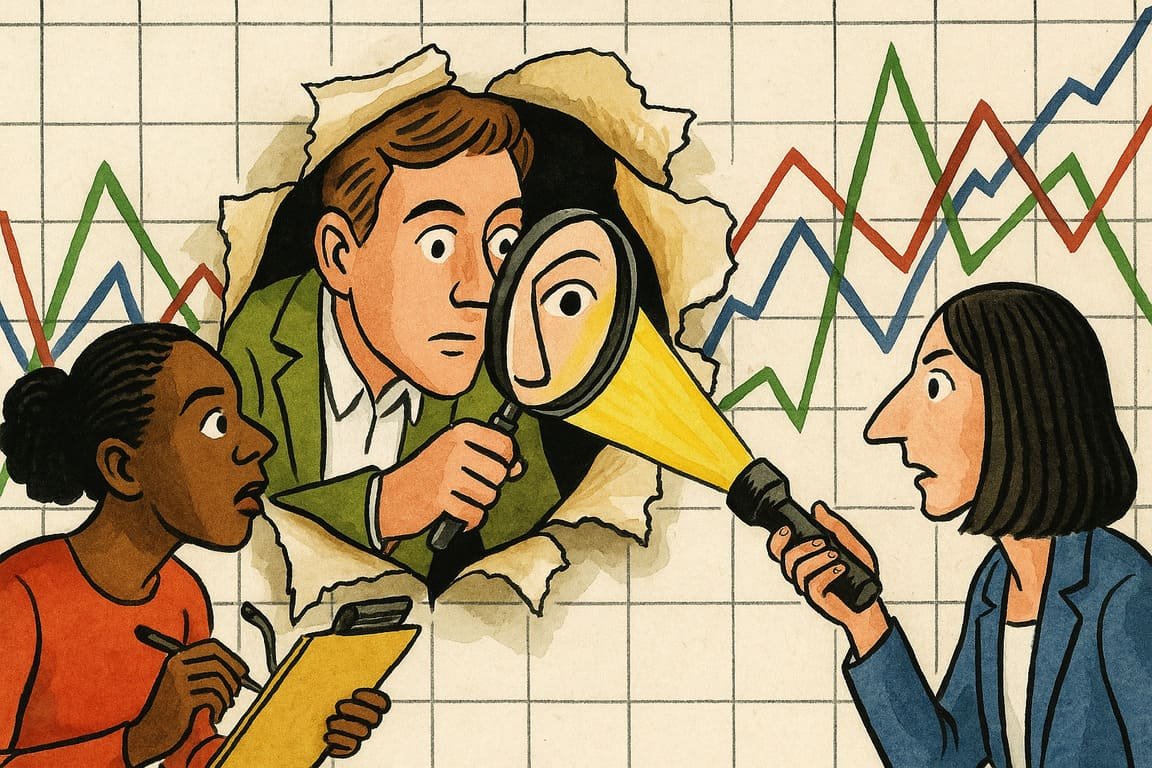
Floodlights slice through the gloom of a windowless operations center, where a maze of monitors glows with rivers of raw numbers. At the nerve center, a small group of data analysts wage quiet battles against confusion, hunched over tangled spreadsheets and code. Every ping from the server is another riddle, every graph a possible trap or a golden ticket. In the silence, there’s an electric sense that something big is just beneath the surface—a pattern waiting to be caught, a truth buried in the data noise. Here, the art of analysis feels part detective thriller, part high-stakes chess match, with every move rippling into boardrooms and city streets.
There’s magic in the way data transforms into insight. Numbers alone are lifeless until you learn to read between them. Kendra Liu, a rising star at a global consulting firm, built her reputation by spotting a single outlier in months of sales figures—an anomaly that signaled a coming market crash. Her team moved first, saving millions. Her secret wasn’t just math, but the ability to ask, “What does this really mean?” It’s a skill learned at the intersection of skepticism and imagination.
The sharpest analysts know context is everything. Trends mean little without the story behind them. When climate researchers tracked spikes in crop yields across West Africa, the data looked like a windfall. But local journalists pointed out an influx of illegal pesticides, transforming the narrative from miracle to warning. No chart exists in a vacuum. Pair your numbers with the world outside the screen.
Pattern recognition separates amateurs from pros. Raw data rarely spells out its secrets. You learn to notice what changes, what repeats, what doesn’t fit. It’s not just statistics, it’s curiosity—questioning why sales drop on Wednesdays, why customers abandon carts after one click, why one clinic outperforms the rest. Real insights come from relentless, sometimes stubborn, pattern hunting.
Outliers are goldmines—or landmines. Ignore them, and you risk missing the real story. Overreact, and you chase shadows. The trick is to investigate with care. There’s a story about a financial analyst in Mumbai who ignored a tiny anomaly in banking data, missing the early warning of a massive fraud. Across the world, a hospital data team in Brazil saved lives by flagging rare symptoms in a patient database. Outliers demand respect and a strong gut instinct.
Bias lurks everywhere. Every dataset is shaped by the questions asked, the samples chosen, and the assumptions baked into collection. Sharp analysts hunt their own blind spots, testing theories from different angles and admitting when something doesn’t add up. When a health NGO found their nutrition program wasn’t working, they dug deeper and realized their surveys missed entire communities. Admitting error became the key to a stronger strategy.
Visualization makes data human. A well-crafted chart or map tells a story in a glance. Remember the moment a single infographic changed the world’s mind about climate change? Or how a viral COVID-19 dashboard became must-see news? The best analysts are also storytellers, using design and empathy to make complex insights unforgettable.
Collaboration supercharges analysis. No one can see the whole field alone. Teams that mix coders, domain experts, and even skeptics end up with deeper insights. When a city’s transit team joined forces with local artists and disability advocates, their analysis of bus routes transformed public policy—and made daily life better for thousands.
Action is the endgame. Analysis means nothing if it isn’t used. When Kendra’s team discovered their market crash, their fast action mattered more than any PowerPoint. Great analysis ends with a recommendation, a shift in policy, a new product, or a better service. Data is a starting line, not a finish.
Ethics draws the line between discovery and damage. Analysts hold power—they can shape headlines, move markets, even decide who gets access to resources. The best keep transparency and integrity at the core. When in doubt, ask not just “Is this true?” but “Is this right?” In an age of surveillance, deepfakes, and privacy risks, these questions matter more than ever.
Learning never ends. Every new tool, every fresh data stream, every global crisis means the rules change. The most successful analysts are lifelong students—always ready to relearn, to test new models, to adapt when the numbers start singing a new tune.
The operations center empties as the first light creeps into the sky. Only one screen remains lit, a solitary graph pulsing with the outline of a hidden pattern. The last analyst lingers, coffee cooling at their side, eyes wide as they trace the curve that no one else noticed. Outside, the city wakes to another day shaped by silent discoveries, its rhythm changed by a single insight found in the depths.
Every breakthrough starts as a question: What secret hides in the data you hold—and are you bold enough to let it change everything you know?
