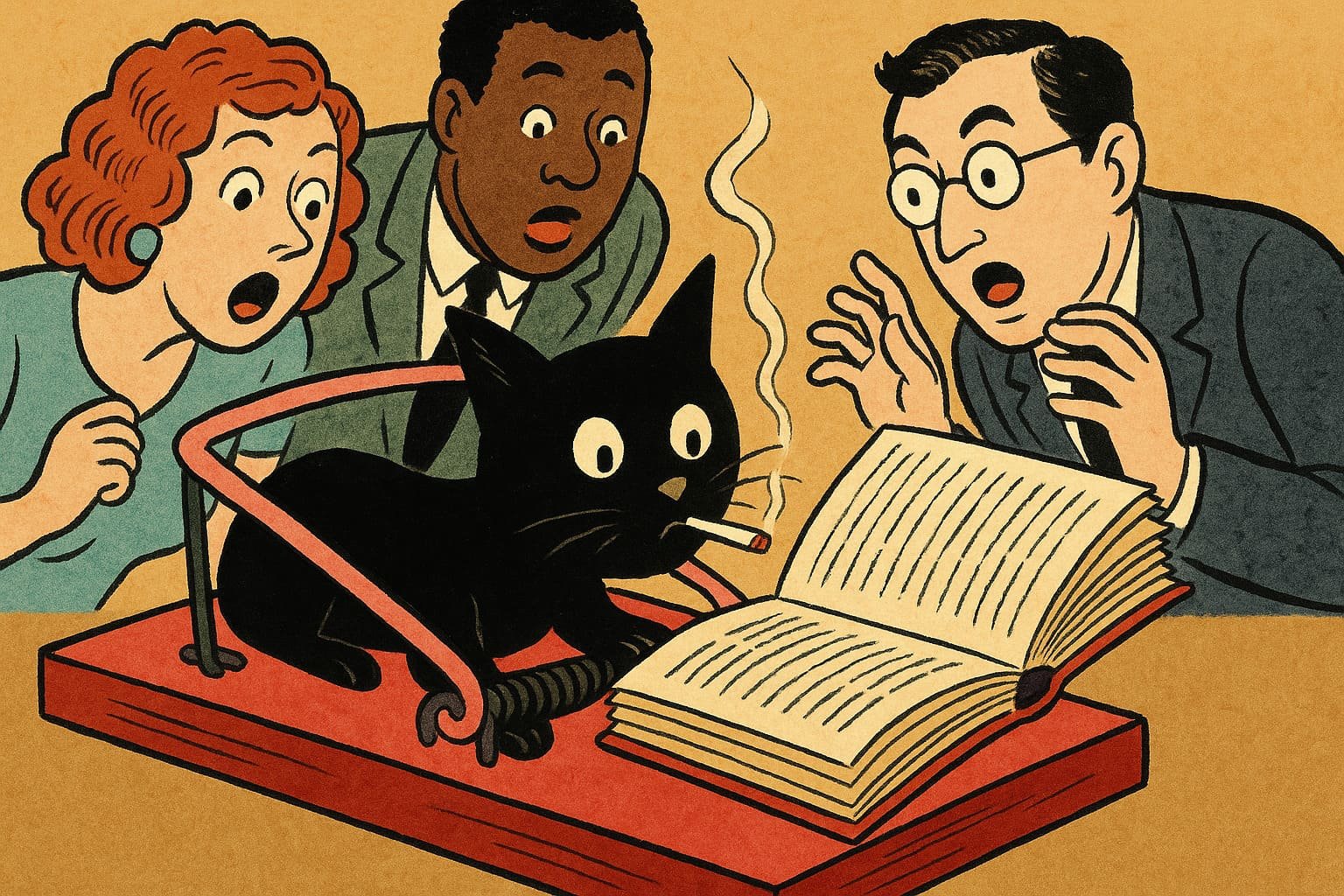
A sharp whiteboard marker squeaks across glass in a city tower just before sunrise, tracing equations that will never be solved. Beyond the window, the skyline sits frozen while rows of glowing screens cast a blue hue over tired eyes. This is not a boardroom. It’s a modern oracle’s chamber, haunted by questions more addictive than caffeine and more volatile than stocks. The people here look successful, but you can almost taste the restlessness—the endless pursuit for that last elusive answer. Coffee cups shake in anxious hands as executives, researchers, and analysts chase that intoxicating rush: knowing something nobody else does.
Inside these walls, curiosity is currency. Each new bit of data is a lottery ticket, promising relevance and status in a world where the next insight might turn a career, a market, or a life on its head. A marketing director once whispered during a midnight brainstorm, “You can’t build a legacy on answers everyone already knows.” Her team never slept so little, hunting for patterns in places most people never think to look. Even sleep feels dangerous—every moment unplugged is a chance for the world to leap ahead, leaving you lost, irrelevant, or obsolete.
A junior analyst—let’s call him Aiden—crashes into the glass conference table, clutching an iPad loaded with a new data leak. He blurts out findings about user retention rates nobody asked for. The others stop, eyes wide, as if he’s discovered fire. No one remembers the last time a fact made them feel satisfied, not hungrier. The thrill never lasts. It’s replaced instantly by a sharper hunger, one that bites from the inside out. Curiosity is supposed to feel good, but here it feels like a fever that never breaks.
Outside, a city hums with small answers: trivia, pings, likes, factoids doled out by algorithms, all feeding the masses in doses just potent enough to keep their thumbs scrolling. Each new notification a sugar hit. Each “You might also like…” a breadcrumb to the next bottomless rabbit hole. The news cycles, the feeds, the constant, grinding flow—every platform is a digital slot machine, and every human hand is compelled to pull the lever.
Somewhere down the hall, a founder named Neha stares into her phone, scanning research on competitors until her vision blurs. Her company’s edge isn’t in what it knows, but how fast it can learn what others haven’t noticed. The stakes couldn’t be higher. One missed insight could cost millions. But Neha’s secret fear isn’t losing to the competition. It’s losing the chase itself—becoming bored, ordinary, static. The very thing that built her empire now keeps her trapped in the cycle. And yet, if you ask her, she’ll smile and say: “Curiosity is a gift.” Most gifts, after all, come wrapped in warning labels nobody ever reads.
Quick Notes
- Curiosity Hijacks Ambition: Most believe wanting answers is noble, but research obsession often chains success to anxiety, not enlightenment. In the boardrooms where breakthroughs are made, curiosity often feels more like an addiction than a virtue.
- FOMO Fuels the Information Binge: People don’t just want to know—they need to. Fear of missing out on new data drives marathon research sessions and sleepless nights, convincing teams to chase insights long after they’ve lost their value.
- The Data Never Ends, But Attention Does: For every new fact discovered, a hundred more appear, leaving even the sharpest minds drowning in details. The ability to say “enough” has become a lost art, sacrificed to the cult of “more.”
- Burnout Is the Hidden Cost of Curiosity: Every “aha” moment has a hangover. As pressure mounts to know more, employees and leaders alike report exhaustion, anxiety, and a feeling of emptiness even after the biggest wins.
- True Mastery Lies in Letting Go: Great leaders, founders, and thinkers know the most powerful move isn’t to hoard every answer, but to know when to walk away from the question. Sometimes, wisdom means unplugging before curiosity consumes you.
Digital Gold Rush: The Obsession That Never Ends
Every modern company lives inside a digital gold rush, convinced there’s always one more insight just beneath the surface. You open your phone, check your dashboard, and discover an anomaly in user behavior, then stay up half the night imagining what it could mean. This pattern isn’t new. In Silicon Valley, product managers sometimes joke that their data dashboards are “slot machines for the soul.” The feeling is always the same: one more pull, one more chance for glory.
You see it in the caffeine-fueled hackathons where coders obsess over metrics that might change the world or at least the next funding round. The story of Sam Altman, OpenAI’s CEO, hints at this chase. He once described his career as “a relentless pursuit of the next right answer,” spending nights wrestling with questions even Google couldn’t answer. Yet with every discovery, the stakes only rose, and the pressure never eased.
The true gold isn’t just knowledge. It’s novelty. Every new fact is a brief shot of relevance, like a viral meme or a trending tweet. In business, novelty translates to market advantage—until it’s common knowledge, then it’s yesterday’s news. The cycle spins faster every year, and nobody seems immune. Employees bounce from research portal to Slack channel, tracking rumors and chasing competitors, terrified of missing the next wave.
Even the smartest leaders admit the addiction. Elon Musk famously described his curiosity as “a tornado” that leaves no corner of the room untouched. That tornado sweeps up everything—facts, rumors, wild guesses—leaving teams exhausted but unable to stop searching. The question is no longer “What do we need to know?” but “What are we missing that could break us?”
It’s not just tech. In finance, fashion, sports, and science, leaders build teams whose only job is to stay ahead of the next curiosity fix. The real danger? When the chase for the next new thing blinds you to the bigger picture, or worse, leaves you forever chasing but never arriving.
The Psychology Trap: When Knowing More Becomes a Burden
You probably feel it every time you click “next page” on a news feed or refresh your inbox just to see if something new has landed. The compulsion isn’t about satisfaction; it’s about the chemical rush of discovery. Psychologists call it “variable reward”—the same mechanism that makes gambling addictive. Each time you uncover an insight or a secret, your brain rewards you with a shot of dopamine, and then demands a bigger fix.
Leaders across industries quietly admit the downside. Anna, a creative director at a global agency, described her team’s obsession with “fresh inspiration” as a kind of performance anxiety. “We’re not searching for better ideas. We’re just terrified of missing the one idea that changes everything,” she confessed over burnt espresso in a Brooklyn café. Their relentless pursuit left them both exhausted and creatively paralyzed.
The pressure mounts from above and below. Startups idolize founders who never sleep, constantly surfing the next big trend. Meanwhile, employees at giant firms are expected to monitor every shift in their market, or risk looking uninformed in meetings. The feeling is contagious, amplified by social media and the 24/7 news cycle, each promising that one more click or comment will deliver clarity.
Academic research points to the darker side of this mindset. Psychologists warn that curiosity, unchecked, can morph into anxiety and chronic stress. A study from Harvard Business School found that employees encouraged to “keep digging” often struggle with burnout and decision paralysis, unable to act for fear of missing a better answer. The price of curiosity, it seems, is perpetual unrest.
Even the greats have faltered. Steve Jobs, known for his insatiable appetite for knowledge, famously pushed his teams to the breaking point in pursuit of perfection. The results built empires, but they also broke spirits. The lesson lingers: curiosity is a powerful tool, but when wielded without boundaries, it can hollow out the very drive it was meant to fuel.
The FOMO Economy: How Fear Shapes Curiosity’s Edge
Fear of missing out (FOMO) isn’t just a social phenomenon—it’s an economic engine. You wake up, check your notifications, and instantly feel behind. Someone else knows more, someone else moved first, and the scramble begins. In digital industries, entire business models thrive on the FOMO effect, pushing people to keep scrolling, reading, and researching long past the point of usefulness.
Take the story of Natasha, a product manager in a bustling tech startup. Her team pivoted the company’s entire direction after hearing rumors that a competitor was about to launch a disruptive feature. They poured months into development, only to discover the rumor was baseless. Natasha later joked, “We built an entire business on the fear of missing an insight that never even existed.” The pressure to always know more blinded them to real opportunities.
FOMO isn’t just personal—it’s institutionalized. Companies subscribe to endless market intelligence services, analysts churn out reports on every imaginable trend, and leaders hold standing meetings to “surface new insights.” The real trick is that no amount of data ever feels like enough. Each new briefing sparks more questions, and the cycle repeats, pulling everyone deeper into the whirlpool.
Pop culture isn’t immune, either. In Hollywood, executives famously greenlight projects based on what’s trending, terrified of missing the next big franchise. Legendary producer Shonda Rhimes once called the entertainment industry “one big game of leapfrog—everyone’s just trying to jump on the next trend before the music stops.” The results can be brilliant, but more often, they leave studios chasing shadows and audiences rolling their eyes.
FOMO keeps curiosity alive, but it can also make it ravenous. The antidote, according to behavioral economists, is intentional ignorance—knowing when to stop digging and focus on what matters most. That discipline remains rare, but the best teams learn to walk the line, using FOMO as fuel, not as a leash.
Burnout Boulevard: The High Price of Endless Answers
At first, the pursuit of knowledge feels exhilarating. Teams sprint through brainstorming sessions, fueled by adrenaline and the promise of a new discovery. But there’s a hidden toll: chronic exhaustion. In hospitals, physicians who research late into the night in hopes of finding a miracle treatment often end up too tired to care for their patients. The drive to know more can be both heroic and destructive.
A case from a leading consultancy brings this home. Marco, a junior partner, landed a major account after uncovering a market trend before anyone else. His career skyrocketed, but the thrill faded quickly. He became obsessed with outdoing himself, sleeping less, scanning reports during family dinners, and missing birthdays. His performance soared until it crashed, his personal life in tatters. The company quietly reassigned his projects, citing “burnout.”
This cycle isn’t limited to high-stakes firms. In education, teachers feel compelled to adopt every new method, convinced there’s always a better way to reach students. The result is a constant sense of inadequacy and fatigue, a phenomenon now dubbed “innovation fatigue.” Even students aren’t immune, pressured to learn more, faster, better—until learning itself becomes a chore.
Organizations that prize curiosity often forget its human cost. Burnout sneaks in when boundaries vanish, leaving employees both hyper-informed and emotionally spent. The warning signs are easy to spot: declining engagement, irritability, and a haunted look that says, “I used to love this.” Companies struggle to address it because the very culture they’ve built is the source of the problem.
The most effective leaders now advocate for “strategic curiosity”—focusing on questions that actually matter and letting go of the rest. This practice, once controversial, has started to gain traction in high-performing teams. As the founder of a successful design agency once said, “The best insight is knowing when to close the tab and go outside.”
Mastery by Subtraction: The Power of Not Knowing
In a world addicted to more, wisdom now hides in restraint. The ancient Stoics practiced what modern researchers call “applied ignorance”—choosing to ignore information that doesn’t move the needle. This paradox is taking root in innovative organizations, where leaders measure success not by what they know, but by what they deliberately choose not to pursue.
The case of Lucy, CEO of a rising fintech startup, illustrates this perfectly. Her board pressured her to chase every competitor, every trend, every regulatory shift. Lucy responded by cutting her team’s research feeds in half, forcing everyone to focus on customer experience instead of industry noise. The result? Revenue climbed, and the company’s culture thrived. Lucy now says, “Every decision to ignore a distraction is an investment in what matters.”
Research supports this contrarian approach. Top-performing organizations, from luxury brands to tech giants, often achieve their best results by narrowing their curiosity to a handful of core questions. They build “learning sabbaticals” into their workflow, encouraging teams to unplug, step back, and think deeply. That space—the gap between knowing and acting—has become a rare competitive edge.
Pop culture, too, is catching on. Shows like “Ted Lasso” celebrate the value of not knowing everything, focusing instead on kindness, intuition, and connection. Even sports teams now hire “performance psychologists” to help athletes block out the noise and focus on instinct over analytics.
The future of mastery may look less like a database and more like a clear mind. It isn’t about hoarding information. It’s about clarity, courage, and the humility to admit when enough is enough. In a world obsessed with knowing more, the boldest move may be choosing what you never need to know.
Will You Break the Spell or Chase the Mirage?
Inside a quiet subway car hurtling through the city’s veins, a lone figure stares at her reflection in the window. Her phone buzzes with unanswered alerts, research articles, and “urgent” Slack threads. The lights flicker overhead, illuminating her face with every new tunnel, her thoughts tangled in the static of things she might never learn. Outside, the city is alive with secrets, each one daring her to chase just a little bit further. But her shoulders relax as she closes her screen, breathing in the rare silence between destinations.
Across town, a team packs up from a marathon hackathon, their ideas scrawled across butcher paper like a treasure map to somewhere they’re not sure exists. No victory speeches, just weary grins and an unspoken question lingering in the stale conference air: “What did we actually find today?” The craving for answers has passed, replaced by a quiet appreciation for the questions left unexplored.
Somewhere, a founder steps out onto a rainy sidewalk, shoes splashing in shallow puddles. The city smells of wet concrete and spring promises, the kind that make you wonder what you’ve been missing by always peering at screens. He remembers a lesson buried in all his research: not every truth must be chased, not every answer is worth the toll. The best discoveries sometimes arrive in the space between questions, in the moments when curiosity surrenders to living.
Under flickering neon lights, the world is still spinning, full of secrets and noise. The temptation to keep scrolling, keep digging, never truly fades. Yet in the hush before the next wave of data, a new possibility flickers: the freedom to not know, to step off the treadmill, to let the last question echo for a while.
You have a choice: Will you feed the addiction to knowing more, or dare to savor the mystery you’ve been running from all along?
