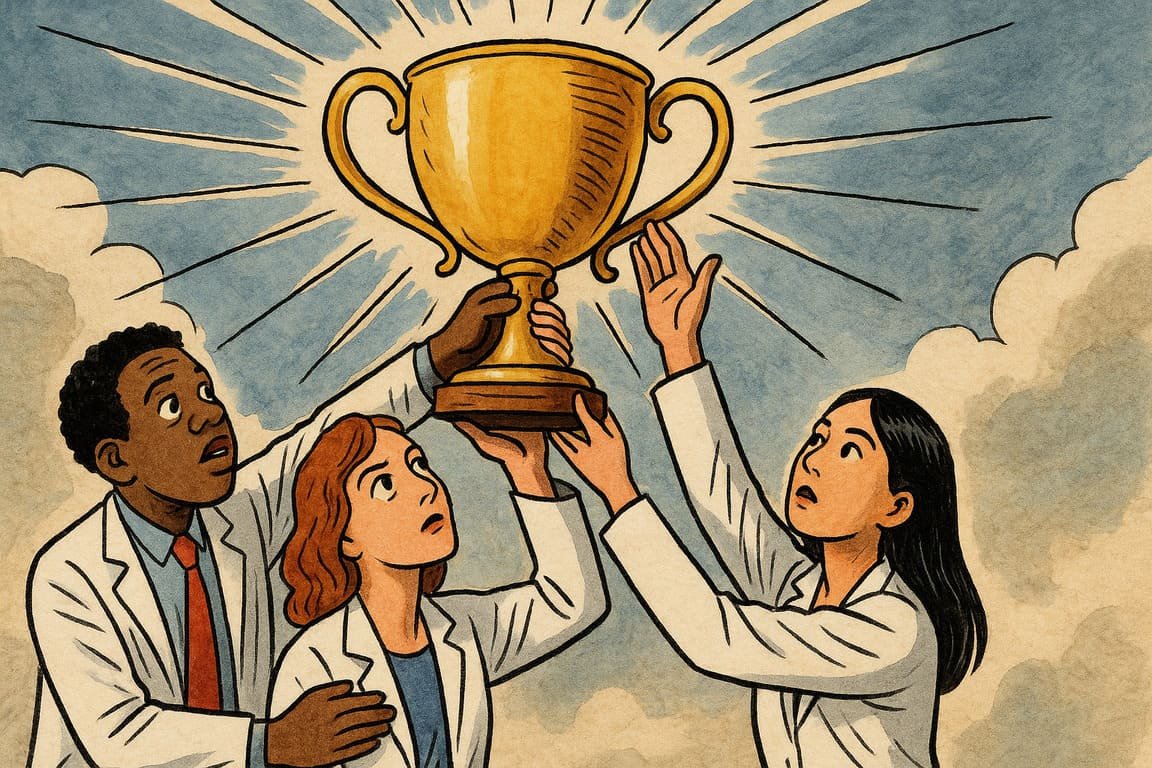
Somewhere behind glass doors, in a converted warehouse with exposed pipes and humming laptops, a strange magic takes root. Old rivals lean over a whiteboard, sleeves rolled and minds locked on a problem that’s outfoxed them all year. The smell of burnt coffee blends with the ozone of determination. Laughter breaks through an argument, and suddenly, the impossible seems within reach. It’s not a solo genius at work, but a team—ragtag, opinionated, and unpredictable. In this room, hierarchy evaporates. The revolution is real: when researchers join forces, the world shifts under their feet.
Forget the lone-wolf myth. Big breakthroughs now require a pack. Collaboration amplifies strengths, covers blind spots, and turns friction into fuel. The magic of a diverse team? It breeds conflict, yes, but that conflict sparks insight. You see it every time a biologist bickers with a coder or a statistician pokes holes in an anthropologist’s pet theory. Through sharp debate, the truth gets sharper. As one famous innovation manager, Carla Ledesma, loves to say, “If you’re not arguing, you’re not learning.”
You’ve seen it: the toughest problems rarely respect disciplinary boundaries. Cancer research needs AI. Urban planners borrow from behavioral economics. Human rights lawyers consult data scientists. Every time teams cross borders, fresh ideas flood in, and previously invisible solutions float to the surface. No solo act can match that velocity.
But there’s more: teams build resilience. When failure strikes—and it always does—it’s the collective that adapts. Picture the climate project in Mumbai that tanked after monsoon data vanished. The mapping expert, the social scientist, and the high school intern pooled late-night brainstorms to rebuild, eventually developing a model better than the first. “The sum is smarter than its parts,” their project lead told Wired. That wisdom is everywhere, from vaccine moonshots to startup hackathons.
Collaboration is an antidote to bias. Every researcher sees the world through their own lens, colored by training, culture, and ego. Teams shatter those filters. When someone challenges your sacred cow, you’re forced to rethink. It’s uncomfortable. That’s the point. The result? More reliable findings and fewer blind spots. In a world hungry for trustworthy science, this is priceless.
Modern research moves at breakneck speed, and teams are the only way to keep pace. Individual brilliance gets lost in the churn; group momentum carries projects through pivots, dead ends, and eureka moments. This is why the labs that win Nobel prizes aren’t led by hermits, but by connectors who know how to draw out the best in others. Every major COVID-19 breakthrough was a relay race, not a solo sprint.
Real collaboration isn’t about groupthink. It’s about safe spaces for sharp disagreement. The best teams nurture oddballs, skeptics, and the kind of rebels who ask, “What if everything we believe is wrong?” That energy is contagious. Just look at the rapid rise of interdisciplinary “collision spaces” at Google, the United Nations, or in indie research collectives worldwide. When you put enough weirdos in a room, the universe gets a little more interesting.
The human side matters. The late-night pizza runs, the ridiculous inside jokes, the Slack threads full of memes—these bonds build trust. When things get tough, and they always do, trust holds teams together long enough to crack the hardest puzzles. Every lab, from MIT to Nairobi, runs on a secret currency of friendship, forgiveness, and snacks.
If you’re just starting out, don’t wait for an invitation. Form your own “league of the curious.” Find collaborators from unlikely backgrounds. Reach out to the musician who codes or the engineer who paints. The most successful teams are rarely the most credentialed—they’re the most curious, the most open to being surprised.
Teams teach humility. You learn fast that no one is indispensable. Roles blur, egos get checked, and credit is shared (or squabbled over, which is its own bonding ritual). The process can be chaotic. That chaos is the engine of real progress. As tech entrepreneur Daniel Ashong once joked, “My only real skill is picking people smarter than me to work with.”
Don’t be fooled: collaboration is work. Miscommunication, clashing work styles, and heated arguments are all part of the package. But with every setback, your team grows stronger, more creative, more fearless. By the time you hit success, you’ll look back and see that the real win was never the headline—it was the tribe you built along the way.
Inside an abandoned train station, repurposed as a start-up incubator, a circle of folding chairs glows under bare bulbs. Young scientists, designers, and dreamers cluster in small groups, laughter and outrage bouncing off brick walls. Someone sketches wild ideas on butcher paper; someone else offers the last slice of pizza as tribute for a new experiment. Outside, rain pounds the rails. Inside, possibility grows louder.
Nobody remembers who had the idea first, or whose name went on the patent. That’s the beauty. When teams collide, something larger than any individual takes shape—a revolution that outlasts ego and outpaces fear. This is the true power of collaboration: the ability to win big, not just for yourself, but for everyone willing to risk the mess together.
You’ve spent enough time waiting on the sidelines. Who’s joining your team?
