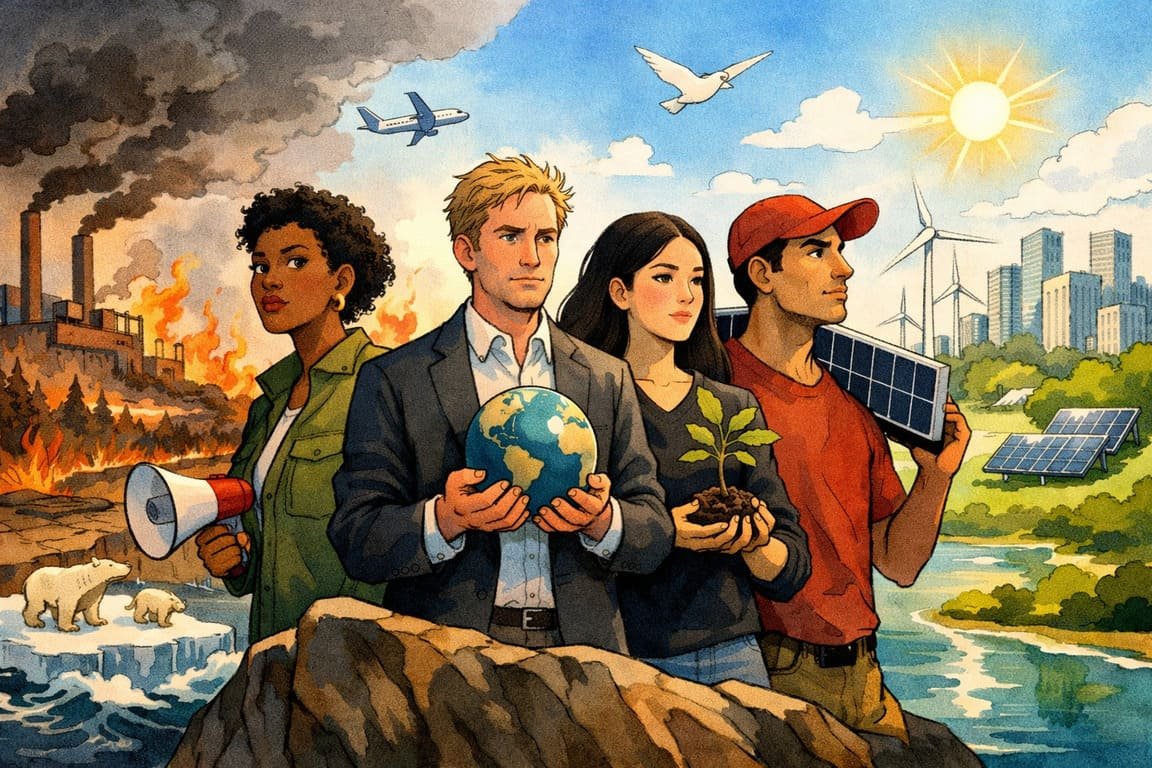
The room is climate-controlled, the language carefully moderated, the urgency packaged into slides that glow politely against darkened walls. Applause arrives on cue. Promises are logged. Outside, heat thickens the air and coastlines redraw themselves without waiting for permission. This contrast captures the defining failure of the climate era. The problem is treated as a communications challenge when it is, in truth, a test of leadership under pressure.
For years, climate action has leaned on awareness as if recognition alone could bend physics. The world knows what is happening. The charts have been memorized. The documentaries have been watched. What remains scarce is not information, but resolve. Climate change is no longer a knowledge gap. It is a courage gap.
Strong leadership in this context does not look inspirational. It looks abrasive. It makes people uncomfortable before it makes them safer. Real climate progress has never emerged from consensus built at comfortable distances from consequence. It has emerged when someone decided that delay carried greater moral cost than backlash.
History supports this, even when it embarrasses modern sensibilities. Cleaner air did not arrive because industries volunteered restraint. Rivers did not recover because pollution became unfashionable. Change followed enforcement. Limits were set. Adaptation followed resistance, then normalization. Leadership arrived before applause, not after.
The modern leader faces a sharper version of this dilemma. Every serious climate decision produces immediate friction. Energy prices rise. Jobs shift. Lifestyles adjust. Weak leadership avoids these realities by deferring them to future administrations or abstract goals. Strong leadership absorbs the anger now, understanding that physics will collect the debt regardless.
This is where slogans become dangerous. They create the illusion of motion while preserving inaction. When climate language turns moralistic, it pushes responsibility downward toward individuals while protecting systems that shape behavior. People are asked to sacrifice without seeing structures change. Resentment grows. Backlash hardens. Progress stalls.
Strong leaders reverse that flow. They shift burden upward. They redesign incentives so better choices require less heroism. They accept that regulation, when clear and consistent, unleashes innovation rather than suffocates it. Markets respond to certainty more effectively than to hope.
The temptation to equate strength with authoritarianism clouds the conversation. Strength in climate leadership is not about silencing opposition. It is about clarity. About naming tradeoffs honestly. About enforcing rules predictably. Accountability, not coercion, is what turns resistance into adaptation over time.
There is also an ethical dimension often ignored. Climate harm does not distribute evenly. Delay punishes those with the fewest buffers. Heat, floods, and food instability strike hardest where margins are thinnest. Leaders who postpone action in the name of popularity are not neutral. They are choosing whose suffering is acceptable.
The most effective climate actions often avoid the label entirely. They arrive as infrastructure upgrades, energy security measures, industrial policy. They lack theatrical flair. They do not trend. They work quietly, reshaping systems so resilience becomes normal rather than heroic.
Culturally, the fixation on likability weakens governance. Leaders trained to soothe struggle to confront. Climate reality does not reward empathy without enforcement. Nature does not negotiate. It responds only to outcomes. Strength becomes compassion expressed through structure.
Late nights reveal the truth of climate leadership. Decisions are made away from cameras. A subsidy ends. A standard tightens. A permit is denied. These moments do not inspire ovations. They alter trajectories. Years later, people breathe easier, live safer, and forget the discomfort that made it possible.
The great lie of this era is that everyone must agree before action begins. Agreement follows results, not the other way around. Strong leaders understand this pattern. They move first, absorb pressure, and let success do the convincing.
As storms intensify and patience thins, the question no longer belongs to activists or skeptics. It belongs to those holding power quietly deciding whether history remembers them for courage or for caution disguised as care.
