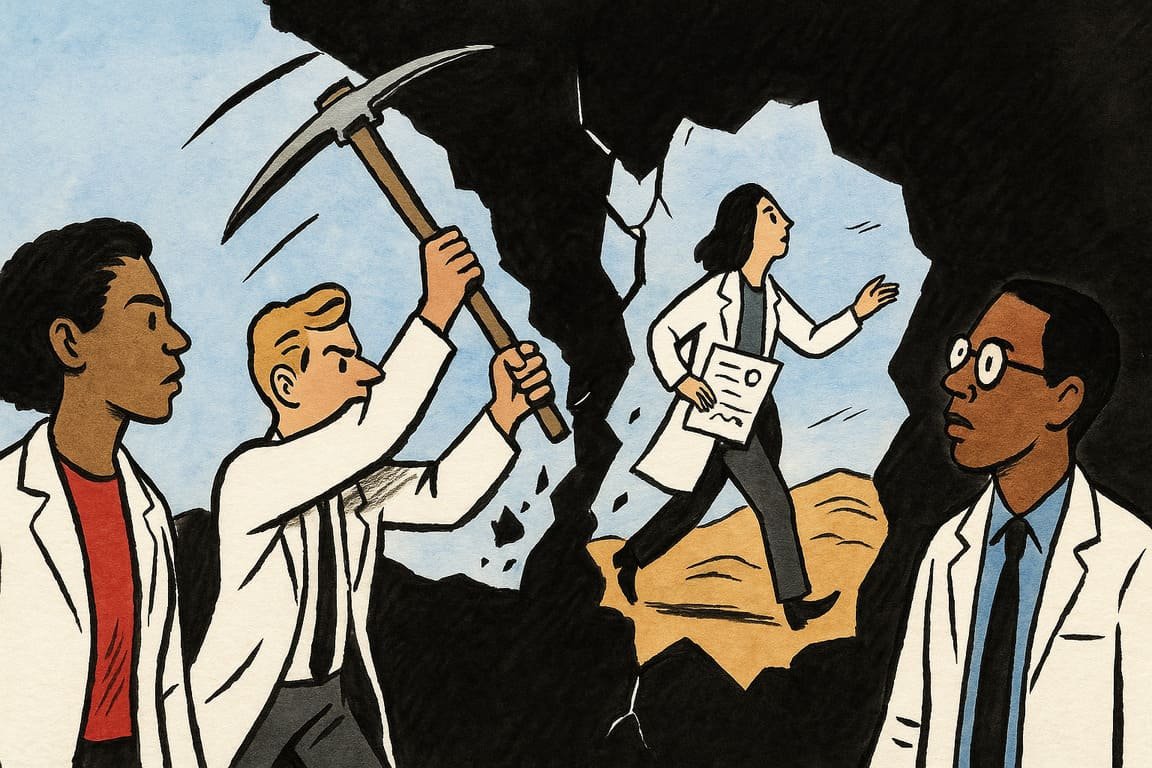
Shadows creep along the fluorescent-lit corridors of a forgotten science museum, glass cases cracked, timelines fading, while somewhere beyond the velvet ropes, the pulse of possibility stirs. Here, under the unblinking stare of yesterday’s achievements, a storm brews behind closed doors. Every click of a keyboard and shuffling of data unlocks a fresh reality: the future of research has broken its chains. Around the globe, innovators rewrite the rules while tradition watches from the sidelines, powerless and silent. In this theater of human ambition, the boundary lines between known and unknown blur, and even cynics have begun to wonder if the greatest discoveries still hide in plain sight, begging for one wild leap of faith.
The modern researcher no longer fits the dusty stereotype: today’s pioneers come from kitchens, basements, back alleys, and pop-up coworking spaces. Picture Nadia Rahim, once a graffiti artist in Istanbul, now running a data lab that predicts social trends faster than any government body. Her team’s breakthrough on crowd behavior became the secret playbook for a dozen election campaigns before the public ever heard her name. Behind every viral meme or sudden trend shift, you’ll find teams like hers—unseen, unapologetic, turning chaos into clarity with little more than laptops, caffeine, and relentless curiosity.
You don’t need a PhD to see the ground shifting beneath your feet. The question isn’t whether research will change: it’s whether you’re willing to change with it. Gone are the days when only those with tweed jackets and library keys held the keys to discovery. Today, you’re a participant, not a bystander. You scroll past medical marvels crowdsourced on Reddit, watch climate change models rendered in Fortnite graphics, and tweet at AI bots that debate ethics with more nuance than most senators. The speed of breakthrough is no longer dictated by gatekeepers, but by your willingness to ask questions nobody else will risk.
Crack open any headline about artificial intelligence, and you’ll see a pattern. Startups outpace university labs, hobbyists tackle problems global think tanks can’t touch, and results that once took decades now arrive before breakfast. Yet with every leap forward, the anxiety builds: what does it mean to trust a machine’s insight over your own gut? That anxiety is your invitation, not your excuse. Every disruptive trend in research was once dismissed as a toy or a gimmick before it overturned entire industries. Only the bold reap the rewards, while the skeptics warm themselves by the dying embers of old dogmas.
You’ll find these wild thinkers at hackathons, in biotech collectives, coding from old pizza boxes or broadcasting breakthroughs live to followers hungry for answers. Consider the case of Tayo Njoroge in Nairobi, who built a gene-editing kit from open-source parts and used it to crowdsource malaria resistance research. His breakthrough, once rejected by a dozen journals, is now the backbone of Africa’s largest nonprofit science consortium. Every established institution that said “wait your turn” is now scrambling to catch up.
Maybe you’re wondering if it’s all hype, just another bubble waiting to pop. Truth is, every wave of progress arrives with its share of noise and snake oil. The trick isn’t to believe everything—you just have to look for the outliers, the patterns, the sparks. The future of research rewards those who combine skepticism with daring. Take a lesson from Jordan Case, who quit her Silicon Valley job to study urban air quality with schoolchildren. Her team’s map, stitched from thousands of backpacks, rewrote city policy and forced three mayors to change course. That’s not just research. That’s revolution.
There’s power in admitting what you don’t know. Most discoveries happen because someone got tired of pretending. The walls come down when humility replaces arrogance. That’s why the new era of research isn’t just about shiny tech—it’s about people who admit uncertainty, own their failures, and keep showing up. The biggest breakthrough might be the courage to say, “What if we tried something completely different?” Every team, from NASA to the corner coffee shop, needs a skeptic who can sniff out groupthink and say, “Prove it.”
Maybe you fear getting left behind, watching others claim the spotlight while you’re stuck on yesterday’s problems. Here’s the secret: everyone is making it up as they go. Even the Nobel laureates started by breaking a few rules. If you want to ride the next wave, stop waiting for permission. Find one small truth nobody else has noticed and run with it. Great research is as much about obsession as it is about skill.
You’re part of a new tribe—the boundary-breakers, the rule-flippers, the questioners who refuse to settle for the first answer. You’re standing at the crossroads of science fiction and fact, with a thousand paths opening up at once. Every new method, every new tool is a key waiting for someone bold enough to use it. Ignore the experts who say, “That’s impossible.” They’re only echoing the last generation’s regrets.
It’s easy to romanticize risk, but the real currency in research is grit. Success comes from the hours nobody sees: the late nights, the failed prototypes, the questions that end in laughter or silence. For every viral headline, there are years of invisible work and a thousand false starts. Those who persevere are the ones who make the impossible inevitable. The journey is messy, painful, glorious—and it’s yours for the taking.
Every so often, the world gives you a glimpse of what’s coming. The future isn’t built in secret labs; it’s shaped by people who stay curious. You’ll know them by the wild look in their eyes, the notebooks crammed with half-crazy ideas, the willingness to leap before the net appears. Follow their lead, and you’ll see the world not as it is, but as it could be.
So what’s the catch? There isn’t one. Every wall is built by someone who forgot how to imagine. Every barrier falls when you push, ask, and refuse to take “no” for an answer. The future of research isn’t just a field; it’s a movement. It’s the stubborn hope that there’s always more to discover.
Under the cool glow of a midnight subway station, a lone figure reviews messy pages and digital maps, piecing together the chaos of progress. Every echo along the tunnel is another idea set free, another question waiting to be answered. This is where legends are born, far from the headlines—on cold benches, lit by determination and the last flicker of a dying phone. A young coder sketches code on her arm, a retired teacher scribbles on a napkin, a father and daughter watch molecules dance on a cracked tablet.
No one waits for applause in this place. The air hums with stubborn optimism. The world outside rushes past, oblivious, but the heart of discovery beats louder every day. Here, boundaries are made to be broken, and the next impossible thing is already on someone’s mind.
If you want the future to remember your name, dare to become the question everyone else is afraid to ask.
