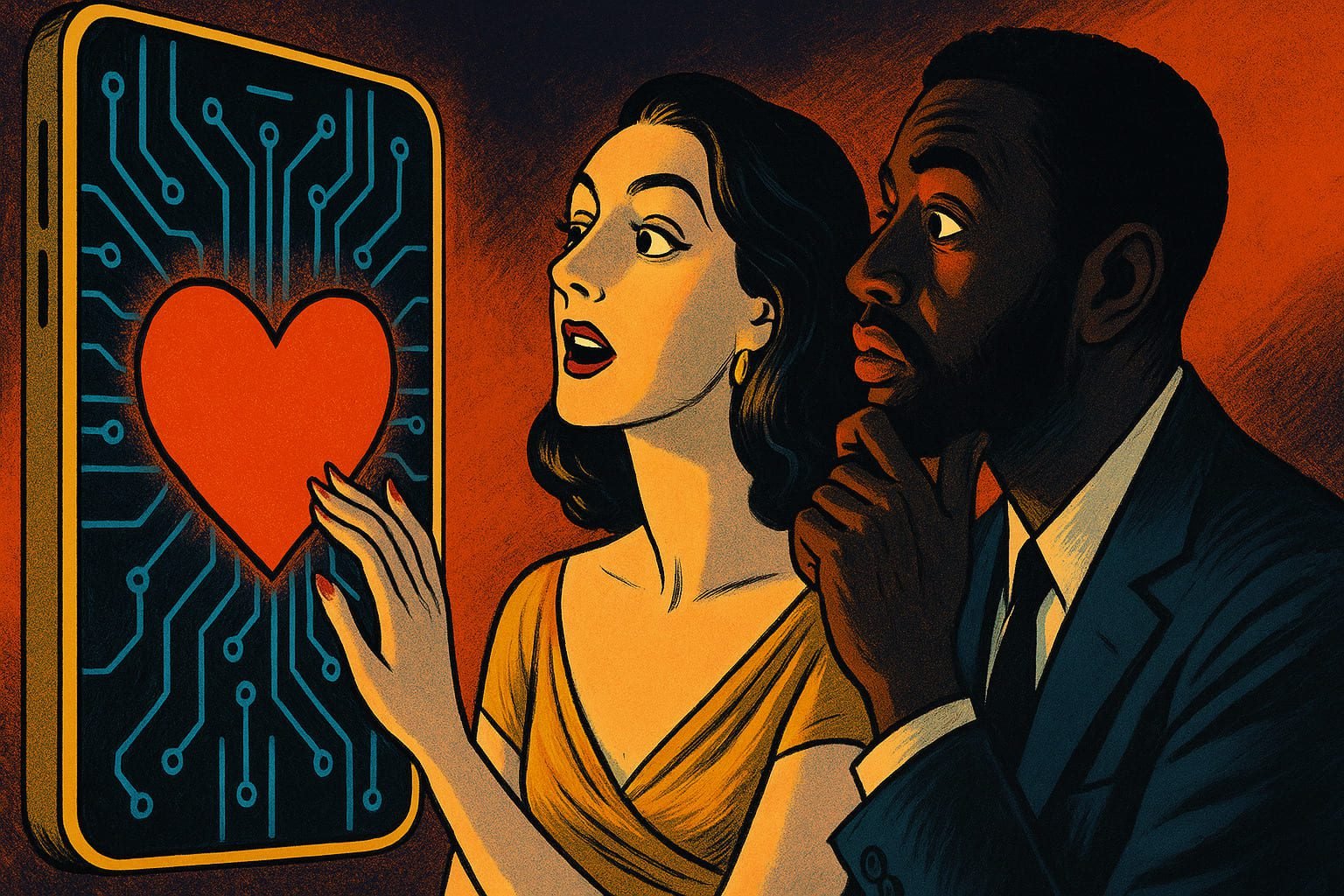
Inside a glass-walled room, fluorescent lights flicker over a tableau of silent faces and glowing screens. Rows of marketers, startup founders, and digital mercenaries hover over keyboards, each orchestrating invisible strings across the world. The air crackles with anticipation, as if everyone is waiting for a magician’s trick to land. In this theatre of attention, every scroll, tap, and click is not a coincidence—it’s a calculated experiment, and the test subjects are unsuspecting millions outside these glass walls.
The world outside races along, phones buzzing like a nervous hive. Somewhere in a café, a barista watches as customers swipe through endless feeds, their attention held captive by dopamine surges designed behind closed doors. What nobody in the café sees is the algorithm’s gentle grip, the way content bends to keep them scrolling, shopping, and returning for another hit. Marketing has become a game of seduction, played not with truth or storytelling, but with code and clever psychology.
Behind each viral product launch, a thousand tests are run in the shadows. What color button makes you buy? Which word makes you panic and share? The answers unfold in spreadsheets and dashboards while outside, the world believes it acts of its own free will. In this new digital order, there is no single villain—just a machine, humming quietly, always learning, always optimizing.
In a corner office, Laila, a growth strategist at a hot fintech startup, watches campaign data spike. She knows her latest notification trick doubled engagement overnight. She remembers the late Steve Jobs quote on “making a dent in the universe,” but sometimes wonders if the dent is now inside the human brain. The meeting room door closes. A CMO smiles at her, and everyone in the room understands: whoever deciphers the next human craving will own the world, at least for another quarter.
At that moment, an influencer’s phone lights up with a push notification. “Flash Sale Ends in 9 Minutes.” A micro-pulse of anxiety pushes her to act, not for herself, but for her followers hungry for the next big thing. Her story ripples outward, algorithms weaving the illusion that millions are making the same choice together, though none realize they are dancing to the same silent tune.
Quick Notes
- You’re Not the Customer. You’re the Experiment: Growth hacking isn’t just about clever marketing—it’s a series of live experiments where every notification, email, or button is a psychological test. You’re not browsing by chance; you’re being gently nudged, day after day.
- Your Desires Are Programmed: Every “like,” “swipe,” or “flash sale” is engineered to hijack instincts you didn’t know you had. The digital world doesn’t just meet your needs; it shapes them, rewiring what you crave, share, or fear missing.
- Growth Has a Price: Your Attention: Viral growth is not about happy accidents. Behind every spike is a team of optimizers. Real people—like Laila, or the anonymous coder whose “FOMO” button rescued a $100,000 deal—bet their careers on keeping you addicted.
- Algorithms Study Your Soul: This is not a fair game. The platforms and brands you trust are running millions of micro-tests on you, feeding your data into vast models that know your secrets better than your friends do.
- The Only Escape Is Awareness: You cannot opt out by ignoring technology; the algorithm adapts. Only by recognizing the trap can you choose which games you play, which messages you trust, and what kind of story you want your life to tell.
The Alchemy of Attention
Digital growth hacking does not simply chase your wallet; it targets your mind. You wake up to your favorite app, welcomed by a personalized greeting that feels like a friend, but it is not. The message you see is the product of a thousand A/B tests, every word and emoji carefully calibrated for maximum impact. Suddenly, you feel compelled to act—read, click, purchase—without ever noticing the hidden hands.
Every notification is a tap on the shoulder. When a social platform tells you “someone mentioned you,” it’s not delivering value; it’s hijacking your sense of belonging. Case in point: Tim, a product manager at a health-tech app, recalls when one small tweak to a notification led to a massive spike in user retention. He confides to his team, “We’re not selling features anymore—we’re selling anticipation.” What started as a tool to help users now shapes their daily rituals.
Growth hackers love uncertainty. If a platform tells you exactly when your message will be seen, excitement fades. When the timing is unpredictable, your brain becomes obsessed, checking again and again. This is not an accident. Casinos perfected it with slot machines; apps have now weaponized it. The science behind the “variable reward” is clear, but the feeling—those anxious refreshes, that dopamine rush—remains deeply personal.
Real brands win not by shouting loudest, but by whispering directly to your subconscious. When Netflix asks if you’re “still watching,” it’s not just a prompt. It’s a gentle nudge to keep you inside their world. The interface, the colors, the timing—all are invisible threads pulling you back, one episode at a time. You believe you’re in control, but the system is playing you like an instrument.
The irony is thick: marketers themselves fall for their own tricks. In the rush for viral growth, they design features to boost engagement, only to find themselves addicted to metrics and dashboards. Their pursuit of the next “growth hack” mirrors the audience’s chase for novelty, both trapped in the same endless loop of craving and reward.
Growth Hacking as Psychological Warfare
You think you’re too savvy to fall for manipulation, but your brain has been wired for survival, not for digital deception. Growth marketers study neuroscience and behavioral economics with the same zeal Wall Street traders once reserved for finance theory. Each new hack is a weapon in the battle for your focus. The winner is not the brand with the best product, but the one with the most persuasive algorithm.
Every campaign you see, every clever copywriting line, has been tested against a dozen alternatives. The losing messages are quietly buried, never to be seen again. You remember those moments of hesitation before clicking “Buy Now,” the fleeting anxiety as a countdown timer ticks away. These are not glitches; they are by design. A director at a major online retailer once confessed, “Urgency is the cheapest way to double conversion—truth rarely stands a chance against panic.”
Pop culture rewards the hustlers who break the code. Whether it’s the infamous blue “Like” button on Facebook or the infinite scroll of TikTok, these inventions become legends. Behind them, unsung engineers and marketers labor through nights, searching for the next exploit in human psychology. Stories circulate at tech conferences: a food delivery startup triples orders by making the “hungry” emoji pulse faster at noon. No one talks about the aftertaste of regret.
Viral campaigns are not born; they are engineered. A team at a sports brand studies which shoes go viral in which cities. A junior data scientist, Lena, spots a pattern: people are more likely to share deals at the end of a bad workday. Soon, flash sales explode at 6 p.m. every Friday. The growth is real, but so is the sense that every emotion—boredom, stress, excitement—has become a marketing asset.
None of this is hidden. Growth hacking guides are now bestsellers, and agency pitches proudly showcase how they “rewire audience behavior.” The story of the failed product launch that turned into a success after a simple copy change is now a modern myth. You might laugh at these stories, but deep down you recognize yourself. The hack is not a secret anymore; it’s the new reality.
The Algorithm as Puppet Master
Every time you think you’ve escaped, the algorithm finds a new way to pull you back. You search for control, but the feed adapts, reshaping itself to your interests and triggers. The illusion of choice is powerful. You follow a rabbit hole of “suggested for you” links, convinced you are exploring freely, yet every path is pre-mapped, optimized for your continued engagement.
Algorithms do not care about meaning. They care about metrics: time spent, shares, conversions. If outrage keeps you hooked, you’ll see more outrage. If laughter does, then your feed fills with viral memes. An ex-Google engineer once described the algorithm as “a mirror with a memory—it learns your fears and fantasies, then reflects them endlessly.” You are not just the user; you are the product, reshaped to fit someone else’s bottom line.
Consider the story of Vikas, a digital marketer at a gaming startup. His team noticed players dropped out after ten minutes of gameplay. A simple tweak—adding a personalized reward at minute nine—doubled their retention overnight. The players never realized the invisible hand guiding their loyalty. For Vikas, the victory felt hollow: “We cracked the code, but sometimes I wonder if we broke something more important in the process.”
FOMO (fear of missing out) is no longer a side effect; it’s a core feature. Limited offers, real-time leaderboards, and constant “friend just joined” notifications keep you chasing an unattainable finish line. You start to measure your worth by the streaks you maintain or the followers you gain, never realizing the rules keep changing to maintain your addiction.
As you scroll, shop, and share, the algorithm weaves your preferences into a pattern. One day, you notice you are acting out of habit, not choice. That’s the secret power of algorithmic seduction. You become predictable, and predictability is the marketer’s favorite currency.
Case Studies in Digital Seduction
Brands that mastered algorithmic seduction don’t always look like tech giants. Even small businesses have learned to play the game. In one famous example, a local coffee chain in Seattle gamified its loyalty app with spinning wheels and digital scratch cards. Customers became obsessed, returning for another chance at “winning” free coffee. The owner, Amir, admits he didn’t expect regulars to turn into daily visitors, but the dopamine loop was irresistible.
Large brands, too, have learned that data is the ultimate growth hack. Nike’s app rewards you not just for running, but for sharing your run on social media. The more you post, the more the algorithm feeds your competitive streak, making every achievement public. A former Nike digital lead, Jordan, jokes, “We’re not just selling shoes anymore. We’re selling proof that you ran.”
Sometimes, the growth hack backfires. Remember the rise and fall of Clubhouse? The invite-only audio app skyrocketed in popularity by leveraging artificial scarcity and FOMO. Yet, as the buzz faded, users realized the endless rooms offered little substance. The seduction wore off, and a once-hyped brand became another digital cautionary tale.
Smaller brands have weaponized micro-influencers and user-generated content, harnessing the raw power of “relatable” voices. A vegan snack startup built a cult following by featuring customer stories and photos. The founder, Priya, swears by “emotional algorithms”—choosing not just the right audience, but the right mood for each post. Her customers felt heard, seen, and, most importantly, addicted to being part of the story.
Every case study reveals the same truth: algorithmic seduction is less about technology and more about understanding the human soul. The brands that thrive are those that recognize the game is not about getting attention, but about holding it. The most successful marketers aren’t just selling products; they’re scripting new habits.
Breaking Free—Or Just Surrendering?
You want to believe you’re immune. Maybe you’ve turned off notifications, deleted apps, or sworn off social media. Yet, in quieter moments, the algorithm’s influence lingers. It shows up in the products you buy, the news you read, the way you judge yourself and others. Every choice feels a little less like your own.
True resistance doesn’t come from escaping technology; it comes from reclaiming your story. You start to notice the patterns, the little nudges and engineered emotions. You learn to ask, “Who benefits from my attention right now?” Awareness is the first step, but action is the real revolution.
A contrarian movement is rising—slow living, digital detoxes, and brands built on transparency. Companies like Basecamp or Notion promise tools that help you work without endless distraction. Their growth is slower, but their audience is fiercely loyal. When customers become advocates, not addicts, the rules of the game start to shift.
The deepest seduction happens not in your pocket, but in your beliefs. If you begin to think you are the sum of your notifications, you’ve lost. The most powerful growth hack is teaching yourself to look away, even when every impulse screams for more.
One day, you realize the greatest algorithm is your own curiosity, your own desire to learn, connect, and grow without being programmed. This is not an easy path. But it’s the only way to win a game that was never meant for you to win.
Soul for Sale: The Price of Clicks
Night falls on the city, and neon signs pulse across empty streets. In a penthouse office, an executive sits alone, staring at a dashboard glowing with real-time metrics. Every new registration is a trophy, every uninstalled app a wound. The city outside is quieter, but the world inside the screen churns on. As rain splashes against the window, the executive wonders if this victory means anything at all.
A janitor enters, mopping the marble floor. He glances at the screen, shakes his head, and asks, “Does it ever end?” No answer comes. Outside, someone receives a “limited-time offer” and feels the familiar rush. Another tap, another small surrender. The algorithm feeds, growing smarter with every heartbeat. Somewhere, a child laughs at a viral video, unaware their joy has been engineered and sold.
In the silence, it’s clear: the cost of digital growth is not measured in dollars, but in the fragments of human attention scattered across a thousand platforms. The marketers, founders, and data scientists, each believing they control the system, have become prisoners of their own design. The audience never notices—the spell is too perfect.
You feel the echo in your chest, a mixture of longing and rebellion. In the end, the only story that matters is the one you choose to write with your own attention. Ask yourself: are you playing your game, or are you just another level in someone else’s?
