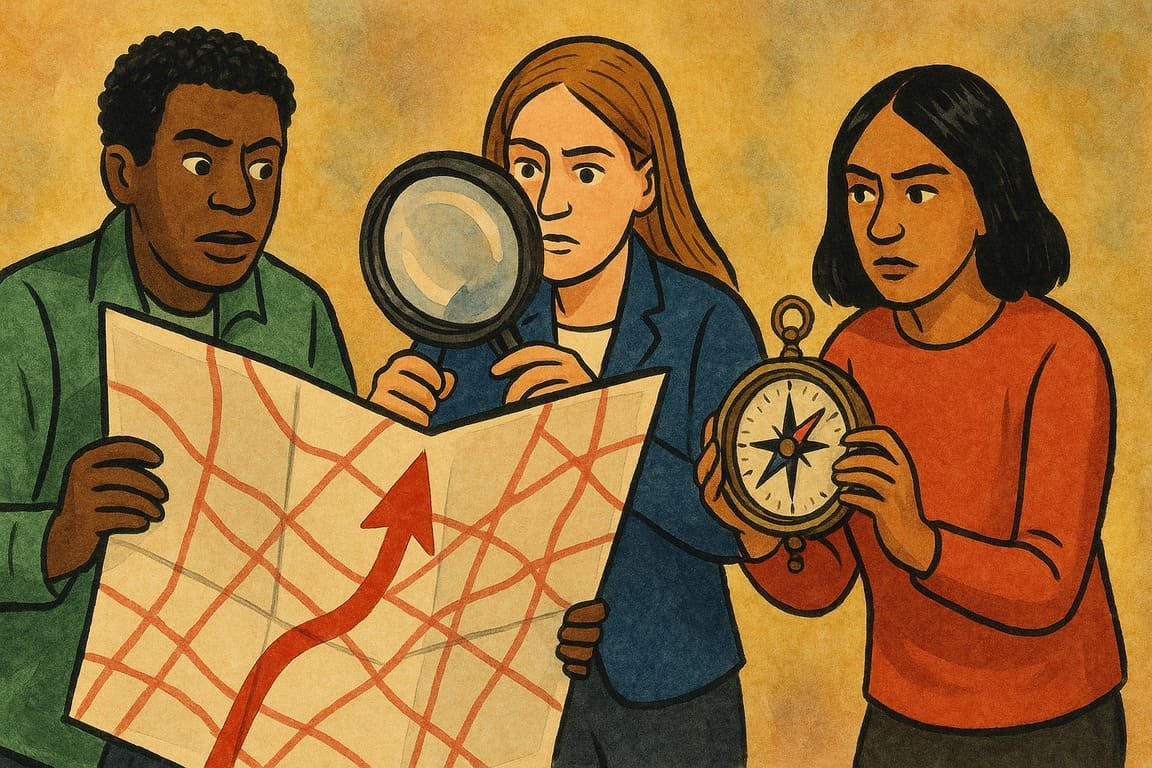
An old city library stands silent at midnight, rain ticking on stained-glass windows, dust rising in lazy columns under flickering lamps. Tucked between sagging shelves, a lone researcher arranges stacks of case files, maps, and dog-eared journals into a kind of mosaic. Every item carries a story, a question, a buried risk. The scene crackles with the thrill of the unknown—a labyrinth waiting to be solved. Navigating research, like charting hidden catacombs, demands patience, boldness, and a nose for what most people overlook. Tonight, the difference between failure and discovery hinges on the next move.
You, too, face these crossroads. Research isn’t just about data collection—it’s a test of your instincts, your ethics, your creativity. The journey starts with a compass: clear goals. Ask yourself, why does this question matter? Legendary ad agency Wieden+Kennedy once turned down a flashy project because it didn’t fit their guiding purpose. That refusal, rooted in clarity, led them to the “Just Do It” campaign—work that changed advertising forever. When you know your destination, you travel with less baggage and more impact.
Preparation is your secret weapon. Imagine an urban planner tasked with fixing congestion. Rather than launching a massive survey, she spends days observing intersections, listening to commuters, and collecting street-level wisdom. The field notes sharpen her strategy, giving her a head start before a single formal interview. In research, sometimes the best discoveries happen before the first form is filled.
Tools are only as good as the hands that wield them. Many organizations shell out for pricey analytics software, only to end up lost in dashboards. A sharp mind trumps expensive gadgets. Steve Jobs, during Apple’s rebirth, was notorious for insisting on pencil-and-paper mockups before any code was written. This low-tech approach forced teams to distill ideas to their core. Mastery comes not from tech, but from knowing when to use it—and when to step away.
Pro-level navigation thrives on curiosity. The world’s best researchers act more like investigative journalists than statisticians. Probing, doubting, verifying—never settling for the obvious answer. Consider the Pulitzer-winning team at the Boston Globe who cracked the clergy abuse scandal. Their dogged pursuit of paper trails, hidden sources, and overlooked evidence changed lives. In research, what you find often depends on what you’re willing to question.
Ethics are the map and compass rolled into one. The fastest route isn’t always the right one. Pharmaceutical giant Johnson & Johnson weathered public storms by choosing transparency and patient-first research, even when easier shortcuts beckoned. The result? Trust, loyalty, and enduring market strength. If you cut corners, you’ll lose more than data—you’ll lose your way.
Collaboration is where blind spots vanish. Solitary geniuses are rare. Most breakthroughs are group efforts. IDEO’s famed design teams start every project with brainstorming rituals, forcing every member to voice their wildest ideas. It’s the clash of perspectives that sparks real progress. When navigating tricky terrain, invite as many navigators as possible.
Failure, when handled right, is a secret map. Airbnb’s founders flopped with cereal box side hustles before cracking the code on short-term rentals. They learned more from their misfires than their wins. In research, wrong turns can light the path to the truth, if you have the humility to retrace your steps and the nerve to try again.
Details matter. A misplaced decimal toppled one bank’s quarterly earnings. A misread memo ended a mayor’s re-election hopes. The best researchers are obsessive, double-checking references, dates, and facts. Starbucks built a global empire not just on coffee, but by measuring everything from store traffic to bathroom breaks. Excellence is in the margins.
Timing, too, shapes every discovery. In the pandemic’s first weeks, nimble research teams at logistics firms pivoted daily—surveying, mapping, and adapting routes as border rules changed overnight. The winners weren’t the ones with the most data, but those who responded the fastest to new information. In research, speed and accuracy are twin engines.
The world’s great researchers are also great storytellers. Nobel laureate Malala Yousafzai turned her personal journey into a data-driven campaign for education. She moved policymakers not with raw statistics, but with narratives grounded in lived experience and bulletproof research. To ace research, master the art of making data sing.
You’ll never have every answer. There’s always a gap, a risk, a chance of being wrong. True pros don’t let this stop them. They cultivate resilience, knowing the map is never finished. The journey matters as much as the destination. Every obstacle, every dead end, is a clue that gets you closer to the heart of the puzzle.
In the dim hush of morning, the researcher gathers notes and snaps the lamp off. The library empties, shelves whispering with the ghosts of questions both solved and unsolved. The city outside stirs, never knowing the silent maps being drawn inside its walls.
No research ends. Every answer uncovers another riddle, another twist, another territory to chart. Those who dare to keep searching, keep learning, keep doubting—these are the navigators who shape the world.
You’re at the crossroads now. Which question will you chase into the unknown?
