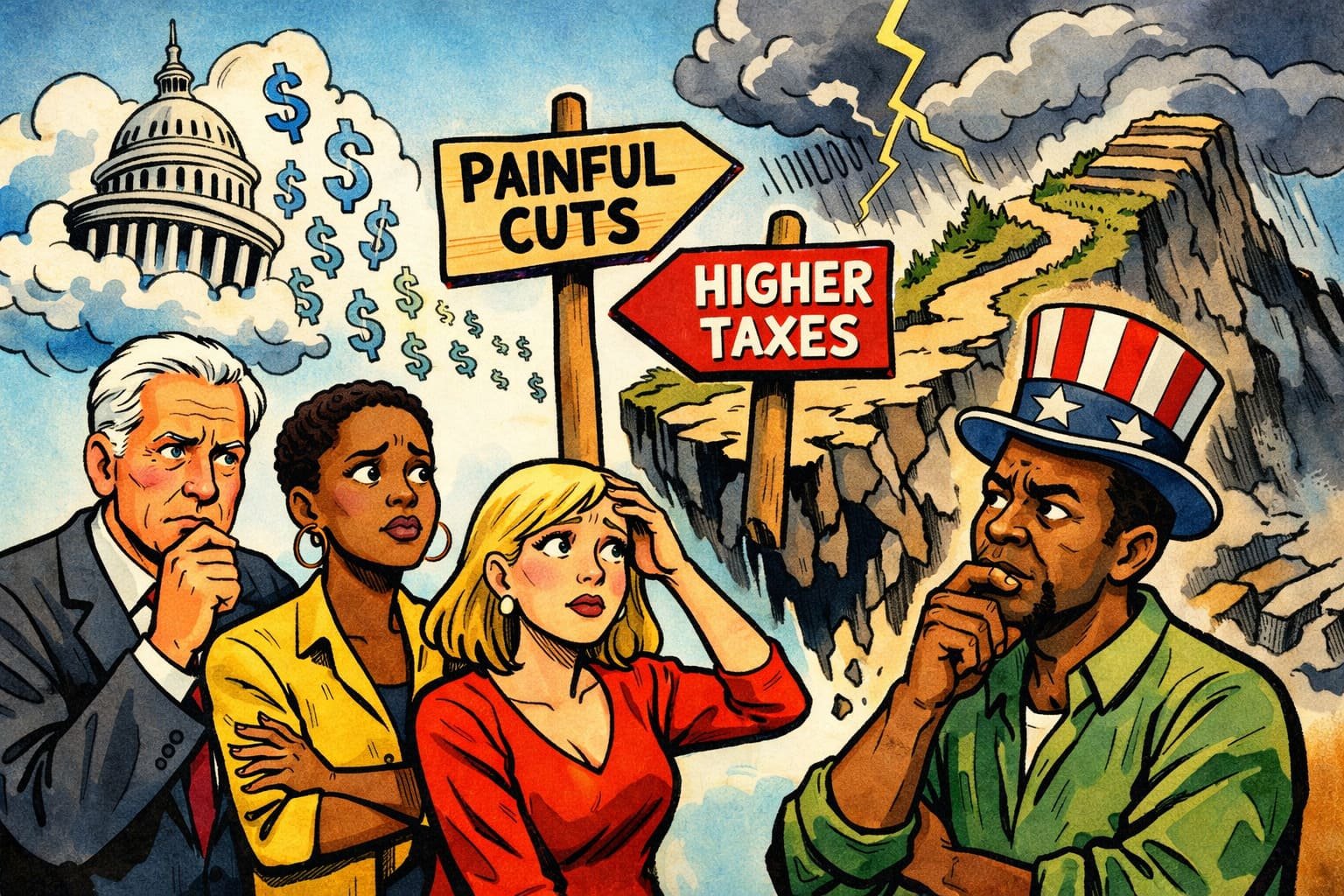
Every era invents its preferred fiscal illusion. One decade believes debt is harmless because rates are low. Another believes growth will outrun every promise. Another trusts windfalls, one-off taxes, privatization receipts, or emergency justifications. The costumes change. The impulse does not. Societies love the dream that someone, somewhere, has found a way to fund ambition without sacrifice. That dream can survive for years. Then reality starts turning off the lights one switch at a time.
Hard choices do not loom because leaders suddenly become less compassionate. They loom because governments keep promising on several timelines at once. Immediate relief. Long-term investment. Aging support. Security. Climate adaptation. Lower taxes. Better services. Stronger resilience. The public is told these goals harmonize. Sometimes they can. Often they collide. What dies first in that collision is not policy. It is illusion. The illusion that all priorities can live at full strength under finite fiscal space.
The IMF’s framework remains useful here because it strips romance from the debate. Fiscal space is not a mood. It is room to spend or cut taxes without endangering sustainability or market access. Once that room narrows, governments face the adult part of politics. They must rank goods that all have moral claims. They must tell voters that wanting something is not the same as financing it. They must decide what matters most before markets or crises do the deciding for them.
This is where many democracies become theatrically evasive. Leaders announce reviews instead of priorities. They promise efficiency instead of describing cuts. They praise fairness while refusing to specify who will pay more. They speak the language of transformation while using tomorrow’s balance sheet as a hiding place. It is understandable. Hard choices are politically ugly. Still, delay does not remove them. Delay merely changes who makes them and under what pressure.
A cabinet room under strain tells the real story. Health wants protection. Education argues for future productivity. Defense invokes danger. Infrastructure points to decay. Municipal leaders warn of service collapse. Tax authorities admit compliance gaps. The debt office watches refinancing conditions darken. None of these actors is entirely wrong. That is why fiscal decisions can feel less like choosing between good and bad and more like choosing which form of damage a society can bear.
The countries that perform best under pressure are rarely the ones with the loudest ideology. They are the ones with stronger institutions, clearer communication, and greater willingness to tell the truth before panic demands it. Public trust helps. Transparent budgeting helps. Credible tax systems help. So does saving windfalls in better times, as Norway’s oil fund model has shown in its own resource context. The common thread is discipline before drama.
Fiscal illusions die especially fast when markets step closer. The Bank of England’s emergency gilt purchases in 2022 and recent BIS observations about sovereign bond volatility both remind governments that financing conditions do not remain friendly just because a cabinet insists on optimism. A rich state can still be confronted by market stress. A developing one can face it even sooner. There is nothing ideological about refinancing pressure. It is just the bill learning how to speak.
A regional governor once tried to preserve everything at once. Subsidies stayed. payroll stayed. capital projects stayed. tax relief stayed. The rhetoric sounded inclusive. The budget became brittle. When revenue cooled, the government cut maintenance first because broken asphalt protests softly. A year later, buses broke down, schools leaked, and emergency repairs cost more than the original maintenance plan. That is how illusions die in public life, not in grand collapse, but in a thousand shabby compromises that citizens feel in their bones.
There is a strange cruelty in fiscal illusion because it often uses empathy as camouflage. The promise is always that pain can be postponed, someone else can pay, growth will rescue the ledger, or administrative magic will somehow close the gap. The public hears care. The future receives confusion. Real compassion does not lie about cost. It faces cost and asks how burdens can be shared with dignity rather than denied until the weakest absorb them by surprise.
A mature fiscal culture is not one that cuts for the thrill of severity. It is one that knows trade-offs are inevitable and therefore handles them with clarity, fairness, and sequence. It taxes with legitimacy. It borrows with purpose. It spends with evidence. It saves in better years. It does not allow every emergency, boom, or election to rewrite the state’s permanent obligations. That kind of discipline is not glamorous. Neither is a well-built foundation. Both matter most when the weather turns.
The hardest part is emotional, not technical. Citizens want to believe their society can have safety, prosperity, fairness, resilience, and lower burdens all at once. Leaders want to believe they can offer this without losing office. Experts want to believe better modeling can soften the conflict. Sometimes it can. Often it cannot. Fiscal life is where human desire collides with limited means and still has to choose a path without losing its soul.
In the quietest hour of budget season, after the speeches have faded and the spreadsheets stop flattering anyone, the state is revealed for what it really is: a machine for turning collective values into funded priorities. Not all values fit. Not all priorities survive. That is painful. It is also honest. Illusion feels generous until the day it breaks. Truth feels harsh until the day it saves a country from its own performance.
Somewhere, a leader is still looking for one more phrase that can postpone the reckoning. The wiser ones know the reckoning is not the enemy. It is the beginning of seriousness. Hard choices loom because fantasy has reached its credit limit. Once the illusion dies, a society gets one precious chance to discover what it truly values. The only question left is whether it will choose with courage, or wait for the numbers to choose for it.
