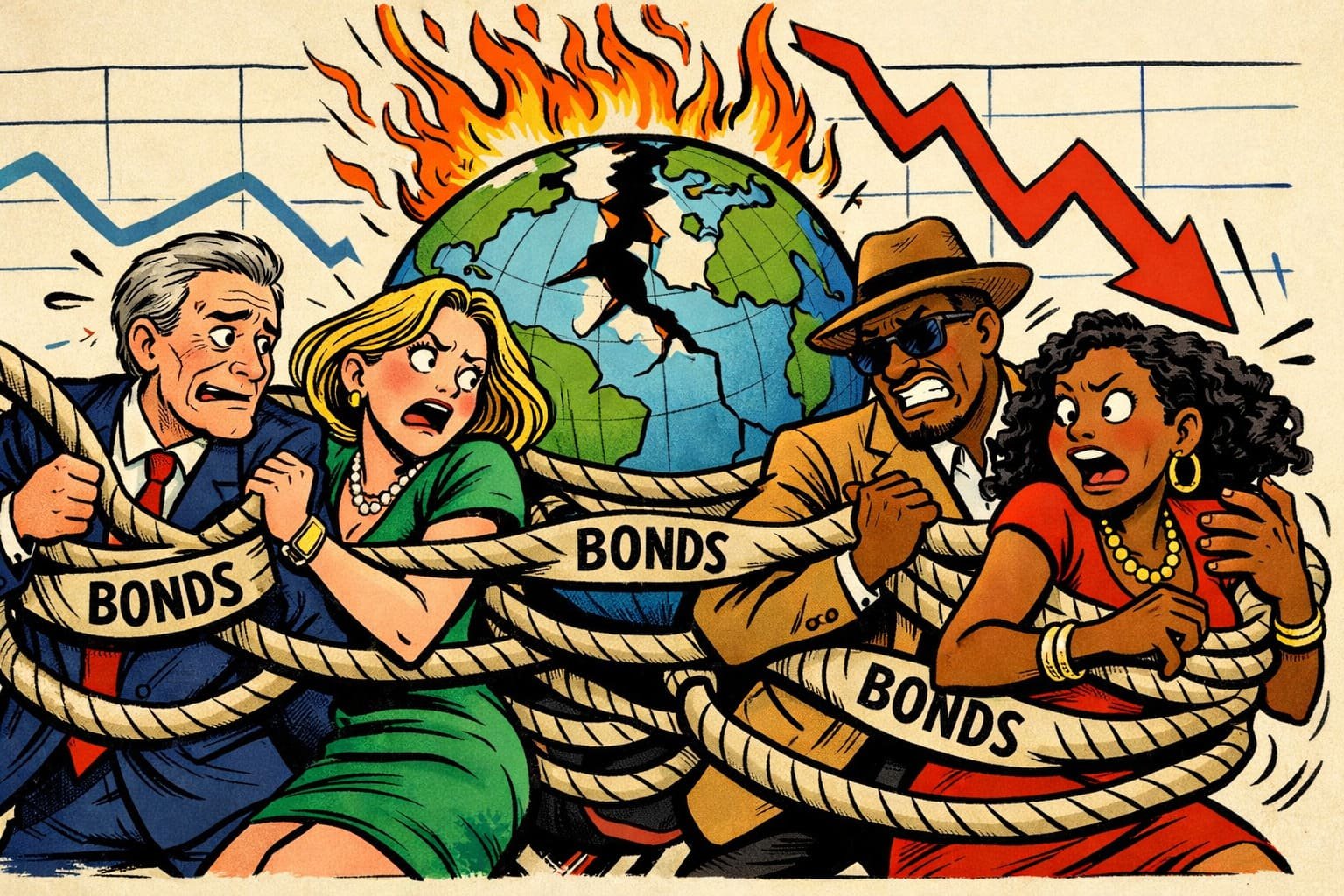
For years, sovereign debt was treated in many capitals like wallpaper. Always there, rarely examined, part of the background hum of modern government. Ministries issued bonds, central banks absorbed shocks, and investors kept showing up. The ritual became so familiar that many leaders began to mistake repetition for safety. Then the old beast stirred. Sovereign risk, written off by some as a relic from other crises and other continents, began growling again.
Bond markets are not sentimental places. They do not clap for campaign slogans or salute ministerial confidence. They watch fiscal plans, refinancing needs, inflation, politics, institutional strength, and the plausibility of future taxes. When all of that feels coherent, yields behave. When it does not, the market tone changes fast. A snarl in sovereign finance is not always a full panic. It can start as a widening spread, a failed auction, a nervous currency move, or a sudden need for official reassurance. Yet those small signals often carry a brutal message: trust is now expensive.
The United Kingdom’s gilt turmoil in late 2022 became one of the clearest reminders in the developed world that government debt markets can punish policy inconsistency with astonishing speed. The Bank of England announced temporary and targeted purchases of long-dated gilts to restore orderly market conditions. That was not theater. It was emergency plumbing in one of the world’s most watched financial systems. When a rich country with deep markets faces that kind of intervention, everyone else receives the memo.
Sovereign risk is often discussed as if it belongs only to chronic defaulters or politically unstable states. That view is lazy. Risk returns whenever governments rely on the market’s patience more than on their own credibility. A country does not need to be Argentina to face a market tantrum. It only needs a mismatch between promise, funding, timing, and institutional confidence. Rich countries are not immune. They simply tend to be shocked when the mirror talks back.
The interesting part is how sovereign stress changes politics even before any default drama appears. When yields rise, budget options narrow. Debt service starts crowding out ordinary ambitions. Cabinet debates lose their theatrical optimism. Programs once marketed as untouchable become negotiable. Local governments feel the squeeze. Businesses start facing higher benchmark rates. Households hear about abstract market pressure and then meet it in mortgages, weaker public services, or delayed investment. Sovereign risk sounds distant until it moves into the kitchen.
A finance minister in a mid-sized economy might still give a brave speech about national resilience while watching auction coverage ratios at midnight. That private anxiety matters. Markets force honesty on those who would rather perform certainty. Investors do not need to predict collapse. They only need to suspect slippage. Once that suspicion hardens, a government can spend months clawing back trust that disappeared in a week. Reputation in sovereign finance behaves like glass. Strong until it is not, then expensive to piece together.
Recent BIS commentary has noted renewed sovereign bond volatility and wider yield differentials in some markets amid geopolitical strain and anticipated fiscal implications. The key point is not that every jump in volatility signals disaster. It is that the era of effortless absorption looks less secure. Governments now operate in a world where debt supply, political shock, conflict, and higher real rates can interact in ugly ways. Bond markets are no longer background music. They are part of the plot.
That matters because the standard political reflex is denial. Officials like to say fundamentals remain strong. Perhaps they do. Yet sovereign risk is rarely about one number. It is about the story connecting many numbers. Investors ask whether a country can make hard choices, collect revenue fairly, protect central bank credibility, and maintain social consent when sacrifices arrive. A government can possess solid assets and still look dangerous if its politics appear allergic to restraint.
There is a moral dimension here that often gets skipped. Sovereign credibility is not only for bondholders. It is a public good for citizens. Stable borrowing conditions protect the space for schools, hospitals, social insurance, and crisis response. When leaders gamble carelessly with credibility, they are not merely upsetting traders in expensive shoes. They are shrinking future policy freedom for everyone who depends on the state to function without drama.
The countries that manage sovereign risk best do something almost unfashionable. They cultivate boredom. Predictable budget frameworks. Clear communication. Credible institutions. Tax systems that work even when commodity prices do not. Debt strategies that assume markets can turn cold. Boring is underrated in public finance. Boring keeps ambulances running and payrolls funded while louder governments are still writing angry press releases about unfair markets.
Some politicians crave the glamour of defiance. They speak as though challenging investor concern proves courage. That can work for a news cycle. It does not refinance maturities. It does not compress spreads. It does not calm pension funds. Bond markets have a harsh sense of humor. They let leaders feel rebellious right up until the refinancing window narrows and rebellion becomes begging.
In the end, sovereign risk returns like an old creditor with perfect memory and terrible manners. It does not knock politely. It sniffs out weakness, hypocrisy, and delay. In the glass towers where debt is priced, and in the quieter homes where that pricing becomes lived reality, the same truth keeps surfacing: states are trusted until they are tested. Then the market asks the question every government hates most, and it asks it with teeth, what are your promises actually worth?
