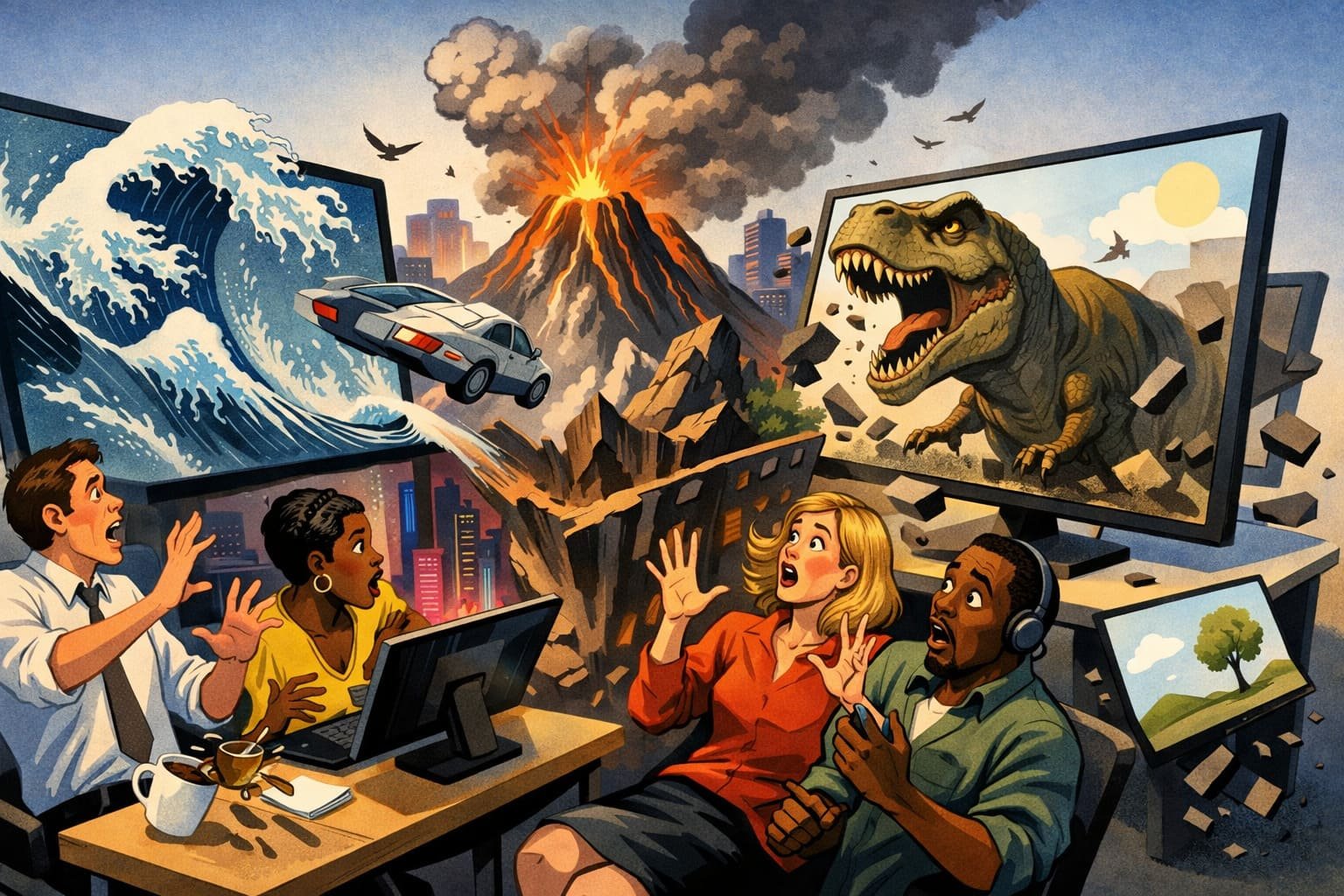
A design studio sat lit by the pale glow of prototype displays, and nothing on the walls looked especially dramatic. Then the screen changed shape. Depth appeared where only flatness used to live. A hand reached toward the image, and the image seemed to lean back. That tiny moment carried more cultural weight than most launch events ever admit. The rectangle had begun to misbehave.
The Glass Starts Breathing
For years, digital life was politely boxed in. Phones, laptops, tablets, monitors. Human attention learned to obey edges. Every experience was compressed into a pane of glass that flattened the world into rows, cards, feeds, and tabs. The arrangement worked, but it also trained people to think in squares. Commerce, communication, entertainment, and work all inherited the same rigid frame.
Now that frame is cracking. Spatial computing, augmented reality, mixed reality, and immersive interfaces are pushing design beyond the old rectangle. Screens are no longer content to sit still. They are becoming environments, surfaces, rooms, and moving layers of context. The shift is technical, but the emotional effect is stranger. Technology no longer feels like a window. It starts to feel like weather.
The cultural meaning is bigger than gadgetry. Flat worlds create flat thinking. When the screen moves, the imagination has room to stand up.
The Rectangle Had Its Era
The flat screen was not a mistake. It was an achievement. It made software legible, scalable, and affordable. It gave the digital economy a universal interface. It let billions of people learn the same visual grammar with almost no training. That made it one of the most successful design conventions in modern history.
But success can harden into habit. Once the interface became standard, it also became invisible. People stopped noticing how much life was being compressed to fit a rectangle. Meetings, school, shopping, art, medicine, and relationships all had to pass through narrow visual lanes. The world got bigger, but the screen stayed the same size.
A product manager named Ilyas once described a customer research session where people kept reaching around a prototype as if the information lived outside the frame. They were not confused. They were revealing a need. The flat interface had trained them to look at things, not inside them. The next generation of interfaces will probably reward that instinct. They will let users step through data rather than stare at it.
That is why the transition matters. The old screen was a container. The new one is becoming a place. That changes how people navigate information, but it also changes how they feel while navigating it. Distance shrinks. Presence grows.
Spatial Computing Is Not A Gimmick
Immersive technology has often been treated like a carnival ride. Too much hype. Too many demos. Too many promises about the future that never quite arrived. That skepticism is healthy. Most new platforms oversell themselves before they earn trust. But spatial computing is different because it solves a problem the flat screen never could.
A designer named Talia worked on a training system for technicians who serviced complex industrial equipment. Traditional manuals were clumsy. Videos helped a little. The immersive version placed instructions directly over the machine itself. The technician did not need to mentally translate diagrams into physical action. The information lived where the work happened. Mistakes dropped. Confidence rose. Learning became tactile.
This is where the conversation gets serious. Spatial interfaces are not valuable because they look futuristic. They are valuable because they reduce translation loss. Humans think in space. Hands, eyes, balance, and memory all work together in physical environments. When a digital system respects that, the result feels less like software and more like competence.
That has enormous implications for healthcare, education, manufacturing, architecture, retail, design, and entertainment. It also explains why people are suddenly asking very old questions in new language. What if the interface itself is part of the task? What if the screen was always the bottleneck?
When The World Becomes The Interface
The most radical change is not that devices will disappear. It is that the world itself will start carrying information. Walls can respond. Glass can guide. Product packaging can move. Rooms can adapt. Objects can speak without needing a glowing rectangle between them and the person holding them.
A retail brand named Noor once tested a spatial shopping experience for furniture buyers. Instead of scrolling through endless images, customers placed virtual pieces inside their own living rooms. They could walk around the chair, see how the table fit, and sense the scale in a way that static images never offered. Return anxiety fell. Confidence rose. The purchase felt less speculative and more real.
That is the quiet revolution. Spatial technology lowers the gap between imagination and reality. The old screen forced people to guess. The new one helps them inhabit decisions before making them. For businesses, that means stronger conversion, better training, richer collaboration, and fewer expensive misunderstandings. For people, it means less friction and more intuition.
It also creates a deeper cultural shift. When the interface becomes environmental, attention becomes less trapped. People stop hunting for the app and start encountering information in context. The flat world gives way to a layered one. And layered worlds are harder to fake.
The New Literacy
Every interface era creates a new kind of literacy. The keyboard taught typing. The touchscreen taught tapping. The app ecosystem taught swiping, searching, and managing endless choices. Spatial computing will teach a more physical form of digital fluency.
That fluency will matter. People will need to understand how to place objects, navigate three-dimensional layouts, interpret persistent overlays, and move naturally between physical and digital contexts. Designers will need to think less like screen decorators and more like architects of behavior. Businesses will need to ask not only what users see, but where they stand when they see it.
A teacher named Renata once piloted an immersive lesson for students who struggled with abstract science concepts. When the solar system became something students could walk through, the room changed. The quiet students leaned forward. The restless ones settled. The topic stopped being information and started becoming memory. That is the power of moving interfaces. They do not just inform. They lodge inside the body.
The deeper truth is blunt. The flat world was efficient, but efficiency was never the same as understanding. The future belongs to systems that can teach through presence, not just display.
The Edge Of The Frame
A dark monitor sits on a desk after the room clears out. It still works. It still glows when touched. Yet the atmosphere around it has changed. The device no longer feels like the center of the room. It feels like one instrument among many. Nearby, a headset rests beside a table lamp, and a room sensor quietly adjusts the light. The world has started to participate.
That shift will not erase the old screen overnight. Flat interfaces will remain useful for many tasks. But their monopoly is ending. The next era of digital design is moving toward environments that are responsive, layered, and alive. Screens are learning to move because life never stood still in the first place.
The companies that understand this will build more than products. They will build experiences that people can enter, trust, and remember. The others will keep polishing rectangles and wondering why the future keeps slipping past them.
