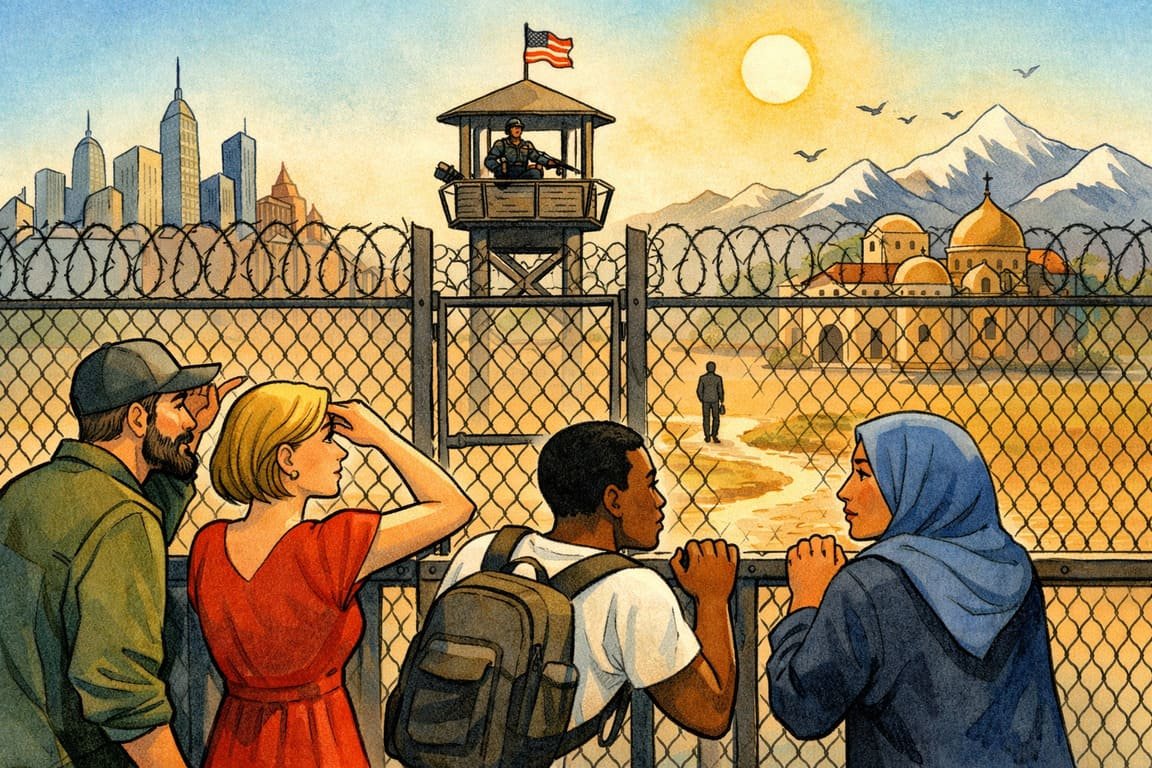
The line is thin, almost unimpressive. No drama announces it. No anthem plays. It exists because someone, long ago, understood that without definition, obligation dissolves. People approach it with documents, desperation, confidence, or silence. Every crossing carries a story, yet the line itself remains indifferent. Borders are not emotional by nature. The emotions arrive when they fail.
The modern argument treats borders as moral tests rather than functional tools. Open them fully and claim compassion. Fortify them and claim safety. This framing flatters conviction while avoiding responsibility. A border that works well does not posture. It organizes. It clarifies who owes what to whom, and under which rules. Without that clarity, even generosity loses coherence.
States exist because responsibility must be finite to be meaningful. Schools, hospitals, labor markets, and welfare systems rely on populations that can be counted and planned for. When that boundary dissolves, trust erodes. Citizens stop debating policy and start questioning legitimacy. Migrants absorb the fallout first, caught between promises and capacity.
History shows that societies with clear boundaries argue less about belonging. When membership is defined, conflict shifts toward policy rather than identity. Ambiguity breeds resentment on all sides. Those inside fear dilution. Those outside feel teased by access that never fully arrives. Weak borders do not remove tension. They multiply it.
The language surrounding borders collapses too easily into extremes. Walls versus welcome. Humanity versus control. Reality sits elsewhere. Borders are systems, not slogans. When managed seriously, they channel movement legally and predictably. When neglected, they invite exploitation, chaos, and political theater that benefits no one.
Economics exposes the cost of pretending borders do not matter. Labor markets distort. Informal work expands. Wages compress at the margins. Public services strain without planning. The result is not solidarity. It is quiet competition between the vulnerable, overseen by leaders who promised openness without preparation.
There is also a moral hazard in signaling access without integration. When wealthy nations advertise refuge without investing in absorption, they outsource suffering to migrants themselves. People arrive into systems unable or unwilling to receive them fully. Exploitation thrives in the gaps. Freedom promised without structure becomes precarity delivered.
Culturally, borders protect something fragile and often misunderstood. Shared norms do not enforce themselves. They are taught, negotiated, and renewed over time. Rapid, unmanaged change strains that process. Integration succeeds when it is paced, reciprocal, and resourced. Borders buy time for that work. They slow the rush so cohesion has room to form.
Critics often conflate borders with hostility. Yet the most generous social systems on earth rely on firm boundaries. Solidarity scales within limits. People support redistribution when they believe membership is defined and rules apply equally. When that belief weakens, generosity retracts. Ironically, weak borders erode the compassion they aim to express.
Philosophically, borders acknowledge an uncomfortable truth. The world is unequal, and no single system can instantly absorb that inequality. Pretending otherwise does not equalize opportunity. It disorganizes it. Responsibility without limits collapses under its own weight. Freedom requires form.
The most stable societies treat borders as living systems rather than moral symbols. They invest in fair enforcement, legal pathways, and integration capacity. Rules are communicated clearly and applied consistently. This approach lacks drama. It does not satisfy culture wars. It works anyway.
Late evenings at border crossings reveal the reality hidden by rhetoric. Officials process paperwork. Families wait with restrained hope. Decisions shape lives quietly, without speeches or applause. When systems function well, suffering decreases in ways no headline captures.
This is not an argument for fear or exclusion. It is an argument for seriousness. Nations that refuse to define themselves invite others to do it for them, often harshly. Borders, thoughtfully designed, are not cages. They are commitments about order, belonging, and mutual obligation.
And as debates harden and slogans grow louder, the unresolved question remains for any society that values both compassion and stability: without fences to hold freedom in place, what exactly is being protected at all?
