The apartment was quiet in a way that felt unnatural. Outside, a city built on motion stood still, traffic lights blinking for nobody, storefronts dark behind glass layered with handwritten signs. Inside, a woman sat at a kitchen table turned command center, laptop open, government briefing muted, waiting for the next instruction that would decide how much of her life remained negotiable. Power did not knock. It settled in, politely, while fear kept the door open.
The pandemic was introduced as a medical emergency, but it quickly revealed itself as something else entirely. It became a referendum on authority, obedience, and trust. The virus was real. The danger undeniable. Yet the response exposed how easily modern societies reorganize themselves when uncertainty enters the bloodstream. Rules multiplied faster than explanations. Decisions traveled downward while accountability drifted upward and out of reach.
At first, the exchange felt reasonable. Safety in return for compliance. Certainty in return for patience. Populations accustomed to convenience accepted disruption with surprising grace. Borders closed. Movement paused. Surveillance expanded under the banner of care. Many welcomed the clarity. In moments of fear, decisiveness feels like leadership. What few noticed was how quickly temporary measures began to behave like permanent tools.
Governments discovered something profound. People will accept extraordinary control if the threat feels invisible and personal. Emergency powers bypassed debate. Oversight softened. Language shifted. Mandates replaced recommendations. Questioning intent became synonymous with irresponsibility. The state did not seize power aggressively. It was offered willingly, handed over in increments that felt too small to refuse.
Technology companies stepped into the vacuum effortlessly. Health passes turned smartphones into permission slips. Platforms decided which voices calmed panic and which risked destabilization. These decisions were framed as neutral, scientific, protective. Yet neutrality dissolves when code governs speech. Corporations became arbiters of legitimacy without election, appealing to safety while reshaping public discourse more effectively than any ministry ever could.
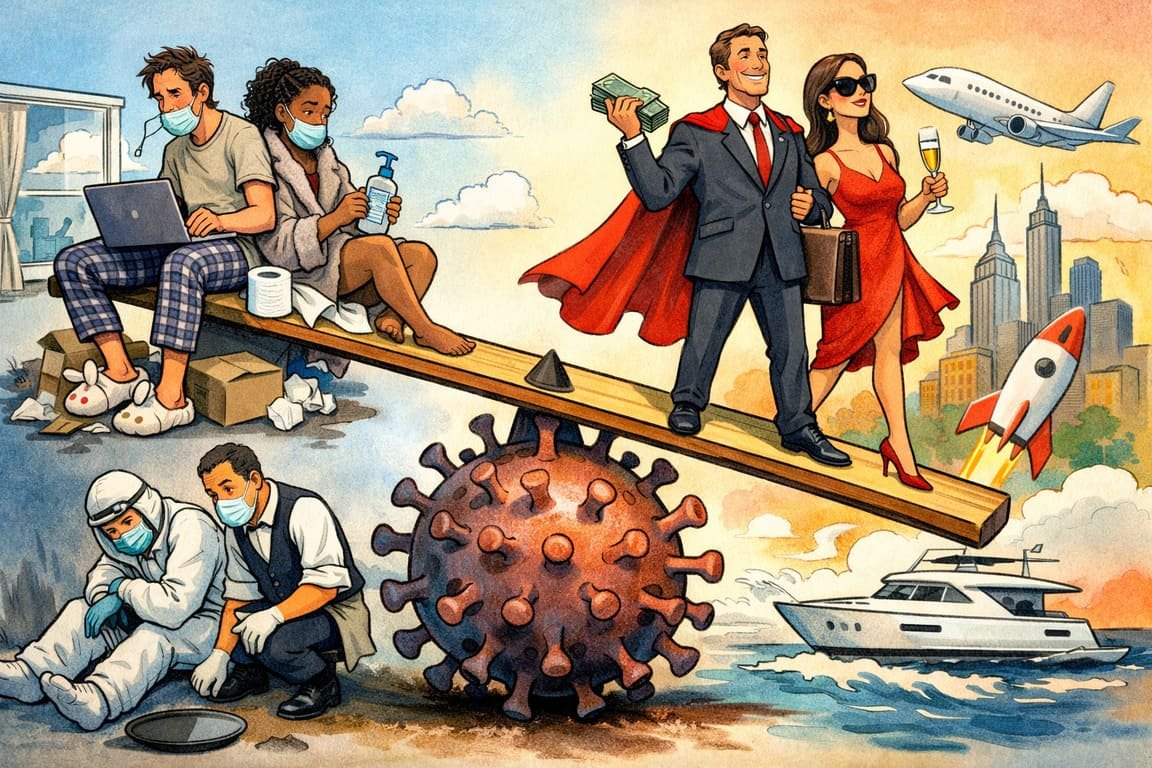
Economic consequences followed familiar fault lines. Global corporations expanded while small businesses suffocated. A café closed while an online marketplace surged. Essential workers were praised publicly and neglected structurally. Remote professionals stayed afloat while entire service sectors collapsed. Inequality did not merely widen. It hardened, justified by necessity rather than choice.
Culturally, something quieter fractured. Social trust thinned. Neighbors monitored neighbors. Compliance became moral currency. A teacher hesitated before answering a student honestly. A friend stopped visiting an aging parent, not from law, but from fear of judgment. These moments rarely entered policy discussions, yet they reshaped daily life more deeply than any regulation.
Science achieved miracles and suffered wounds simultaneously. Collaboration accelerated discovery. Solutions arrived with historic speed. Yet certainty replaced humility too often. Dissent was framed as danger rather than inquiry. When questions disappear, trust follows. Science thrives on challenge. Treating disagreement as disobedience left scars still visible in public confidence.
A small shop owner named Elena felt the shift viscerally. At first, she believed fully. Rules meant protection. Weeks passed. Then months. Relief promised but delayed. Inspections increased. Explanations thinned. Her compliance remained. Her faith did not. By the time restrictions eased, something inside had already changed. She followed rules, but no longer believed stories.
Philosophically, the pandemic forced an old question into the open. How much freedom should be surrendered for collective safety, and who decides when the trade expires. Democracies answered unevenly. Some leaned into authority. Others fractured into resistance. What emerged was not consensus, but exposure of underlying values long buried beneath routine.
Those who “won” gained reach, influence, and precedent. States expanded authority. Corporations deepened integration into civic life. Tools built for crisis waited patiently for reuse. Those who “lost” were harder to quantify. Autonomy eroded. Trust fractured. Habits of questioning dulled. Loss arrived quietly, without a single dramatic moment to resist.
History will argue over effectiveness, statistics, and outcomes. Yet memory lingers elsewhere. People remember how fast rules changed. How unevenly pain landed. How easily fear justified silence. Memory is not power, but it is dangerous to those who rely on amnesia.
Somewhere tonight, another room glows with screens and charts, another decision framed as urgent and reasonable waits to be approved, and the real struggle continues quietly in the space where citizens must decide whether safety purchased through surrender ever truly belongs to them at all.
