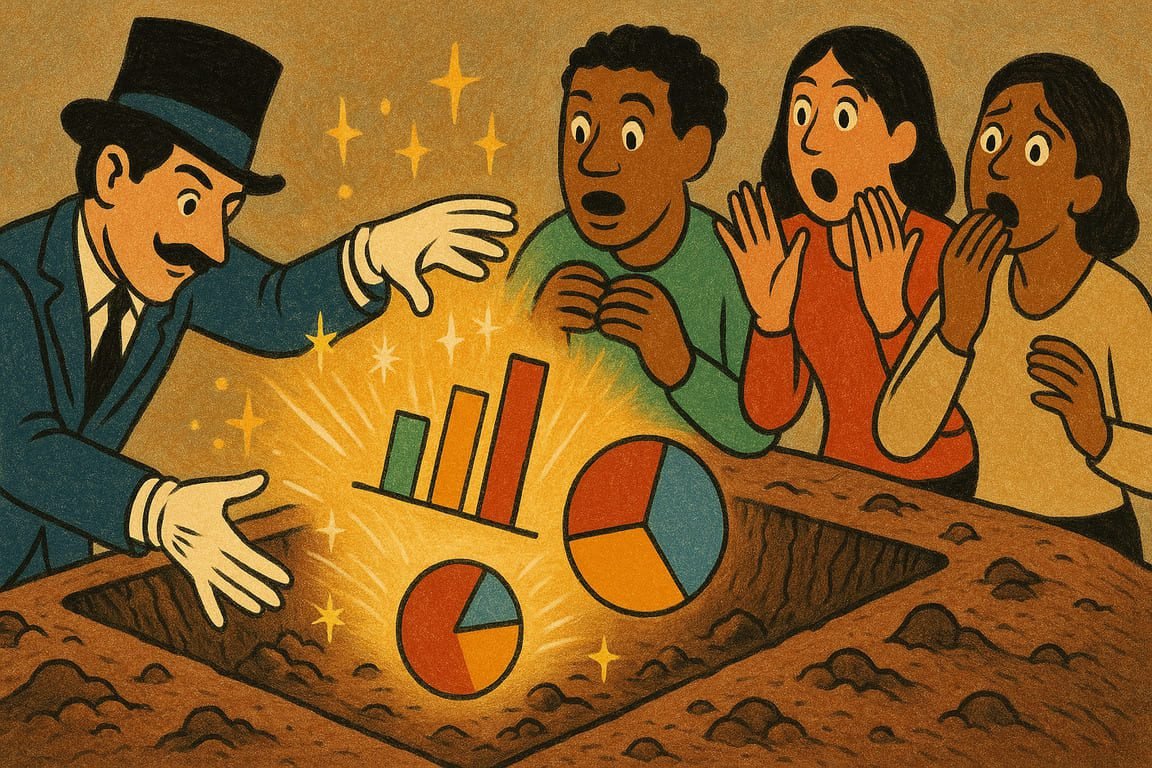
A rusted ceiling fan spins lazily over a midnight brainstorming session. Four analysts huddle around a battered table, stacks of charts fanned out like tarot cards. The air hums with tension. Outside, city lights flicker in code. Somewhere between the columns and rows, something human is happening—a pulse beneath the numbers, an intuition that statistics alone will never reveal. Here, the magic isn’t in the data, but in the hands and hearts that dare to translate it.
You’ve seen it happen: someone waves a printout, convinced the answer is on page seven. But raw data rarely speaks for itself. The real breakthroughs come when someone senses what the numbers almost say. It’s the manager who sees the pattern in late-night sales and shifts store hours, doubling profits. No algorithm could have guessed the power of an old-fashioned gut feeling paired with a spreadsheet.
There’s a myth that big data kills instinct. The truth is more complicated. When the numbers whisper, it takes human ears to listen closely, to hear what’s hidden between the lines. Walmart famously caught on to increased Pop-Tart sales before hurricanes, not by accident, but by having people curious enough to ask “what if?” and bold enough to trust the answer.
Human touch gives context. During a pandemic, dashboards flooded with infection rates and projections. But it was a nurse’s voice on a video call, explaining what those numbers meant for one patient’s family, that turned statistics into stories. Data can tell you what is happening. Only people can tell you why it matters.
Every organization has its “data whisperer.” This person sees not just the outliers, but the faces behind them. At a growing fintech startup, founder Tariq noticed a spike in tiny deposits. Instead of dismissing them, he reached out to customers and learned a whole community was using the platform in an unexpected way. That insight led to a product pivot, capturing a new market no competitor even noticed.
Sometimes, interpreting data means challenging it. When an energy company’s sensors predicted flawless pipeline performance, one skeptical engineer insisted on a manual inspection. His hunch uncovered a hidden leak, saving millions—and sparking a new protocol that trusted human oversight as much as artificial intelligence.
Stories emerge when data interpretation is an act of empathy. Spotify’s famous “Wrapped” feature doesn’t just present streams and minutes; it weaves a soundtrack of your year, reminding listeners that every stat represents a memory, a mood, a moment. That emotional connection is the difference between retention and churn.
Research teams know the pitfalls of bias. Human touch isn’t about ignoring facts, but about questioning them, testing their limits, and seeing the whole picture. A fictional public health analyst, Priya, noticed that survey responses from a rural village kept breaking the pattern. Instead of scrubbing the data, she visited in person and discovered a mistranslation in the survey, opening a vital new perspective on community health.
Great interpretation thrives on curiosity. When NASA’s Mars rover beamed back strange readings, it was a young technician’s “what if” that cracked the code—she realized a sensor was picking up solar flares, not mechanical failure. Her blend of technical skill and creative thinking saved a billion-dollar mission.
Human intuition, when paired with rigorous analysis, becomes unstoppable. Think of the teacher who sees not just declining test scores, but the subtle shift in a student’s energy after lunch. The solution might not be more tutoring, but a sandwich. Data highlights the problem, but people solve it.
In every field, data interpretation is a superpower—one that’s rooted in humility. It’s knowing when to trust the trend and when to investigate the anomaly. The best interpreters ask better questions, never settling for easy answers or pretty dashboards.
If you want to find magic in your own work, practice noticing. Listen to what the numbers almost say, but haven’t found the words for yet. Connect the dots, but remember every dot is a person, a story, a possibility.
A single light burns long past midnight as a weary analyst sketches connections on a fogged-up window, each line a silent promise to keep searching. The secret isn’t in the formulas—it’s in the courage to look twice, to ask again, to care about the truth hiding in plain sight.
You have a choice: treat your data as a puzzle to solve, or as a mystery to feel. Which story will you tell?
