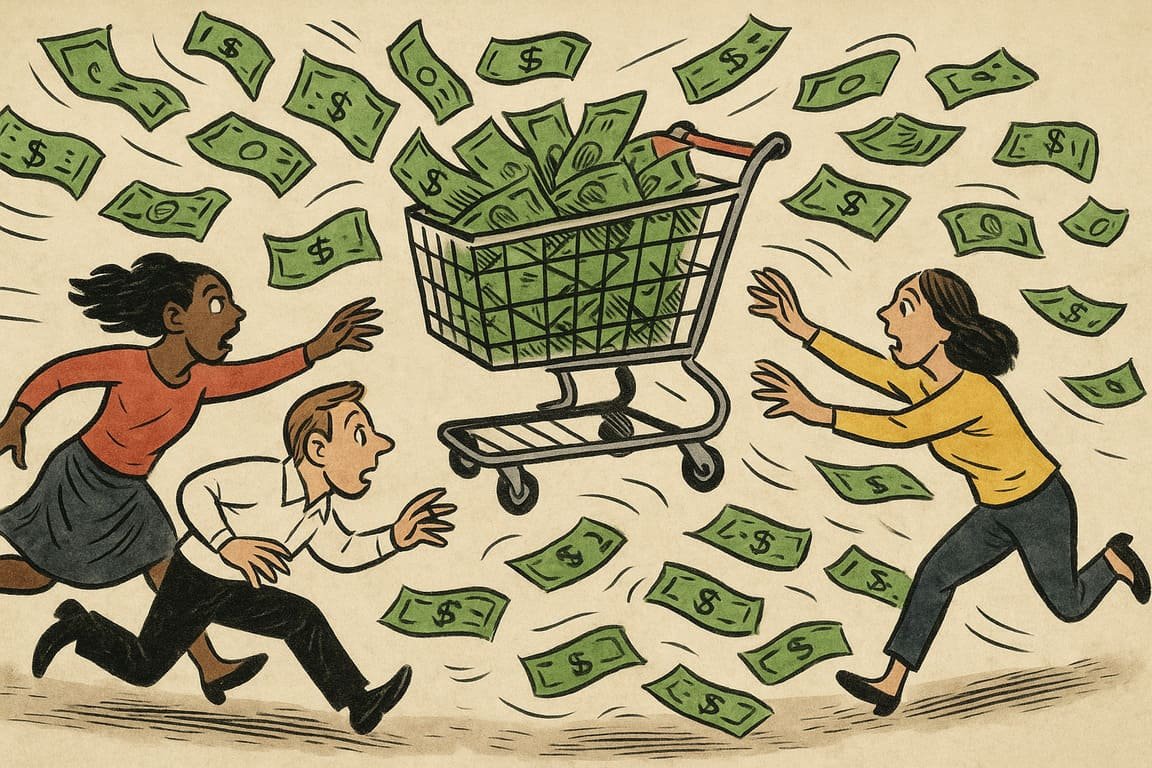
Bright lights flicker across a crowded market where anticipation thickens the air like the scent of buttered popcorn. Shoppers orbit a peculiar cart, hands stuffed with cash, feet tapping to an unspoken rhythm. Each cart isn’t just a container on wheels. It’s a stage, a character, the headline act of a feverish new spectacle where design no longer whispers from a glossy brochure—it yells, seduces, and commands. There’s chaos at the heart of this scene: a wild rush for snacks that look too good to eat, packaging so clever it might outwit its own buyer. Underneath it all, the invisible hand of design quietly rearranges fate, stacking the odds in favor of those who dare to make carts dance.
Shadows stretch across the pavement as people form lines not because they’re hungry, but because they’re hooked by something irresistible. It’s the work of a young designer named Rina who transformed a drab street cart into a kinetic sculpture. Neon edges, modular compartments, a foldout LED sign pulsing with humor—her cart becomes a selfie magnet. This is not just a place to buy food; it’s an Instagrammable oasis, an experience. The result: foot traffic doubles, rival carts shrink into the background, and a simple snack business is now a viral sensation. This is design as currency, and it’s changing everything.
You stand in the swirl, eyes darting from one cart to another, wondering why some draw crowds while others go ignored. It’s not just the product. It’s the feeling: the urge to be part of something memorable, even if only for a minute. One local vendor, Abdi, admits that since repainting his cart in wild geometric patterns, business hasn’t just improved—it’s exploded. “People take pictures. They bring their friends. I spend less on ads now,” he laughs, recounting how a viral TikTok from a tourist nearly wiped out his stock in an hour.
You start to see the pattern. A cart’s silhouette, its sound, the textures under your fingertips—these details decide whether wallets open or stay shut. When a cart glides by with speakers piping out Afrobeat rhythms and a scent cannon dispersing whiffs of fresh bread, people gather without understanding why. That is the invisible gravity of design at work, drawing in both the curious and the hungry.
Underneath the color and movement lies strategy. The smartest carts are optimized for speed and spectacle, with every inch calculated for impact. Vicky, a design consultant who helped rebrand over thirty Nairobi carts, describes her approach as “micro-theater.” Every cart gets its own backstory, a color palette with personality, and a suite of modular add-ons—think pop-out shelves, swinging condiment holders, or touchscreen menus that gamify orders. “Design is the new advertising,” she quips, “but only if you can turn heads before someone else does.”
As night falls, the true power of design reveals itself. Carts with built-in lighting draw crowds long after sunset. Parents pull their children closer, lured by soft blue glows and animations that spark wonder. It’s not about the snack. It’s about belonging to a fleeting, magical moment—one that feels exclusive, curated, almost cinematic.
Some entrepreneurs resist the craze, clinging to old, unbranded metal carts. Their lines dwindle. Their stories evaporate. In a world where experience trumps product, bland carts become invisible. The few that adapt find themselves on an upward spiral, cash boxes fuller, their names whispered on WhatsApp and Facebook groups as the place to go.
A new rivalry erupts every weekend, not over recipes but over aesthetics. The design war isn’t fought in kitchens but on sidewalks. Carts compete for the best lighting, the quirkiest logo, the most irresistible signature jingle. Young designers now moonlight as “cart stylists,” launching entire careers by making snack wagons go viral. The boundary between food and performance blurs until every purchase feels like applause.
These design-led carts spark a fresh sense of community. Local artists get hired to mural the sides, graffiti artists sign their work in secret corners, and social media influencers drop by to broadcast the spectacle. Sales soar not because of discounts but because the act of buying becomes a shared experience, a story to tell.
Every big business trend needs its skeptics. Some old-timers grumble that design is just “window dressing.” They forget that humans are visual creatures, wired to crave novelty, beauty, and a dash of spectacle. A well-designed cart becomes a local legend, a memory that lingers long after the last bite.
When you look closer, you see that design isn’t just a way to grab attention. It’s a catalyst for reinvention. Ordinary street vendors morph into micro-brands. Neighborhoods earn reputations as culinary hotspots. Money follows the action, and the action follows the cart that makes people feel alive.
A silent rain slicks the pavement as the last cart wheels away, its neon afterglow rippling through puddles. Left behind: a whisper of excitement, the echo of laughter, and a city block forever changed by something as simple as fresh paint and a clever twist of light. In this theater of commerce, design doesn’t just win hearts or profits. It rewires desire itself, offering anyone bold enough to change their story a front-row seat to a revolution that smells like bread, pulses like a festival, and leaves you wondering: are you watching history, or are you the main act?
You feel it now—the pull to create, the hunger to reinvent, the invitation to make your next move unforgettable.
Partnered. Provocative. Worth Your Scroll.
This is a Promoted Post by ESYRITE—yes, it’s paid, but never filtered. Our voice stays raw, real, and razor-sharp. We team up with bold ideas, game-changers, and stories that spark something real. If it’s here, it earned its place—no fluff, just impact. We don’t just promote—we provoke. Stay sharp. Dive deeper.
