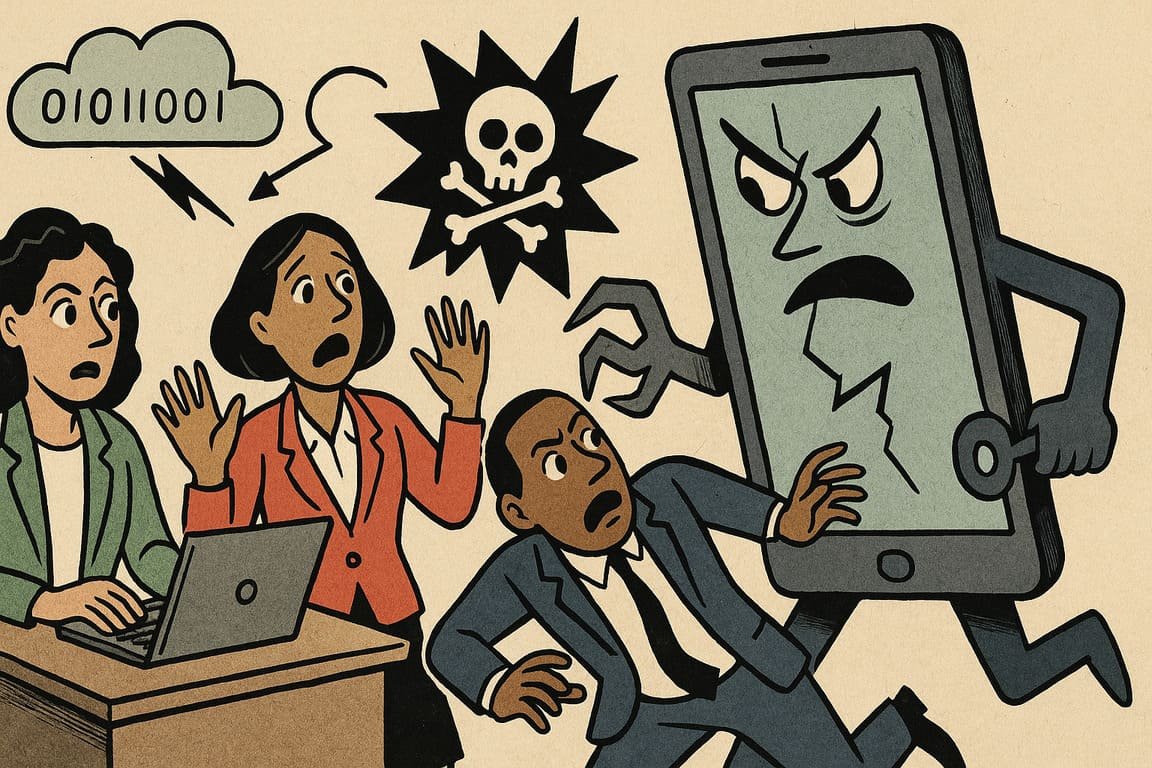
Every blinking dashboard in a silent operations center tells a story long before executives hear alarms. Screens glow with reassuring greens while unseen attackers quietly test forgotten doors, almost like thieves strolling through an unlocked museum after closing time. That contradiction has become modern business life. Technology promises speed, scale, and extraordinary opportunity, yet every new digital connection quietly introduces another path for disruption, making technology risk less about computers and more about leadership, judgment, and the hidden consequences of progress.
Many organizations still imagine cybersecurity as an IT responsibility, yet technology risk stretches far beyond malicious hackers. Poor software updates, weak governance, unreliable vendors, outdated systems, careless employees, and unmanaged artificial intelligence can interrupt operations without dramatic headlines. Maya discovered this after her growing logistics company relied on a single cloud integration that unexpectedly failed during peak deliveries. Customers remained patient, but the lesson lingered. Digital resilience is rarely tested during ordinary mornings. It reveals itself when ordinary assumptions suddenly disappear.
Business history repeatedly rewards organizations that treat risk as a design principle instead of an emergency response. Microsoft transformed security into a companywide priority after painful cyber incidents reshaped internal culture. Financial institutions routinely simulate attacks because preparation exposes weaknesses before criminals do. Meanwhile, Omar, who managed technology for a regional retailer, insisted every employee participate in simple phishing exercises despite initial complaints. Months later, a convincing fraudulent email reached finance staff. Nobody clicked. Boring preparation quietly prevented an expensive disaster.
Technology systems resemble living ecosystems rather than static machines. Every application, supplier, employee, device, and customer interaction influences another connection somewhere else. Frameworks such as enterprise risk management and defense-in-depth succeed because they recognize those relationships instead of protecting isolated components. Netflix built resilient digital operations by engineering systems that expect failures rather than assuming perfection. That philosophy feels almost counterintuitive. Yet businesses prepared for disruption usually recover faster because resilience has already been woven into everyday decisions instead of added after damage appears.
Consider a manufacturing company expanding rapidly across several countries while adopting cloud software, connected equipment, and AI-powered forecasting. Growth accelerates. Confidence rises. Then a minor supplier suffers a cyberattack that interrupts shared digital services across the production chain. Nothing inside the manufacturer was directly compromised, yet operations slowed because digital ecosystems rarely fail alone. Executives soon realized technology investments required equal investment in supplier governance, continuity planning, employee awareness, and constant monitoring. Innovation had multiplied opportunity while quietly multiplying responsibility.
Morning eventually arrives for every organization, and bright office lights often hide yesterday’s invisible battles. Companies that survive emerging digital threats rarely possess magical technology. They simply cultivate disciplined thinking, curiosity, preparation, and continuous learning before urgency demands them. Technology advantage belongs to leaders willing to question comfortable assumptions while opportunity still feels abundant. Every digital breakthrough opens another doorway, so the enduring question remains beautifully unsettling: will your business notice the next risk before the next risk notices your business?
