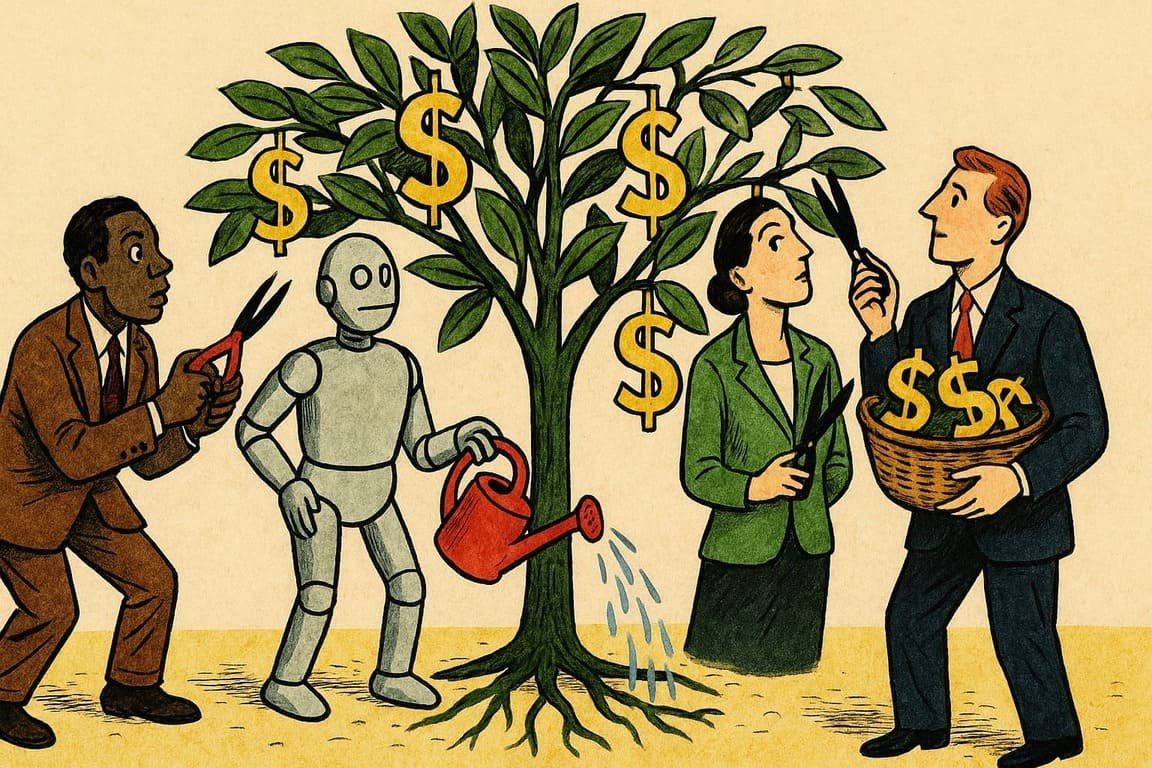
Golden light spilled across a bustling distribution center where forklifts moved with practiced precision, yet one manager stood quietly watching a dashboard instead of the warehouse floor. Nothing appeared unusual. That was exactly the point. Invisible technology had begun making thousands of tiny decisions before people even noticed problems forming. Competitive advantage has changed shape. Modern businesses no longer win simply because they work harder. They win because smart digital tools help ordinary teams make consistently better decisions while competitors remain trapped inside yesterday’s routines.
Technology advantage rarely comes from owning the newest software. It grows from choosing tools that strengthen strategy, simplify operations, and improve customer experiences over time. Farah discovered this while leading a growing retail business expanding into online commerce. Sales increased rapidly, but fragmented inventory systems created costly stock shortages and disappointed loyal customers. Integrating intelligent inventory management and predictive analytics restored confidence across the organization. Employees spent less time correcting mistakes and more time building stronger relationships with customers who noticed the difference almost immediately.
Leading organizations demonstrate this principle every day. UPS uses advanced route optimization to reduce unnecessary travel while improving delivery reliability, turning operational intelligence into competitive strength. Starbucks combines digital ordering, customer insights, and loyalty technology to personalize experiences while improving efficiency behind the counter. Meanwhile, Henrik managed a regional agricultural supplier where weather patterns constantly disrupted planning. Introducing forecasting tools and automated purchasing recommendations reduced waste, stabilized inventory, and helped the company respond faster than larger competitors burdened by slower decision making.
Technology becomes truly valuable when viewed as an interconnected capability rather than a collection of individual applications. Artificial intelligence, automation, cloud platforms, analytics, and enterprise systems reinforce one another when aligned with business objectives. The resource based view of strategy suggests that sustainable advantage comes from capabilities competitors cannot easily replicate. Smart technology supports that idea because success depends less on purchasing software than on developing organizational habits that transform information into faster, wiser decisions. Culture quietly amplifies every digital investment.
Consider a regional food processing company facing rising demand while struggling with production planning and supplier coordination. Executives resisted another expensive expansion because operational bottlenecks continued limiting growth. Instead, they invested in integrated planning software, automated quality monitoring, and predictive maintenance tools. Equipment downtime declined, supplier communication improved, and production schedules became remarkably reliable. Profitability increased without constructing new facilities, proving thoughtful technology adoption often unlocks hidden capacity already waiting inside existing operations.
Evening settles gently over every ambitious organization, leaving behind a simple truth that expensive technology alone can never erase. Sustainable profits belong to businesses that treat smart tools as trusted partners in better thinking rather than fashionable symbols of innovation. Competitive advantage emerges from thousands of disciplined decisions made consistently over time, each strengthened by systems designed to support people instead of replacing them. Every digital investment quietly asks whether it creates lasting capability or temporary excitement. That answer shapes the businesses remembered long after today’s trends have faded.
