A cold blue glow pulses across an abandoned coworking space, screens flickering like neon ghosts over empty ergonomic chairs. On each monitor, a thousand faces stare back: some smiling, some blurred, all eerily familiar. Surveillance cameras record every pixel, every twitch of an eyebrow, every digital handshake. In this modern coliseum of glass and wire, identity is no longer sacred; it’s just another data feed, auctioned off to the highest algorithm. The air hums with the low, secretive energy of lives quietly mapped, mined, and mutated in real time. There’s no drama here, no grand heist, just the slow drip of selfhood leaking through USB ports, copied and repackaged until the original forgets it ever existed.
At the heart of the city, a tech founder known for building “the world’s safest digital wallet” sits alone at his desk, scrolling through a database of customer complaints. His name is Rohan Patel, but he barely recognizes himself in the digital footprint left behind by his company’s relentless drive to automate trust. Meanwhile, somewhere in a university dorm, a student named Mia Nguyen stares at a message that reads, “Your account was accessed from a new device.” She shrugs, changes her password, and returns to scrolling. In a luxury high-rise, a startup’s chief marketing officer laughs with friends about how deepfakes of her TED Talk outperformed her real one.
Somewhere, right now, a data broker matches a mother’s voice to a late-night search for “how to help a son with anxiety.” In a midnight diner, a burned-out engineer checks the privacy settings on a phone that’s already betrayed every secret. On a dark web forum, stolen health records are swapped for cryptocurrency and a few memes. The world keeps spinning, faster every year, while the edges of selfhood start to blur, then fade.
This isn’t sci-fi. This is the quiet, chaotic truth of a digital civilization that mistakes sharing for living, logging in for belonging, and uploading for breathing. The ultimate identity invasion isn’t coming; it’s already here, hidden in every tap, swipe, and automated “yes.” This is the day self-hacking became just another subscription. Welcome to the mirror maze. Try not to lose yourself.
Quick Notes
- You Are Already Hacked: Your digital double is out there; compiled, sorted, and sold by companies you never heard of. If you think your password is enough, you’re already behind.
- Identity Is a Moving Target: Social logins, biometrics, and deepfakes have turned “who you are” into a negotiable commodity. Today’s avatar might be tomorrow’s liability.
- The Real You Is Up for Grabs: Between smart devices and social media, your personal brand gets edited and broadcast 24/7. You’ve lost control of the narrative, and the algorithm writes the script.
- Corporations and Criminals Play the Same Game: The difference between a data breach and a marketing campaign is often a single line of code. Consent, privacy, and trust are mostly window dressing.
- Reclaiming Selfhood Demands Bravery: Fighting back means more than tweaking your settings. It’s a philosophical war for meaning, belonging, and the right to be forgotten in a world that remembers everything.
The Mirror Shattered: Digital Identity Is Now a Playground
Most people still cling to the illusion that logging in means safety. Every morning, passwords are typed with the same hopefulness that used to greet a locked diary or a front door. Those tiny shields don’t stand a chance against the world’s relentless appetite for personal data. Once, identity meant something secret and sacred; now, it’s a patchwork of logins, likes, and autofilled forms scattered across the web.
Not so long ago, a mid-level bank manager named Aditya realized someone had been taking out loans in his name. Not because he was careless, but because his “identity” had been copied, sold, and reconstructed in a thousand places by companies chasing profit. He spent weeks unraveling the damage, only to discover that the real thief was the system itself; a digital ecosystem that rewards speed over safety. His story is hardly unique. Around the world, people wake up to notifications about “suspicious activity” and think little of it. The true invasion is slow, silent, and insidious.
Smart home devices and fitness trackers, meant to simplify life, now track every heartbeat and bedtime. They promise you control while quietly selling every detail to hungry data markets. The irony is everywhere: your favorite mental wellness app might be the most dangerous thing on your phone. “It’s not about hacking anymore,” says cybersecurity analyst Ellen Bryce. “It’s about being permanently open, everywhere.” That’s the new normal.
Pop culture makes it sound glamorous; identity thieves in hoodies, dramatic music, secret codes. The real world is a spreadsheet full of names, emails, old passwords, and medical records, traded in quiet deals behind the scenes. The hacker is not always a criminal; it’s often the business next door, with a cheerful login page and a privacy policy no one reads. In the end, the biggest risk isn’t losing money; it’s losing the ability to say who you really are.
As boundaries dissolve, selfhood becomes a mosaic, ever shifting and fragmented. You find yourself haunted by ads for sneakers you never searched for, your face used in memes you never made, your digital ghost tagging along on every browser tab. Identity is up for grabs, and the playground keeps getting bigger.
Digital Body Snatchers: When AI Owns Your Face and Voice
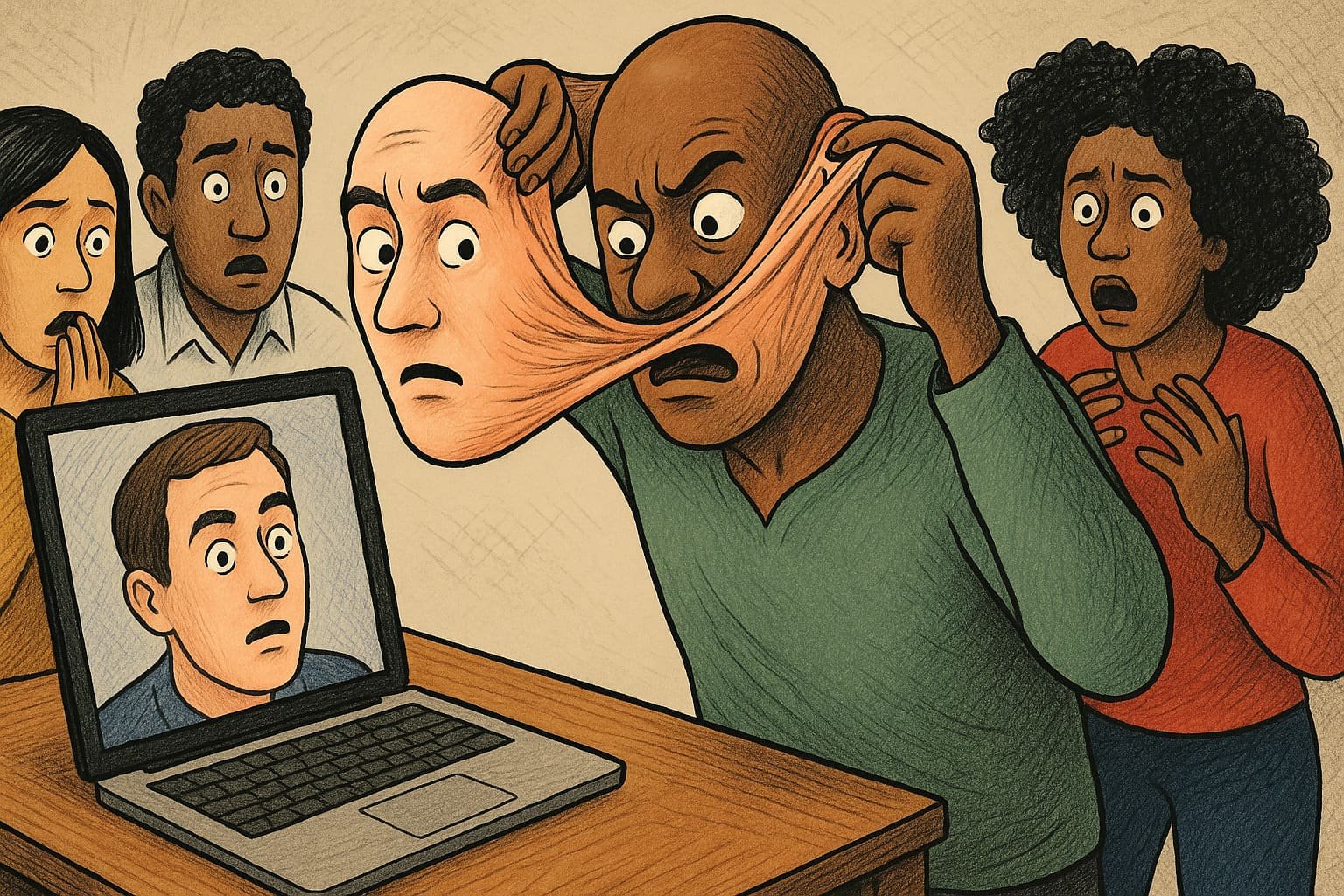
Technology’s promise is convenience, but the price is steep: you. Artificial intelligence now scours the internet for your photos, audio clips, and videos, stitching together deepfake versions that can fool even your closest friends. A marketing manager in Berlin once discovered a video ad starring “her,” but she’d never filmed it. Her voice, gestures, and smile; all perfect copies, all fake. She laughed at first, then called her lawyer. The company behind the campaign said it was “just a demo.”
Every digital conversation; every quick voice note, every Zoom call, every throwaway selfie becomes raw material. AI models gobble it up, training themselves to mimic and predict. You don’t get a vote in the matter. This is the age of programmable people, where a celebrity’s image might sell sneakers in Beijing, and a job applicant’s smile becomes a passport to automated rejection in Silicon Valley. “Your face is the new password,” says tech ethicist Nia Redding, “and everyone wants a copy.”
Real-life stories now sound like science fiction. A family in Dubai answered a FaceTime call from a loved one, only to realize they were speaking to a synthetic clone built from stolen data. The shock is always the same: disbelief, confusion, anger. Then comes the resignation. The tools are too powerful, the safeguards too weak. Even pop stars are caught in the trap: Taylor Swift’s legal team famously spent months scrubbing unauthorized AI tracks from streaming platforms.
Popular TV shows like “Black Mirror” once seemed outlandish. Now, their darkest episodes feel like news bulletins. Each season of digital innovation brings new headlines; scammers using AI voices to defraud banks, politicians caught in deepfake scandals, entire companies launched with nothing but synthetic avatars. The old defense “I didn’t do it, that’s not me” carries no weight in a world where anything can be faked, and proof is just another product.
Beneath the excitement, something more troubling grows. If anyone can wear your face or speak in your voice, what’s left to call your own? The idea of privacy collapses, replaced by a new rule: you are whatever the internet decides.
The Consent Delusion: Fine Print Is Dead, and You’re the Product
Most users scroll past privacy policies faster than a TikTok trend. The boxes get checked, the updates ignored, the terms accepted with a sigh. Consent, in this world, is just a ritual; one that offers little protection. By the time you’ve agreed to a new app’s demands, your entire history might already be archived, dissected, and sold. The “user” becomes the used.
Take the case of Jorge Mendes, an accountant in Lisbon who discovered that his favorite shopping app had been leaking his purchase history to social networks. The result? Birthday gifts for his wife showed up in Instagram ads before he could even wrap them. When he complained, customer service replied, “We value your privacy.” What they meant was: they valued his data more.
Regulators talk a big game about protecting digital rights, but loopholes outnumber laws. One famous tech CEO once said, “If the service is free, you’re the product.” The reality is sharper: you’re the product even when you pay. Smart TVs eavesdrop for “personalization,” ride-share apps track your every move, fitness platforms know your deepest insecurities. Each promises more control, while quietly erasing choice.
Pop culture isn’t immune. The rise of “influencers” means every coffee, every gym session, every vacation becomes a commercial. Consent, once the bedrock of personal boundaries, now feels like a checkbox in a world too busy to care. Even celebrities get played: Selena Gomez called out a game app for using her image without permission. The company apologized, then moved on to the next face.
Beneath the surface, the real invasion is philosophical. If you never really chose to share, and you can never take it back, what does ownership mean? In a world where the rules keep changing, control is just another illusion.
Corporate Double Agents: When Trust Gets Monetized
Every big tech company promises to “put the user first,” but most have secret side hustles; selling data, experimenting with new AI tools, cutting quiet deals. Your loyalty points, location history, and voice commands are all potential revenue streams. The line between serving and spying is almost invisible. In the world of digital transformation, the word “trust” is painted on every billboard, but rarely honored.
Consider the story of Amara Bello, who once led an innovation team at a global fintech giant. She spearheaded a project to automate customer onboarding, only to discover that the algorithm they built was biased against certain zip codes. When she raised concerns, leadership reminded her of quarterly targets. The project went live, and customers lost access for reasons no one could explain. Data, it turned out, wasn’t just about service; it was about power.
Every year, a new wave of tech startups promises “radical transparency.” They offer dashboards and privacy controls, but those are mostly PR stunts. Behind closed doors, partnerships blossom between companies that would never admit to sharing your secrets. Hackers aren’t the only ones you should fear. Sometimes, the breach comes with a free trial and a friendly chatbot.
Pop culture loves stories of lone whistleblowers, but the real world is filled with silent bystanders. People inside big organizations see the trade-offs, shrug, and sign the next NDA. The value of trust has become another metric, managed by teams with catchy acronyms and no real accountability. “Data is the new oil,” they say. But nobody asks what happens when the well runs dry or explodes.
In this new landscape, trust isn’t a promise. It’s a commodity, auctioned to whoever offers the highest click-through rate.
The Fight for Your Future: Reclaiming Selfhood in the Algorithm Age
It’s easy to feel powerless in a world ruled by algorithms, but every revolution starts with a spark. Identity isn’t just a password or a profile; it’s the story you tell, the choices you make, the boundaries you defend. The invasion of selfhood is real, but so is the opportunity to push back. The real heroes aren’t hackers or CEOs; they’re the people who refuse to let the system rewrite their story.
Maya Kim, a teacher in Seoul, started a blog about digital privacy for her students. She posted weekly about apps to avoid, privacy settings to tweak, and how to spot a phishing scam. Her posts caught fire, and soon other teachers joined in, building a network that helped thousands reclaim a little control. Maya’s story isn’t rare; it’s a blueprint for the future. Small actions, multiplied across millions, can tip the scales.
Technologists like Jack Brewster advocate for “self-sovereign identity,” a model where you own and control your digital footprint. Some startups offer encrypted data lockers, promising you the keys to your own information. It’s not perfect, but it’s a start. The real transformation happens when people demand more; not just from companies, but from themselves. Courage, not convenience, will shape the next era.
Pop culture always finds a way to adapt. New artists turn privacy warnings into protest songs. Late-night comedians roast surveillance capitalism on prime-time TV. Even video game designers embed lessons about data ethics in blockbuster hits. The fight for selfhood is everywhere; in boardrooms, classrooms, and chat rooms.
The invasion isn’t destiny. It’s a choice, played out in millions of small moments: a password changed, a setting reviewed, a demand for transparency. The future isn’t owned by algorithms; it’s written by people bold enough to care.
Stolen Faces, Borrowed Souls: Who Writes the Final Script?
A rainstorm thrums against the glass walls of a silent office tower, where a lone security guard watches as profile pictures morph across security monitors. In the amber glow, faces flicker from friend to stranger to digital clone, until the difference disappears. On a city street below, an entrepreneur throws her phone into a gutter, eyes wide with the realization that every version of herself; every message, every selfie, every innocent “accept all cookies” has become both a mask and a map. The world hums with invisible voices: some desperate to belong, others hungry to be left alone. In living rooms, conference halls, and empty cafés, the same question pulses through the digital air, silent but inescapable.
In another room, a group of college students stares at a projector showing deepfakes that dance between comedy and horror. Laughter fades to silence as the line between parody and identity theft collapses, and a sense of fragile wonder settles over the crowd. Someone whispers, “Can you really tell who’s real anymore?” No one answers.
Backstage at a tech conference, a CEO stands before a mirror, adjusting a badge that now means less than a forgotten password. She glances at her reflection, searching for certainty in eyes that have seen too many privacy breaches and not enough truth. The applause outside grows louder, but the mirror stays silent. The world expects answers, but all she has is another story.
Under the fluorescent buzz of a late-night diner, a tired engineer pours coffee, scrolling through messages from loved ones whose faces might be fakes. The mug trembles in her hands. Tomorrow, she’ll patch another leak, knowing it’s never enough. Yet as dawn breaks, something stubborn remains; an urge to resist, to reclaim, to rewrite.
You are not your profile. You are not your feed. You are not the sum of passwords, check-ins, and retargeted ads. You are the question the world still can’t answer.
So ask yourself: If the world stole your face, your story, your voice; what would you do to steal yourself back?
Why scroll… When you can rocket into Adventure?
Ready to ditch the boring side of Life? Blast off with ESYRITE, a Premier Management Journal & Professional Services Haus—where every click is an adventure and every experience is enchanting. The ESYRITE Journal fuels your curiosity to another dimension. Need life upgrades? ESYRITE Services are basically superpowers in disguise. Crave epic sagas? ESYRITE Stories are so wild, your grandkids will meme them. Want star power? ESYRITE Promoted turns your brand cosmic among the stars. Tired of surface-level noise? ESYRITE Insights delivers mind-bending ideas, and galactic-level clarity straight to your inbox. Cruise the galaxy with the ESYRITE Store —a treasure chest for interstellar dreamers. Join now and let curiosity guide your course.