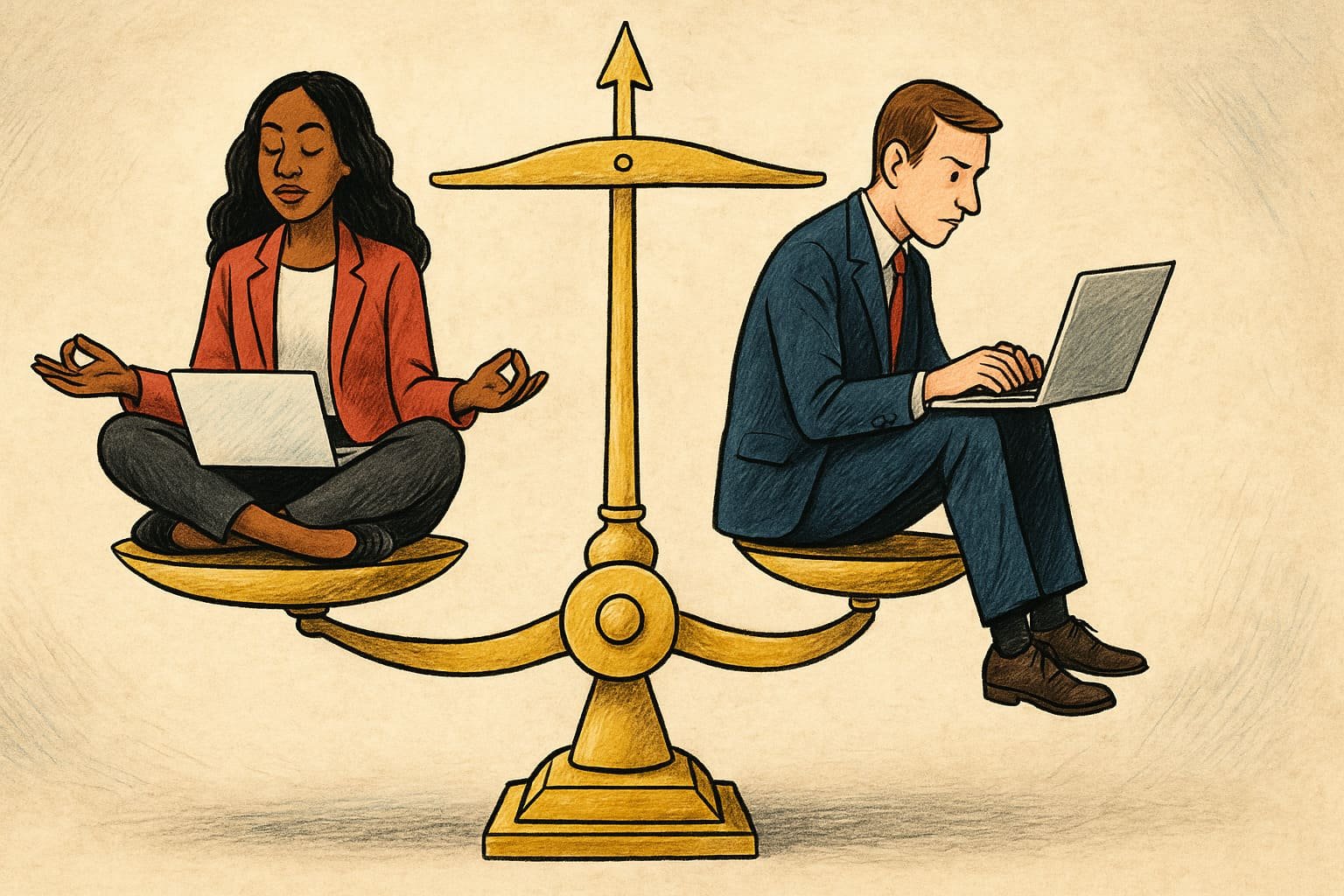
Imagine two startup founders staring each other down across a small glass table, passion burning in their eyes, ideas clashing like thunderbolts. Now picture them stepping out of that battle and walking side by side suddenly, the storm settles, and something electric happens. The company they build doesn’t just grow; it flourishes. This is not just a feel-good parable. It’s the explosive reality of what happens when startups put power on an even scale. Equal power isn’t just a noble ideal; it’s the rocket fuel for sustainable, world-changing business.
Every entrepreneur has felt the gravitational pull of hierarchy and ego. History is littered with ventures that crumbled because vision got buried under a pile of unchecked power. The old “genius founder” myth makes for flashy movies, but in real boardrooms, the best ideas rarely come from one voice. The heartbeat of every thriving startup pulses with shared authority, mutual respect, and power distributed as widely as the coffee cups in a busy coworking space.
Today, we’re cracking open the true secret behind startup booms that last. We’ll uncover why shared power ignites innovation, how the myth of the lone hero is sabotaging growth, and what practical, lived stories reveal about teams that thrive on balance. Buckle in, because you’re about to find out why the next unicorns will be built not on dominance, but on daring, democratic power.
Quick Notes
- Shared Power Lights Up Innovation: Startups where everyone has a voice create more original ideas, build faster, and adapt to market shocks with agility.
- Hierarchy Kills Startup Speed: Rigid power structures slow decision-making, stifle creativity, and breed toxic cultures that repel top talent.
- Diverse Teams Drive Disruption: Founders who share power across backgrounds, genders, and skills don’t just look good—they outperform and endure.
- Real-World Founders Are Shifting the Paradigm: Case studies of companies like Basecamp, Atlassian, and Figma prove balance isn’t a theory it’s a tested route to resilience.
- Balance Is the New Billion-Dollar Skill: Tomorrow’s most successful startups will be those that treat equal power as their core asset, not a side benefit.
Shared Authority: Where Breakthroughs Are Born
There’s a reason stories of lone geniuses make headlines: they’re dramatic, simple, and easy to remember. Reality paints a messier, far richer picture. Every breakout product, viral app, or disruptive service is built atop a swirl of ideas from people empowered to speak, challenge, and reimagine.
Take Figma a company founded by Dylan Field and Evan Wallace where product decisions are famously democratic. Figma’s culture of open feedback isn’t just a slogan. New hires recount sitting in on meetings where their first-day ideas are weighed alongside those of senior engineers. This flat approach has allowed the company to outpace entrenched rivals, because fresh voices mean blind spots get caught, fast.
Authority, when hoarded, shrinks a company’s imagination. Shared authority, by contrast, turns every team member into an owner, not just an employee. Teams at Basecamp, for example, report that their flat structure enabled them to pivot during crises while larger competitors froze in their tracks.
When startups empower everyone, something remarkable happens: breakthroughs don’t depend on the brilliance of a single leader but on the collective energy of many. This is how real revolutions happen not by decree, but by creative combustion.
Daniel Pink’s “Drive” points to autonomy as a prime motivator. When people feel trusted to make decisions, their engagement soars, and the company unlocks hidden reserves of creativity. Startups betting on balance are stacking the odds in their favor.
Death by Hierarchy: How Startups Sabotage Themselves
It’s tempting to believe that strong leadership means tight control, but the evidence tells a different story. Many startups that crashed and burned did so not from lack of vision, but from a failure to listen.
Uber’s early years provide a cautionary tale. The company’s meteoric rise was powered by boldness, but internal chaos followed as power became concentrated at the top. Employees describe a culture where dissent was discouraged and mistakes were buried rather than fixed. Eventually, those cracks threatened to break the entire business.
Contrast this with Atlassian, an Australian tech company with two equal co-CEOs, Scott Farquhar and Mike Cannon-Brookes. Their leadership style set a tone for openness and humility. New hires are encouraged to question decisions, and product teams are empowered to experiment without fear of top-down vetoes. This approach has helped Atlassian weather storms and scale with surprising agility.
Rigid hierarchy chokes the flow of information. When only the highest-ranking voices are heard, warnings go unheeded and opportunities slip through the cracks. Startups need speed, and speed comes from the ground up, not the top down.
Building a startup on rigid authority is like constructing a skyscraper on sand impressive at first glance, but doomed to collapse. Those who share power not only survive; they build legacies that last.
The Diversity Dividend: Balance as a Strategic Weapon
Diversity is the word on every investor’s lips, but true balance isn’t about ticking demographic boxes. It’s about putting real power into the hands of people with different perspectives, skills, and backgrounds. When startups get this right, the results are electric.
Take a look at Bumble, the dating app founded by Whitney Wolfe Herd. The company built its core product on gender balance giving women the first move, flipping the script on an entire industry. Behind the scenes, Wolfe Herd invested in hiring women into senior product, engineering, and board roles, challenging the tech world’s old guard. Bumble’s success wasn’t a fluke; it was the outcome of intentionally distributed power.
Diverse teams outthink, outlearn, and outlast the competition. A McKinsey study once called this “the diversity dividend,” but you don’t need charts to see it play out in daily startup life. Balanced teams argue, innovate, and solve problems more robustly because they’re wired to challenge consensus and spot risk from more angles.
The diversity dividend isn’t just about who sits at the table. It’s about who gets to speak, shape, and lead. Founders who recognize this build not only fairer companies but faster, more resilient ones. Equal power becomes a strategic weapon, not just a talking point.
Balance isn’t a PR move it’s a bet on survival. In a world where change is the only constant, startups with true balance will keep reinventing themselves long after the headlines fade.
Lessons from the Frontlines: Startups That Built with Balance
Theory is nice, but stories are what stick. The startups winning today have a secret: they learned to spread power around, even when it was messy, slow, or counterintuitive.
At Basecamp, cofounders Jason Fried and David Heinemeier Hansson insist every major product decision runs through multiple hands, not just through their desks. Their flat approach meant that during a company crisis, ideas from junior developers shaped the pivot that saved the business. This wasn’t charity it was strategy.
Figma’s Dylan Field often credits the team’s “radical candor” as the lever that let them out-innovate industry giants. When an intern challenged the status quo on the design tool’s interface, the leadership team listened, tested, and ultimately shipped the feature a move that users now cite as a game changer.
Even giants like Slack began with a radically egalitarian process. Stewart Butterfield recounts how, before launch, every employee from marketing to support was given equal weight in feedback sessions. The result was a product with fewer blind spots and a culture that retained talent even when competitors came calling.
Real-world case studies reveal that startups who flatten the power pyramid don’t just move faster; they recover from mistakes more gracefully. When everyone feels accountable, the team runs towards problems instead of away from them.
Balance doesn’t mean chaos or indecision. It means every voice matters, every day. That’s the heartbeat of a startup built for the long run.
Balance Is the Billion-Dollar Superpower: How Founders Can Lead the Charge
What does balance look like in action? It’s not about abolishing all hierarchy, but about consciously designing systems where authority can be questioned, shared, and rebalanced as the company grows.
Take Shopify, where CEO Tobi Lütke encourages teams to challenge his ideas publicly. On more than one occasion, product leads have convinced him to reverse course, saving the company from missteps that would have gone unchallenged in a more rigid culture. This open power dynamic has allowed Shopify to stay nimble and innovative at scale.
A shift towards balance requires vulnerability from founders. Leaders who admit they don’t have all the answers create safe spaces for debate. This makes room for the real magic when the intern’s idea outshines the expert’s, and when risk is shared rather than offloaded.
Teams who practice “distributed leadership” thrive in high-stakes moments. During COVID-19, startups with flat hierarchies pivoted to remote work and new product lines faster than their traditional peers. Leaders who had seeded power early reaped the rewards in resilience and adaptability.
Balance also brings out the best in individuals. Team members who feel seen and heard rise to challenges with new energy, investing more deeply in outcomes. The result isn’t just a happier team it’s a smarter, tougher company.
The question isn’t whether startups can thrive with balanced power. The real challenge is whether founders have the courage to give it a try. Balance is more than a buzzword it’s the billion-dollar superpower the next generation of unicorns will wield.
Will You Build with Balance or Be Left Behind?
The stories of tomorrow’s legendary startups won’t star a lone hero. They’ll shine with the brilliance of teams who dared to share authority, distribute risk, and trust the wild alchemy of equal power. The days of the top-down tyrant are ending, and the era of collaborative, creative, fiercely balanced teams is here.
The greatest risk isn’t chaos or disagreement it’s the echo chamber that forms when power pools at the top. Balance doesn’t just create a better place to work; it unlocks the speed, resilience, and imagination needed to win in a world that moves at the pace of a viral tweet.
So ask yourself: Are you clinging to control, or are you unleashing the kind of shared power that makes startups unstoppable? The next billion-dollar business won’t rise on the back of a single founder, but on the shoulders of a team that dares to build, decide, and win together.
Are you ready to rewrite the startup story and give equal power the starring role?
Why scroll… When you can rocket into Adventure?
Ready to ditch the boring side of Life? Blast off with ESYRITE, a Premier Management Journal & Professional Services Haus—where every click is an adventure and every experience is enchanting. The ESYRITE Journal fuels your curiosity to another dimension. Need life upgrades? ESYRITE Services are basically superpowers in disguise. Crave epic sagas? ESYRITE Stories are so wild, your grandkids will meme them. Want star power? ESYRITE Promoted turns your brand cosmic among the stars. Tired of surface-level noise? ESYRITE Insights delivers mind-bending ideas, and galactic-level clarity straight to your inbox. Cruise the galaxy with the ESYRITE Store —a treasure chest for interstellar dreamers. Join now and let curiosity guide your course.