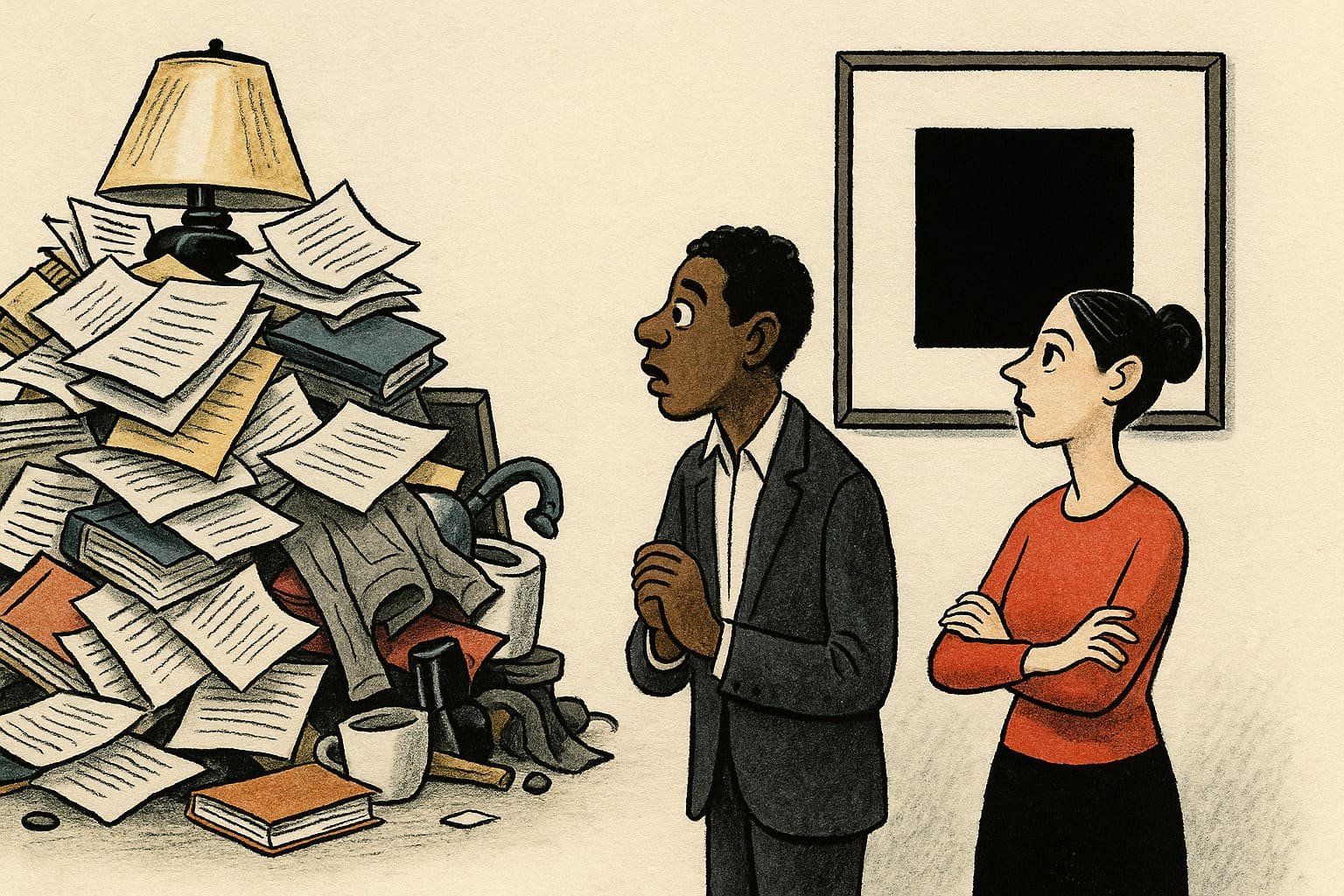
Some revolutions arrive with fireworks. Others whisper their way to dominance. Minimalism did the latter and today, it’s no longer a design trend. It’s a full-on philosophy that’s sweeping across tech, business, fashion, and digital spaces. The silent spaces between elements now speak louder than a thousand flashing banners ever could. In a noisy world, silence has become the new status symbol.
Designers once fought for attention with flamboyant visuals, cluttered grids, and 17 different call-to-actions on a homepage. Now? The savviest brands flex their muscle with restraint. Minimalism doesn’t just clean up your screens; it elevates your message. It’s more than an aesthetic; it’s a strategic edge, a psychological cue, and a declaration of confidence. This article walks you through how clutter became the enemy, and why simplicity is now the loudest voice in the room.
Quick Notes
- Minimalism Equals Trust: Users trust clean interfaces because they feel intuitive, professional, and user-first.
- Strategic Simplicity Wins: Less visual clutter reduces cognitive load and boosts conversions.
- Cultural Shifts Influence Design: Minimalism reflects modern values like mindfulness, sustainability, and intentional living.
- Brand Luxury in Cleanliness: High-end brands embrace minimalist design to signal prestige, clarity, and purpose.
- Designers Who Humanize Win: Real-world case studies show minimalist design not only converts better but creates emotional resonance.
Decluttered = Decoded: Why Users Flee Chaos
Visual chaos triggers stress. Cognitive science proves that human brains crave order. When users visit a cluttered website or open an app overloaded with functions, the response is not excitement; it’s anxiety. They don’t stick around to decode a visual riddle; they bounce to a better-designed alternative. That’s not an opinion. That’s behavioral economics in action.
The shift toward minimalism isn’t rooted in design snobbery. It’s a reaction to overwhelming digital environments. When everything screams for attention, nothing gets heard. Designers who practice restraint guide user focus with deliberate intention. They orchestrate experience, not just visuals.
Google’s homepage is a masterclass in this principle. Just a logo, a search bar, and two buttons. That’s it. Yet it powers most of the planet’s access to information. Why? Because it doesn’t distract. It delivers. In contrast, think of Craigslist. Functional, yes. But emotionally bankrupt.
A cleaner interface doesn’t just look better; it feels better. People associate minimalist design with intelligence, modernity, and care. There’s dignity in whitespace; a confidence that says, “We respect your time.”
Psychologist Barry Schwartz talks about the “Paradox of Choice.” Too many options paralyze decision-making. Minimalist design simplifies interaction. It calms. It invites. It wins.
The Psychology of Simplicity: Less Noise, More Action
Simple doesn’t mean basic. It means intentional. It means every pixel has a purpose. And here’s the kicker: simplicity accelerates decision-making. When users aren’t bombarded by flashing offers or chaotic layouts, they move faster and trust deeper.
Minimalist interfaces are like great waiters: present when needed, invisible when not. Consider Airbnb. It doesn’t shove options in your face. Instead, it invites exploration through clarity and hierarchy. That’s no accident. That’s UX brilliance.
Simplicity also equals speed. Fewer images, leaner code, and concise layouts lead to faster load times. Faster experiences retain more users. That’s not design preference; that’s conversion math.
Brand loyalty also skyrockets when users feel in control. Simple designs foster a sense of autonomy. They make users feel smart. Ever noticed how Apple’s website feels like a calm museum? That’s not just design. That’s strategic reverence for the product.
Even mobile banking apps have joined the movement. Chase and Revolut restructured their UI to reduce cognitive steps. The result? More transactions, fewer support calls, and happier users. Simplicity is not a downgrade. It’s an upgrade in user trust.
Design Reflects Culture: Why Simplicity Speaks to the Modern Soul
Culture doesn’t just influence design. It demands it. In a world drowning in noise, minimalism feels like a breath of fresh air. As mindfulness, sustainability, and self-awareness become cultural norms, design evolves to mirror these values. A clutter-free layout isn’t just clean; it’s conscious.
Think about the rise of tiny homes, capsule wardrobes, and digital detoxes. These aren’t fads. They’re societal corrections. They’re responses to consumer burnout and the overproduction era. Minimalist design rides the same wave.
Japanese aesthetics, like wabi-sabi and Zen philosophy, heavily influence today’s design minimalism. Muji is a prime example. It offers unbranded, quality goods in pristine packaging. The brand’s appeal? Humility, quiet excellence, and timeless design.
Instagram feeds once glittered with filters and emojis. Now? Beige tones, clean lines, and subtle shadows dominate influencer aesthetics. This visual detox has turned into a movement. It tells the world: “I’m focused. I’m grounded.”
Even corporate spaces are adapting. Open office chaos is being replaced with intentional, minimalist layouts that inspire focus and well-being. This isn’t design for design’s sake. It’s cultural realignment.
Luxury is Minimal Now: Prestige Hides in the White Space
Luxury used to scream. Now, it whispers. The flash is gone. The subtlety reigns. Why? Because confidence doesn’t need to shout.
Look at the world’s most elite brands; Hermès, Apple, Tesla, Prada. Their websites are clean, slow to animate, and dripping in restraint. They’re not bare because they lack imagination. They’re minimal because they lead. Clarity is their flex.
Customers associate minimalism with sophistication. It reflects curation, not chaos. Just like a well-designed living room with fewer items makes each object stand out, minimalist branding elevates perception.
Even luxury hotels like Aman Resorts use minimalist digital experiences to craft serenity. Their booking pages look like art installations. No pop-ups. No urgency copy. Just calm.
Minimalism is now a wealth signal. The fewer distractions, the more premium the experience feels. Clutter implies desperation. Simplicity suggests mastery. That’s not just design theory. That’s human psychology.
Real-World Proof: Case Studies That Killed the Clutter
Mailchimp’s redesign stripped away illustrations and saturated colors for a muted, modern vibe. The result? Higher engagement. Not because they added more, but because they removed what didn’t matter.
Medium succeeded for years by putting content first. No sidebar circus. Just clean type, focused reading, and ambient whitespace. It felt like thinking. It invited depth.
Robinhood’s app looked like a minimalist dream at launch. Critics praised its intuitive flow. Users felt empowered to trade stocks even if they shouldn’t have. The point? The interface made action feel frictionless.
Squarespace didn’t become a creative darling by overloading. It won hearts with temple-like structure, simple typography, and plenty of room to breathe. That clarity became its calling card.
Even Notion, the ultimate productivity tool, used elegant minimalism to win over a sea of tired Trello users. Its interface doesn’t scream “power user,” yet it quietly outperforms traditional enterprise software.
The Final Clean Sweep: Make It Matter or Make It Go
Every pixel you leave in earns attention. Every element you remove earns respect. In design as in life the essential is invisible to the eye, but felt by the soul. Minimalism wins because it gets out of the way.
Today’s user doesn’t want to dig through your cleverness. They want to feel your clarity. And that clarity starts with courage; the courage to delete. To edit. To prioritize purpose over presence. This is where good design becomes great strategy.
Clutter is a cover-up. It hides indecision. It conceals insecurity. But when you design minimally, you declare authority. You lead with intention. You become unforgettable.
So before your next product launch or site redesign, ask the real question: What happens if we take half of this away? You’ll be shocked by how much more remains. Because in design, as in life, less really is more.
So ask yourself: Are you designing for attention, or designing for impact?
