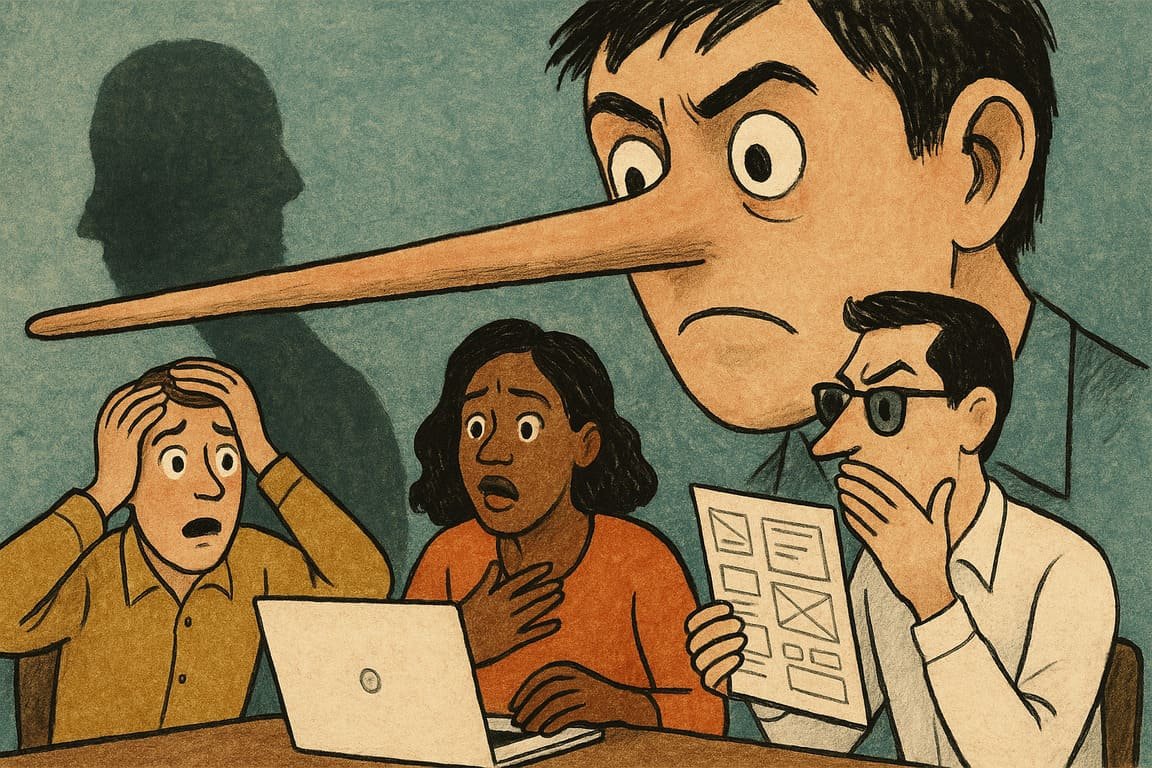
Night settles over a row of sleek office towers, their glass walls reflecting a thousand stories of digital ambition. Behind one window, a UX team huddles around a glowing monitor, eyes tired but hopeful as they watch users interact with a new app. The numbers look good. Surveys show satisfaction. Yet, beyond the tidy metrics, something slips through the cracks. The room buzzes with self-congratulation, but in the silence that follows, a quiet question hangs: Are we seeing the truth, or only what we want to believe?
The story of UX is filled with well-meaning illusions. Teams believe users behave as they “should,” that clean interfaces equal happy customers, that A/B tests always point the way. It is comforting to trust dashboards and shiny heatmaps. But real life is messier. The best designers know: user experience is full of lies, half-truths, and hidden obstacles that polite surveys will never reveal.
You have watched it happen. A team celebrates a high completion rate on a signup flow, unaware that most users fumbled through with clenched jaws and silent curses. A product manager beams at a low drop-off rate, blind to the subtle friction that makes people dread returning. The myth persists that if nobody complains, everything must be fine. But silence can be the loudest warning of all.
Designers love to believe in best practices. Grid layouts, rounded corners, micro-animations—these are the marks of quality, right? Yet real users rarely care about what wins design awards. They want to get on with their lives. The lie spreads when designers design for each other, not for the human on the other side of the screen.
Dig a little deeper, and you will find the truth hiding in the places data cannot reach. One retail brand boasted about its seamless checkout, yet interviews with customers uncovered stories of abandoned carts and confusion over shipping. A nonprofit launched an app to “empower” users, but field visits revealed the interface only worked for tech-savvy volunteers, leaving older participants excluded. The lesson: data without context is not just incomplete—it is misleading.
You know this tension in your own work. There is a rush to show results, to check off usability scores and move on. But every project is haunted by the things you do not measure: moments of hesitation, micro-expressions of annoyance, the tasks that get dropped and never mentioned. The most dangerous lie is the one that says “good enough” is good enough.
The truth often surfaces in stories, not stats. Watch a user in their own environment—at a bus stop, at midnight, with a crying child on their lap. The rules change. Features that seemed clever in the lab become pointless obstacles in the wild. One UX researcher named Zara tells her team, “If you want honesty, leave your office. Talk to the people who would never take your survey.” The most valuable insights are whispered, not shouted.
Designers must resist the temptation to believe their own marketing. The urge to polish, to spin, to hide flaws in clever copy or soothing gradients is strong. But every hidden pain point is a future lost customer. A health startup learned this the hard way: months of glowing feedback unraveled when a partner finally admitted they hated the calendar interface but were too embarrassed to say so. Candor is hard to find, harder to accept.
You can spot the best UX teams by the way they hunt for discomfort. They do not chase validation, but revelation. They search for the moments when people stumble, the workarounds users invent, the points where frustration outweighs delight. Real progress is made not by defending decisions, but by admitting where you have been fooled.
Feedback loops must stay open, uncomfortable, relentless. A hospitality brand that once prided itself on its booking flow discovered, after inviting customers to share unfiltered stories, that nearly everyone misunderstood the cancellation policy. That single finding triggered a cascade of redesigns, increasing trust and bookings overnight. The hidden truth: one honest answer is worth more than a hundred polite reviews.
Do not let your team fall for easy wins. Question the numbers, chase the awkward conversations, design for the moments when users break the rules. The real path to excellence is not paved with consensus or applause, but with humility and curiosity. Ask yourself: what are we missing, and why?
The future belongs to those who dare to look beneath the surface. UX is not a static map, but a living territory, always shifting under real human needs. The next leap in your project will come not from perfect pixels, but from a willingness to be proven wrong.
Outside, streetlights flicker on, casting long shadows across empty sidewalks. Inside the tower, the team sits in reflective silence, replaying moments when their confidence blinded them to reality. Something changes in the room—a sense that beneath every “success” story lies another, quieter narrative begging to be heard. As chairs scrape back and the night deepens, a question lingers with electric force.
Will you stay lulled by beautiful lies, or go searching for the hidden truths that could transform everything you build?
