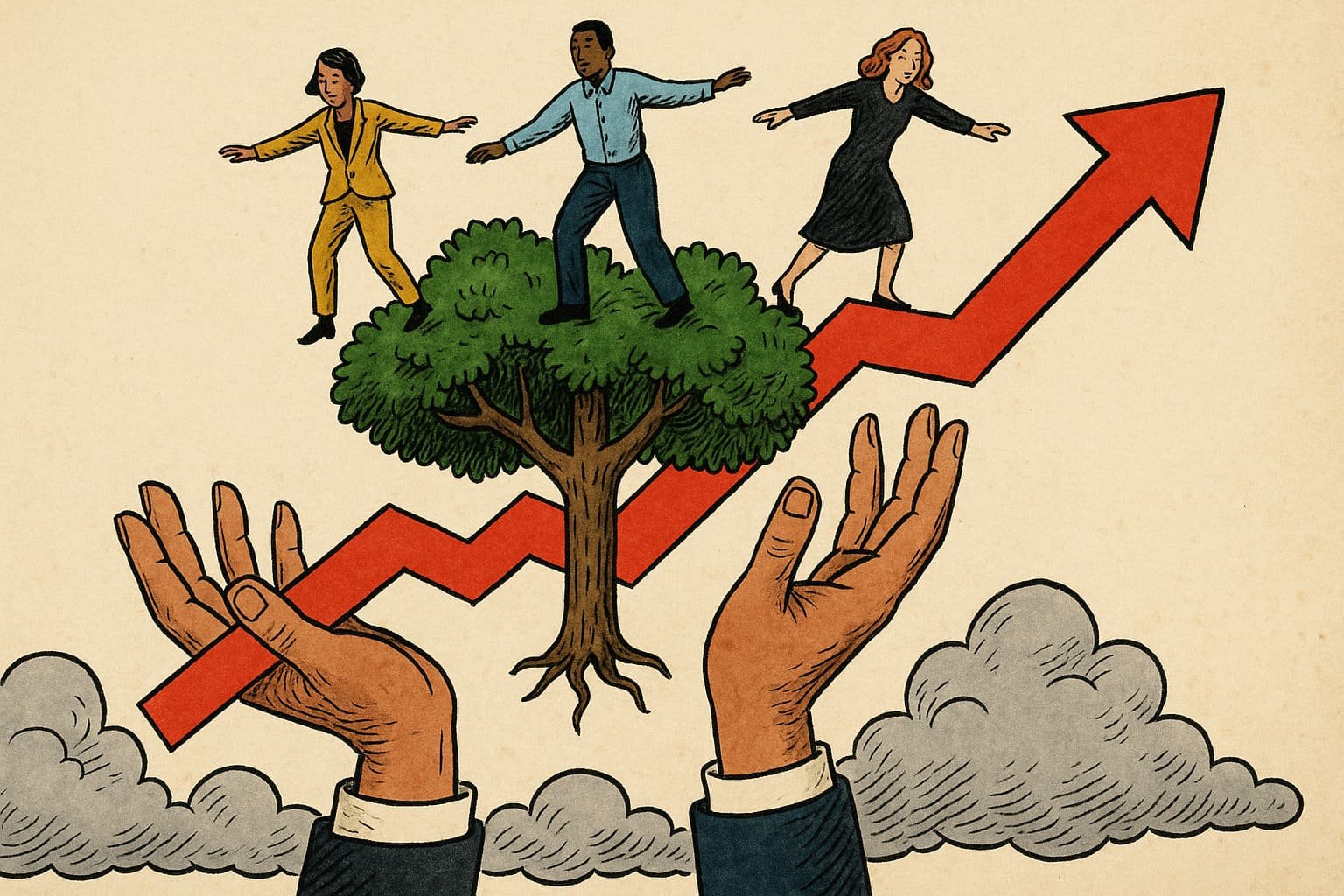
A marble floor glimmers underfoot, echoing the footsteps of a founder lost in thought. Towering glass walls surround her, reflecting a skyline stitched together by ambition, risk, and second chances. In the boardroom, sunlight pours across blueprints for global expansion. Yet at the room’s far end, a battered leather notebook sits open, its pages scribbled with customer dreams, handwritten complaints, and love letters to an idea that once changed everything. The air carries a tension—a business balancing on the knife-edge between wild growth and something far more fragile: its soul.
Outside, the city hums with restless ambition. In every café, entrepreneurs sketch out futures on napkins, their eyes flickering between spreadsheets and memories of a company’s first sale. Somewhere, a team debates whether automating support will save costs or strip away the laughter from midnight customer calls. Every building tells a story—one of meteoric rises, public failures, and the private agony of watching culture slip through digital cracks.
In the break room, an intern listens to old-timers swap stories about “the garage days” when the whole business fit around a folding table. Their voices rise above the clatter of coffee mugs and last night’s takeout. Laughter echoes, tinged with nostalgia, as if holding tight to the warmth of something no quarterly report can measure. A product manager pins a photo to the wall: the original team, faces beaming, standing in the rain the day their first store opened. That spirit lingers, ghostlike, watching every new process, merger, and pivot.
Down the hallway, a leader stands at the window, watching rain streak the glass. Every drop is a question: Can you scale a vision without sacrificing what made it magic? Is there a growth story that ends with both profit and purpose intact? Out on the city’s edge, a street vendor wraps food in paper stamped with a single word: “Stay.” The word whispers through corridors and contracts, tempting every founder, marketer, and dreamer to believe that growth does not mean saying goodbye to the soul of what matters.
Quick Notes
- Growth with Heart Wins Loyalty: Brands that scale with care keep customers and employees invested for the long run, building more than numbers—they create belonging.
- Automation Cannot Replace Authenticity: Systems may save money, but cutting the human touch can erode the foundation that first drew people in.
- Purpose-Driven Brands Outlive Trends: Companies anchored in values weather storms, adapt better, and bounce back when the hype cycle fades.
- Culture Is Your Secret Weapon: Firms that guard their original culture inspire teams, win customer trust, and attract partners who stay when growth gets messy.
- Leaders Must Be Soul Keepers: Sustainable growth starts at the top—when leaders listen deeply, adapt quickly, and choose legacy over shortcuts.
Foundations First: Building for Forever, Not Just Today
A brand’s first customer is never forgotten. That initial handshake, real or digital, becomes the DNA of the company’s future. Sustainable growth is about bottling that feeling and sharing it with every new employee, investor, and partner. When leaders put foundations before fireworks, they ensure expansion doesn’t erase the essence that made the brand matter.
Case in point: Roots Collective, a farm-to-table startup in Oregon, built a cult following not by chasing trends, but by obsessing over personal relationships. Co-founder Simone Harlow still recalls every customer who wrote a thank-you letter after a meal. She jokes, “We scale slow, but we scale deep.” Her team hosts weekly “customer memory” sessions, reading messages and stories that fuel their purpose. Growth follows, but never at the expense of connection.
The theory is old but feels revolutionary now. Lasting brands work like cathedrals, constructed brick by brick, with an eye for beauty and endurance. That means turning down quick wins that could corrode trust or damage reputation. A famous sneaker brand, for example, refused a mass-market deal to keep its loyal fanbase. Instead of blowing up overnight, they focused on deepening relationships with their core.
Foundations are tested during tough times. In a year of uncertainty, companies that relied on trust survived while those built on hype crumbled. Customer feedback, employee wellbeing, and slow, thoughtful pivots became survival skills. As Roots Collective shows, when values drive strategy, loyalty grows roots.
A brand built for forever doesn’t need to shout. Its foundation speaks for itself, quietly, in every decision, policy, and promise kept. That’s the story worth scaling.
Culture Carriers: The People Who Guard the Flame
Growth exposes a business’s core like nothing else. When every hire counts, the original culture is tested by new personalities, expectations, and risks. Protecting a company’s soul requires more than posters on a wall. It means real rituals, tough conversations, and a willingness to choose the hard right over the easy wrong.
One story stands out from Finch, a fintech company known for scaling rapidly without losing its family feel. Chief People Officer Tara Malik noticed teams drifting after a major funding round. Instead of issuing a memo, she invited employees to “culture clinics”—open forums where anyone could voice concerns or share stories from the old days. These sessions unearthed anxieties, ambitions, and secret rituals from the company’s early months. Tara says, “If your culture can’t survive daylight, it’s already gone.”
Rituals matter, but so does everyday behavior. When a new sales director skipped a company lunch to chase a deal, founders reminded everyone: “It’s never just about numbers.” Small moments—birthday celebrations, welcome notes for new hires, even handwritten thank-you cards—add up to a culture that refuses to be diluted by scale.
The challenge isn’t preserving the past, but evolving it with every new chapter. Finch now empowers employees to lead culture workshops, ensuring fresh voices shape the company’s soul. This approach protects against stagnation, inviting healthy tension between legacy and innovation.
A culture worth keeping is one that adapts without apology. Its flame is guarded by people, not policy, and that flame lights the way for true, sustainable growth.
The Automation Dilemma: Scale Meets Soul
Technology seduces leaders with promises of efficiency and savings. Automated workflows, chatbots, and algorithmic decision-making tempt teams to trade human touch for speed. The challenge: how do you automate without losing what makes the brand feel alive?
Mason & Maple, a luxury candle brand, faced this dilemma during a pandemic boom. Demand tripled, and the founders considered outsourcing customer service to a virtual helpdesk. Their marketing lead, Daniel Reyes, pushed back. He reminded everyone that their brand’s reputation was built on personal, handwritten notes with every order. “Scale shouldn’t sound like a robot,” Daniel argued. So, they invested in training and empowering their support team to keep the magic alive, even as orders soared.
Automation has its place. It frees people from repetitive tasks and makes growth manageable. But when bots answer every inquiry and decisions are made by unseen algorithms, the soul of the business fades. Research shows that loyalty comes from unexpected, human touches: a surprise follow-up call, a custom recommendation, or a heartfelt apology when things go wrong.
Hybrid models offer a path forward. Smart brands use technology to amplify human creativity, not replace it. Mason & Maple now uses automation for inventory and shipping, but every customer message gets a real reply from someone empowered to make things right.
The companies that master this dance scale with soul intact. Their customers feel cared for, not processed. The lesson is simple: grow the systems, but never forget the smile.
Purpose Is the North Star: Anchoring Growth in Meaning
Without a purpose, growth becomes just a numbers game. Brands that rise and fall with quarterly targets soon discover that customers—and employees—crave meaning more than metrics. Purpose-driven organizations weather storms, bounce back faster, and create impact far beyond their product lines.
Take Seedling Tech, an edtech startup that found its purpose in bridging digital divides. CEO Marcus Voss built the company on a single question: “Who are we helping, and why does it matter?” Their mission—empowering underprivileged students with affordable technology—shaped every business decision. Marcus often reminds his team, “If the mission dies, so does our future.”
Purpose is not a tagline, it’s a lens. Seedling Tech turned down lucrative partnerships that clashed with their values, earning respect from educators and families alike. Their story went viral when a school district posted a thank-you video from students whose lives changed overnight. Authentic impact, not PR, fueled their brand loyalty.
Purpose-driven brands draw inspiration from frameworks like Simon Sinek’s “Start With Why,” but the secret lies in living those principles daily. Leaders walk the floor, listen to stories, and adapt when the mission demands a pivot. Teams are empowered to say no to shortcuts, knowing their work has meaning.
The world rewards companies that stand for something bigger than themselves. When growth is guided by purpose, the brand becomes unstoppable—and unforgettable.
Leadership Legacy: The Courage to Stay Human
Scaling with soul demands courage from the top. Leaders must become keepers of the company’s heart, willing to choose legacy over vanity. True leadership means listening to dissent, admitting mistakes, and modeling the humility it takes to grow without losing one’s way.
One powerful story comes from Helix Health, a fast-growing healthcare platform. During a major growth spurt, founder Priya Shah faced pressure to slash costs and automate care pathways. Instead, she made a bold choice: investing in nurse-patient relationships, even when it slowed growth in the short term. Her mantra, “People before processes,” sparked debates but built deep trust. A longtime nurse, Helen Grant, recalls, “I stayed through the chaos because Priya listened, every time.”
Great leaders step into the mess. They welcome tough feedback and reward vulnerability. Helix Health’s leadership team publishes a monthly “Mistakes Made, Lessons Learned” memo, celebrating not just success but failure and growth. The team’s transparency turned crisis moments into turning points.
Legacy is not about monuments or medals. It’s written in how teams treat each other when no one is watching, how leaders respond when plans go wrong, and what the company stands for when the market shifts. Courage means choosing slow, principled growth over shortcuts and empty spectacle.
In the end, every founder, manager, and marketer must decide what story they want to tell. Legacy is not what you build, but what you leave behind in the hearts of those who believed in you.
Soulfire: The Moment You Choose to Matter
A quiet dawn breaks over the city, the air thick with promise and possibility. In a sunlit office, a founder sits alone at a reclaimed wood table, running fingertips across a faded blueprint. Outside, rain washes the world clean, and every drop carries the weight of all that’s been risked, lost, and loved. On a corkboard behind her, handwritten notes from customers—each one a spark of gratitude, a lesson in humility, a call to stay true.
She thinks of the mistakes, the pivots, the dreams that refused to die. She remembers team huddles at midnight, laughter after missed targets, and the silent vow she made to never lose the soul that built this company from scratch. The city stirs, ready for another day of hustle and hope.
On the street below, a delivery worker hands a box to a stranger with a simple “thank you” and a smile. The exchange is small, but its impact lingers, echoing through every level of the business. Legacy, it turns out, is not written in headlines or viral trends, but in these moments of meaning.
You get to choose—will you build an empire of numbers, or a home for hearts?
Keep your soul, and the world will follow.
