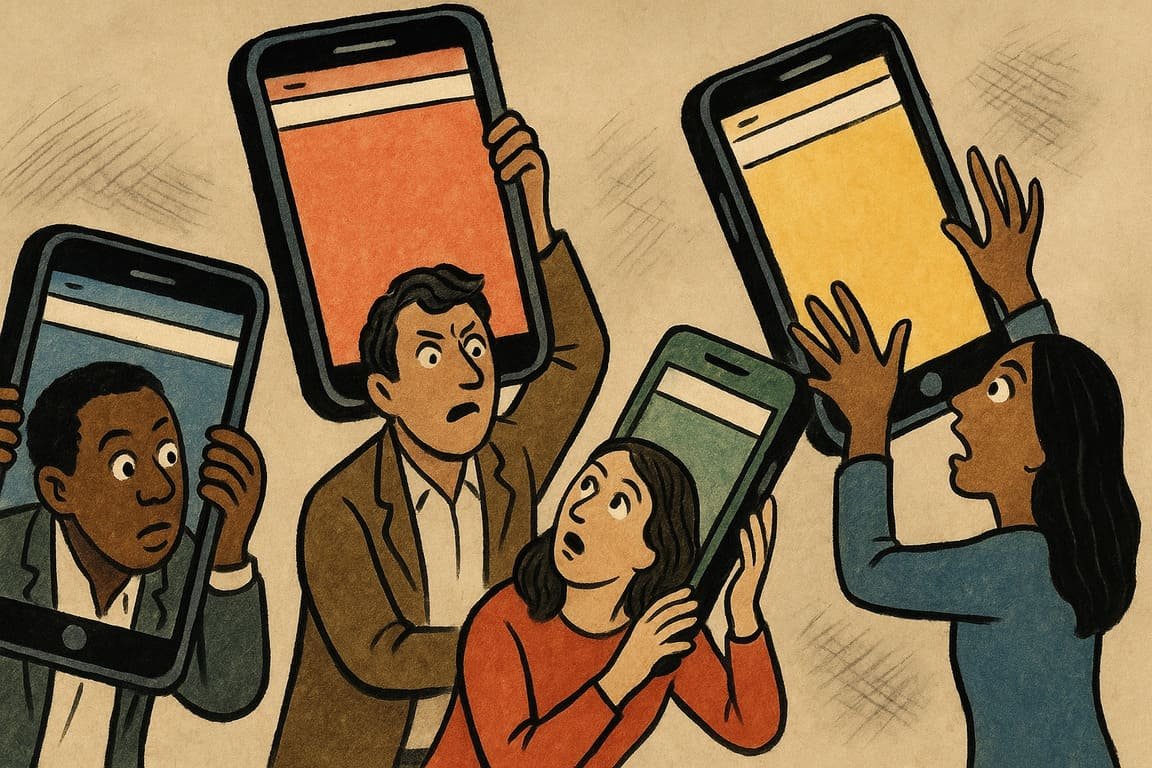
On a humid night in the city’s oldest bus terminal, glowing screens bounce light across tired faces, each thumb scroll a silent wish for speed, delight, and something new. The air hums with the collective restlessness of commuters trapped in perpetual motion, lost in endless app feeds and micro-interactions. A small child, no older than six, teaches her grandmother to swipe right, their laughter rising above the drone of horns and late-night announcements. This is the epicenter of mobile madness, where expectation is not only set by Silicon Valley, but rewritten daily by anyone with a pocket and a need for connection.
The smartphone is no longer a device. It’s an extension of the human hand, a nervous system that links millions of fleeting thoughts, dreams, and complaints. Every user now expects frictionless experiences, custom-fit to their quirks and needs. You can’t bluff your way past their intuition. The moment a loading wheel spins too long, the app gets uninstalled. There’s no brand loyalty, only attention span.
You’re competing for milliseconds. Every microsecond shaved from an onboarding screen, every animation that feels more like a friendly wink than a technical transition, makes or breaks the relationship. You’ve watched people tap an app icon while sipping cold street chai, only to abandon it in the time it takes to hail a cab. That’s the battlefield—every city square, every idle moment.
Mobile madness is fueled by a simple human truth: people want to be surprised, not annoyed. Imagine Zara, a food delivery startup founder in Nairobi, who reworked her app’s menu flow after watching real customers fumble through it with greasy fingers during lunch rush. Her team started hosting live feedback sessions at local cafes, letting users break things and complain. The result was a design that felt less like software and more like a conversation.
As expectations rise, so do the stakes. Push notifications, once novel, now risk feeling like spam. If you want to keep users engaged, you have to offer real value. Think about how a single push from a meditation app at just the right anxious moment can feel like a lifeline, while another from a shopping app at 2 a.m. inspires only irritation and a fast delete.
Designers must learn to anticipate needs before they’re spoken. The mobile user journey is a dance of subtle cues, predictive gestures, and empathy-driven logic. Netflix spent months studying how users watch on cramped trains, adding skip buttons, subtitles, and low-data modes that fit real life instead of some sanitized focus group ideal. Small adjustments, huge impact.
The real revolution is happening outside the tech press headlines. Rural kids in India hack together voice notes on WhatsApp to share homework. Gig workers in São Paulo trade location tricks for navigating city traffic. Each micro-behavior shapes global app trends, forcing designers to adapt or vanish. It’s no longer about features. It’s about relevance.
Accessibility is no longer a legal box to check. It’s a competitive weapon. Every color contrast, every haptic nudge, every alternative input is a chance to invite new users in. Shira, a blind entrepreneur, built her own accessible finance tracker after being ignored by mainstream developers. Her app’s wild success was proof: design for the edge, and the mainstream follows.
The wildest expectations come from the young and the impatient. Twelve-year-olds, building TikTok filters or Roblox worlds in their bedrooms, push boundaries that grown-up designers still hesitate to cross. They want magic. If your app doesn’t deliver delight, they’ll move on. That’s the truth of mobile madness: your best user is the one who challenges you most.
Global culture is shaped on mobile. Street protests, fashion trends, viral recipes—each surges from phone to phone, crossing borders in seconds. Design has to match this urgency and volatility. You are not just designing apps. You are engineering culture.
Mobile madness has a dark side, too. The addiction to swiping, the FOMO spiral, the dopamine loop built into every infinite scroll. Responsible designers admit this, and build with care. Apps that respect the user’s time—offering gentle reminders to step away or sleep—earn trust that money can’t buy.
Every app is a bet on the future: Will people want more automation or more control? More magic or more transparency? Your job is to listen and respond. Test, fail, tweak, and try again. The cycle is relentless, but the rewards are real—every small win ripples outward, shaping how millions experience the world.
In a silent living room, the glow of a charging phone pulses in the dark. Somewhere, a designer dreams up a new gesture, hoping it will change the way people touch the world. Each night, as the city sleeps, mobile madness ticks on—one more update, one more experiment, one more hope that tomorrow’s users will feel something different.
Every expectation is a moving target. Only those who chase it become legends. Are you bold enough to chase faster than the fever?
