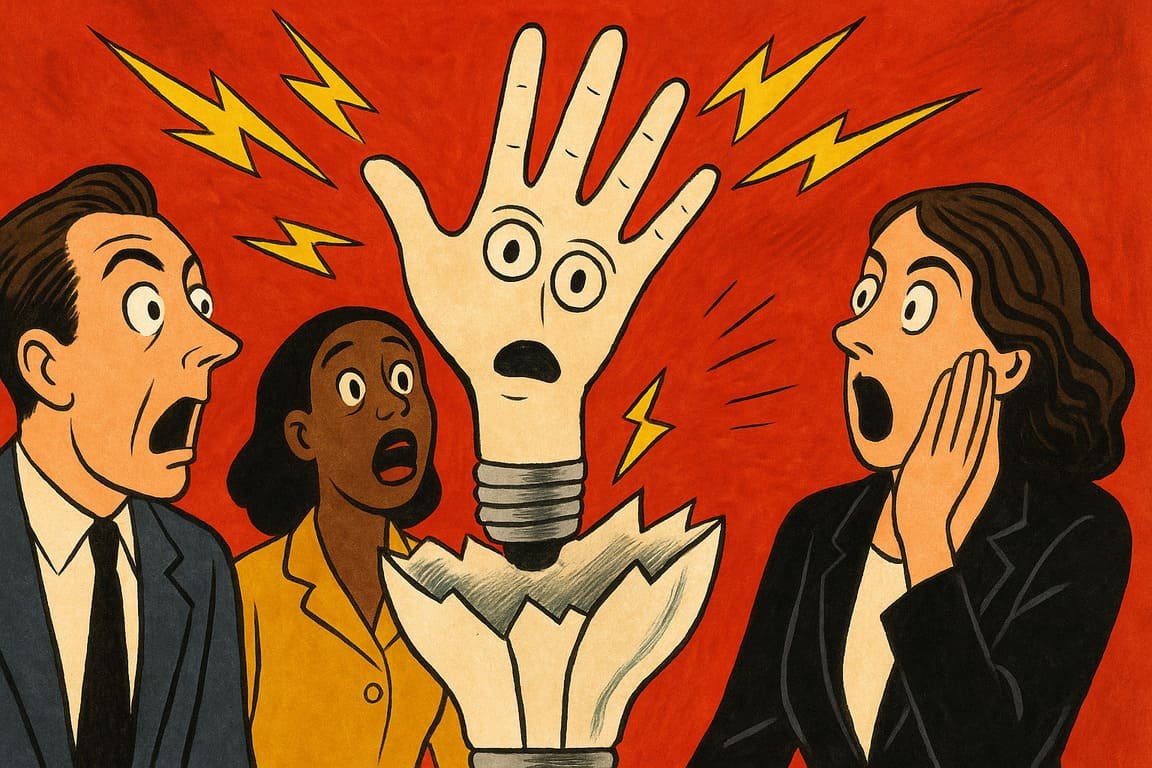
Night settles over the city’s R&D district, where light spills through lab windows like secrets leaking into the street. Inside, teams tinker with code and circuitry, their hands stained with ink and ambition. Whiteboards are crowded with sketches, arrows, and wild promises: “Next Big Thing?” “Break the Rules.” Somewhere in the back, a dog-eared book of business clichés is collecting dust, replaced by a post-it that reads, “Nothing new ever starts by copying.” This is where innovation gets personal, where shockwaves ripple out from unlikely places and the word “impossible” loses all meaning.
You recognize real innovation by its mess. It never looks polished at first. Instead, it’s the awkward prototype, the idea everyone said was pointless, the midnight pivot when funding is gone and hope hangs by a thread. Think of the story behind the Post-it Note: a failed adhesive experiment at 3M found purpose years later when an engineer needed bookmarks that wouldn’t damage his hymnbook. A billion-dollar product was born not from a plan, but from a blunder embraced.
Disruption rarely wears a badge. Consider how Airbnb started—not with tech wizardry, but with two roommates inflating air mattresses to make rent during a design conference. Their willingness to question why hotels had to own all the beds upended an industry. The early critics laughed. Now, hotels study their playbook and pray for a comeback. If you want to innovate, you must first accept looking foolish.
Look at Tesla’s journey. Elon Musk’s pursuit of electric vehicles began as a Silicon Valley curiosity. The early Roadster was expensive, unreliable, and mocked by auto giants. But behind every headline, Tesla’s team obsessed over battery tech, open-sourced patents, and built charging networks nobody thought would scale. Now, every major automaker scrambles to catch up. Innovation is relentless, hungry for fresh experiments and untamed vision.
Sometimes, the most shocking case studies come from overlooked places. In Nairobi, M-Pesa transformed banking by making it possible to send money by SMS. This wasn’t Silicon Valley hype; it was a response to a real problem: moving cash where there were no banks. Skeptics doubted it would catch on. Today, the world studies Kenya’s mobile money miracle. When you solve an urgent pain, innovation finds its moment.
Failure is not a detour but a driver. The story of WD-40—yes, the spray can in every garage—started as formula number forty in a series of failed attempts to create a rust-preventer for rockets. It worked, not as intended, but as essential. The lesson: embrace the dead ends, because sometimes, genius hides in the wrong answer.
You don’t need deep pockets or pedigree to change the game. Sara Blakely, with just $5,000 in savings, created Spanx from her Atlanta apartment. Her quest for a better undergarment led to rejection after rejection, until persistence paid off. Now, her name is shorthand for disruptive thinking, and her story is cited in every MBA program worth its salt. Real innovation often comes from the outside, from people with nothing to lose but their patience.
Even in tech, the big surprises keep coming. Instagram began as a clunky location-sharing app called Burbn. When users flocked to its simple photo filters, the founders doubled down, stripping out features until they had something elegant. Their pivot, driven by close attention to what delighted users, is a masterclass in humility and boldness.
In entertainment, the rebirth of Marvel is legendary. Near bankruptcy, the company risked everything to launch its own film studio, betting on “second-tier” heroes like Iron Man. The gamble paid off, rewriting Hollywood’s rules and spawning a cinematic universe no one saw coming. Innovation doesn’t always reward caution—it favors those who risk their reputations for a shot at something new.
You feel the pulse of reinvention everywhere. In a pandemic, restaurants that launched DIY meal kits survived while others closed their doors. The story of pivoting isn’t glamorous: it’s desperate calls, kitchen chaos, late-night packing, and the moment an owner realizes customers don’t just want food—they want to cook together at home. Creativity is often hidden in crisis, waiting for a window.
All these stories echo the same truth: innovation is less about genius and more about grit. It’s in the willingness to look strange, to get it wrong, to chase what others ignore. It is about being present when inspiration strikes, and stubborn enough not to give up when it fades. You already have what it takes.
Somewhere, a lab’s lights stay on as tired engineers argue over the next experiment. On a rooftop nearby, a founder takes a call, eyes darting to the horizon, searching for a sign. In quiet kitchens and loud boardrooms, someone somewhere is asking: “What if we tried it this way instead?” It’s never the loudest idea that wins, but the boldest, most persistent, and most needed.
The real shock of innovation is that it’s waiting for you, right where things look most impossible.
So—what rule are you brave enough to break next?
