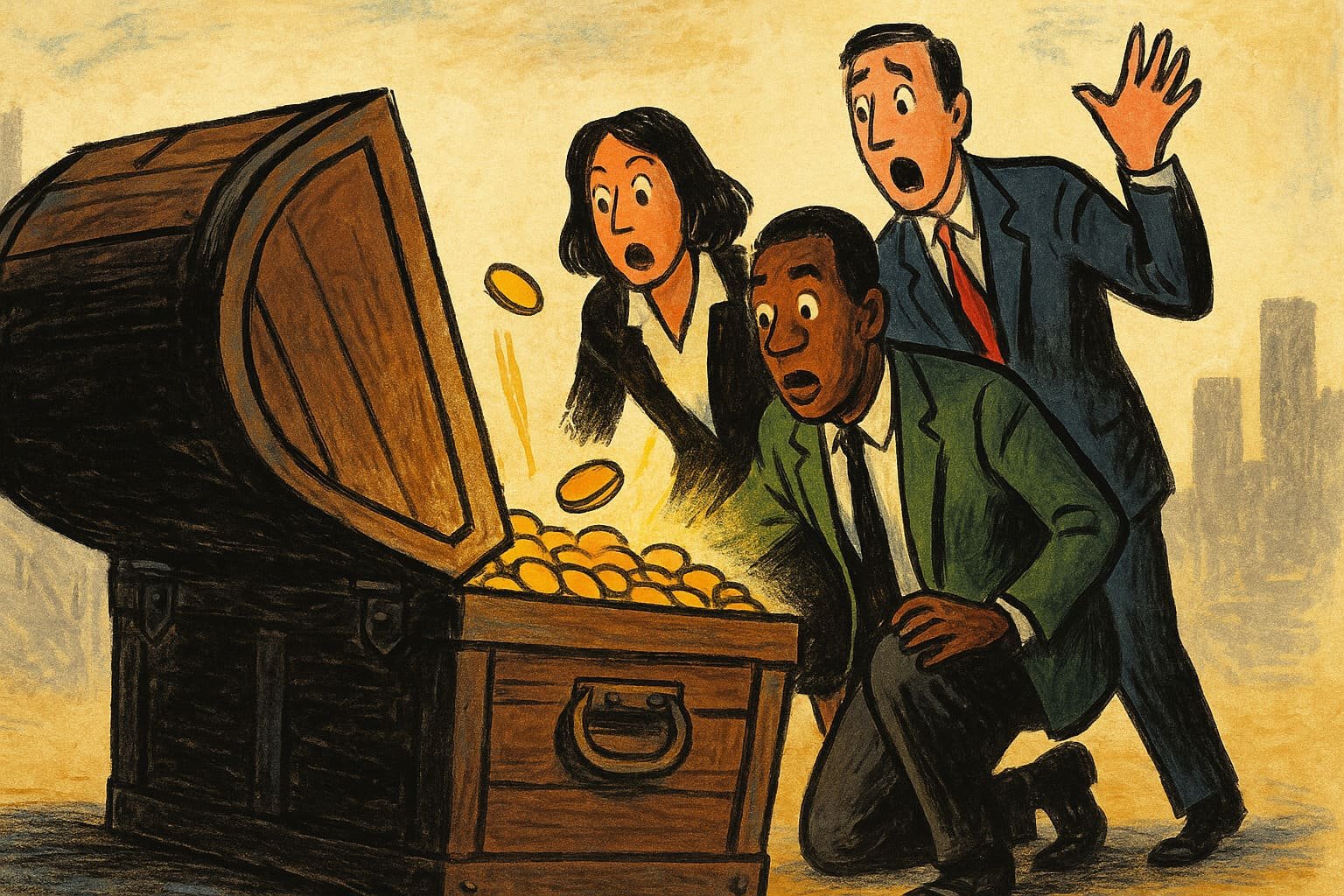
There are buried treasures in business no one talks about. Not because they’re hidden behind lock and key, but because most entrepreneurs don’t know where to dig. Business equity isn’t just a line on a balance sheet. It’s the silent engine of generational wealth, the key that unlocks leverage, freedom, and long-term power. And here’s the kicker: most founders leave it untouched, like pirates abandoning gold to chase pennies.
Business equity isn’t just a financial term; it’s a philosophy. It’s ownership, control, legacy, and value all rolled into one. From small business owners bootstrapping their dreams to venture-backed startups chasing unicorn status, the way you structure, build, and protect your equity defines the wealth you truly create. If cash is king, equity is the kingdom. And today, we’re about to redraw the map.
Quick Notes
- Equity Isn’t Just Ownership, It’s Leverage: True business wealth is hidden in ownership. Equity enables influence, funding, and scale in ways cash never could.
- Most Entrepreneurs Undervalue Their Own Equity: Too many founders give it away too soon or too cheaply. Learning how to protect it is a superpower.
- Creative Equity Structures Are the New Competitive Advantage: Equity isn’t one-size-fits-all. Smart entrepreneurs use it to attract talent, investors, and partnerships.
- Equity Liquidity Is Possible Without Selling Your Soul: You don’t have to go public or sell out to extract equity value. Secondary markets and structured deals are rewriting the rules.
- Your Equity Narrative Matters More Than Your Numbers: Investors and partners buy into your story. Owning the narrative amplifies your equity’s perceived value.
The Invisible Asset: Why You’re Richer Than You Think
Ownership has always been the quiet revolution. When Brian Chesky and Joe Gebbia rented out air mattresses in their apartment, they had nothing but a sliver of equity. That sliver is now worth billions. The math was never in the mattress; it was in the multiplier effect of owning the idea. Equity takes what looks like nothing and turns it into the leverage of a lifetime.
Every business owner is sitting on latent value most don’t see. You might have five loyal clients and a local operation, but if you own it, you control its destiny. That control has value far beyond your revenue today. It gives you options; to raise funds, bring in partners, or exit on your terms. And that freedom is what every wealthy entrepreneur fights for.
Equity grows in silence. You won’t see it compound like cash, but every decision that builds brand, trust, and systems makes it stronger. If you’re spending your time increasing revenue without touching valuation, you’re sprinting on a treadmill. Equity is the staircase.
Too many founders focus on income instead of infrastructure. Yet, infrastructure is what buyers pay for, investors bank on, and successors inherit. Equity rewards those who build strategically, not just busily. It’s delayed gratification with exponential upside.
The next time someone asks how business is going, don’t just talk revenue. Talk ownership. Ask yourself: what am I building that outlasts me? That’s where equity lives.
The Great Giveaway: How Founders Lose the Farm Without Knowing
Picture a 27-year-old founder with a brilliant product, some traction, and a dream. An angel investor comes along with a check and charm. They take 30% of the company. Three years later, that investor has tripled their stake’s value, and the founder? Burned out, diluted, and locked out of decisions. This isn’t a cautionary tale. It’s the norm.
The most common mistake in entrepreneurship is selling equity without understanding it. Equity feels like monopoly money early on. Founders hand it out for favors, marketing help, developer work. They forget it’s their only real currency. Once it’s gone, it doesn’t regenerate. Every share matters.
Investor capital is seductive because it feels like momentum. But when you raise at the wrong time, on the wrong terms, you might be trading a jetpack for a parachute. Funding without a plan to protect equity is just speed towards uncertainty. Every dollar raised should be weighted against the control it costs.
What’s worse is founders don’t always feel the pain immediately. It creeps in later when big decisions require board approval or when they can’t fire an underperforming cofounder who owns 25%. Suddenly, the dream is governed by people who didn’t build it. Equity missteps are silent killers.
Protecting equity isn’t about greed. It’s about vision. It’s about building something that reflects your values, not just your balance sheet. The question isn’t “how much can I raise?” but “how much am I keeping?”
The Power of Structure: Equity Isn’t One-Size-Fits-All
Ask ten founders how they structured their equity, and you’ll get ten radically different blueprints. That’s the point. Equity is a toolkit, not a template. Used well, it can attract game-changing hires, form unstoppable alliances, and signal trust to stakeholders. Used poorly, it creates resentment, imbalance, and instability.
Consider Canva. They built one of the most equitable company cultures in tech by giving generous employee stock options. It wasn’t just a gift. It was a statement. When people feel they own a piece of the outcome, they work like owners. Equity is a motivator more powerful than any perk.
Founders often overlook phantom equity or profit-sharing models. Not everyone needs shares on paper. Sometimes, a revenue share or performance-based bonus creates buy-in without dilution. Flexibility in structure is where smart leadership lives. Cookie-cutter cap tables create cookie-cutter companies.
There’s also the question of founder dynamics. Not every founder needs equal ownership. Contributions, risk, and timing should influence splits. Equity should reflect value creation, not just friendship. Misaligned equity among founders is a ticking bomb no pitch deck can hide.
The structure isn’t just legal. It’s emotional. It sets the tone for how people show up. A messy equity story signals misalignment to investors and breeds dysfunction within teams. Structure wisely, or restructure painfully.
The Liquidity Myth: You Don’t Have to Exit to Cash Out
Who says you need to IPO or sell to enjoy your equity? That’s old school. The new era of entrepreneurship is about liquidity without losing the reins. Secondary shares, revenue-based financing, earn-outs, and even SPVs are rewriting the exit playbook. There are ways to turn equity into cash without turning in your resignation letter.
Founders today are renegotiating the rules. Look at companies like Calm or Notion. Founders took chips off the table during funding rounds, ensuring personal financial stability while continuing to build. That freedom fuels better decision-making. It’s hard to innovate when you’re worried about rent.
Early liquidity isn’t a betrayal of the mission. It’s protection. It helps founders stay in the game longer, think clearer, and resist bad deals. The myth that you have to suffer financially until exit is just that; a myth. Smart equity strategy includes founder wellbeing.
Even employees can benefit from better liquidity design. Platforms now exist to help employees sell options pre-exit. Why build a generational company while starving your team of generational wealth? Equity should serve everyone involved.
It’s time to redefine success. Not every win is a billion-dollar exit. Sometimes, it’s keeping control, building on your terms, and living well while doing it. Ownership should mean freedom, not a cage.
Crafting the Story: Equity Is Narrative, Not Just Numbers
People don’t invest in spreadsheets. They invest in belief. Your equity is only as valuable as the story surrounding it. Is it a story of resilience, disruption, innovation? Or confusion, dilution, and desperation? The narrative drives perception. And perception drives value.
Consider the founder of Spanx. Sara Blakely never took outside funding. Her story wasn’t just bootstrapped brilliance; it was a masterclass in narrative equity. Investors and acquirers didn’t just see a profitable brand. They saw a founder who held the reins, who bet on herself. That confidence adds a multiple to any valuation.
Your pitch deck is part of your equity. So is your brand voice, your origin story, your team alignment. These elements weave a tale that says, “We’re worth more than our P&L.” The better the story, the higher the value others assign to your ownership.
Narrative also fuels internal culture. When your team believes they’re part of something meaningful, equity becomes a badge of honor. That energy becomes palpable to partners, media, and customers. Equity without story is just stock. With story, it’s currency.
So, ask yourself: What’s the legend you’re writing with your ownership? Make it gripping, make it true, and most of all, make it yours. Equity isn’t just what you own. It’s the story others believe about what you’ve built.
The Treasure Was Never Buried. You Just Needed the Map
Here’s the truth no one tells you in business school: equity isn’t the prize at the end of the journey. It is the journey. The difference between thriving and surviving often comes down to who owns what, why they own it, and what they do with that power. Every invoice you send, every contract you sign, every system you build either strengthens or weakens that ownership.
Most people chase profit and miss power. They chase revenue and miss wealth. But equity? That’s the lever that tilts the whole game board. The founders who win don’t just create products; they shape narratives, protect ownership, and play the long game. They don’t sell the farm. They grow it.
So the next time you think of your business, don’t ask, “How much did I make this month?” Ask, “What did I build that someone else would want to buy a part of or better yet, all of?” That shift changes everything.
There’s fortune in your foundation. There’s power in your paperwork. And there’s freedom in your equity. You just have to unlock it.
Now ask yourself: Are you building a business that can run without you or one that only runs because of you? That answer reveals the true value of what you own.
Partnered. Provocative. Worth Your Scroll.
This is a Promoted Post by ESYRITE—yes, it’s paid, but never filtered. Our voice stays raw, real, and razor-sharp. We team up with bold ideas, game-changers, and stories that spark something real. If it’s here, it earned its place—no fluff, just impact. We don’t just promote—we provoke. Stay sharp. Dive deeper.
