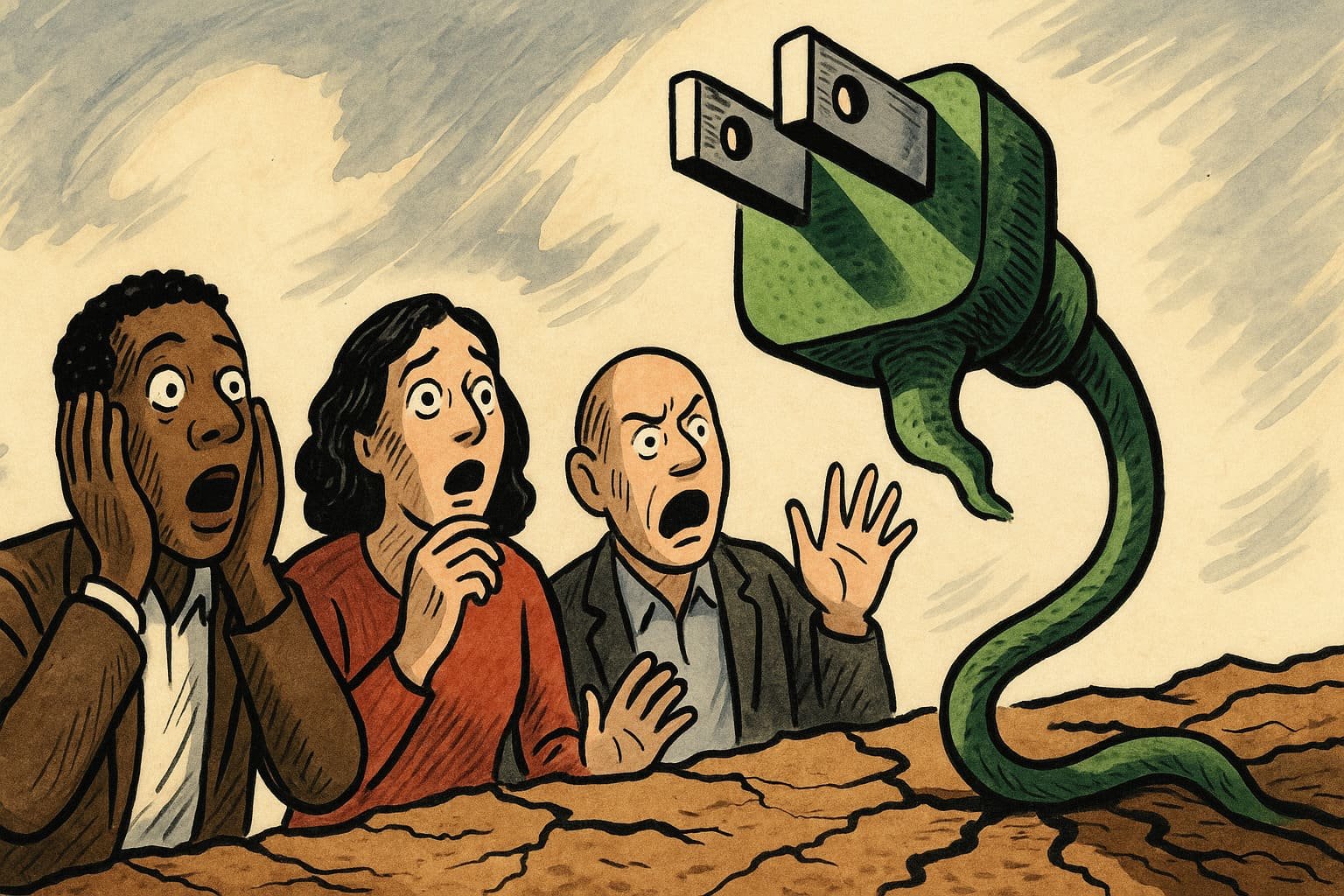
What if you woke up one morning and the world had run out of fossil fuels? No more traffic jams snarled by fuel shortages, no more debates echoing through parliament about oil prices, no more black smoke curling over city skylines. At first, panic pulses through the streets; headlines shriek, politicians squabble, and social feeds explode with dire predictions. For decades, we’ve been haunted by the myth that civilization would collapse without coal, oil, and gas. The specter of a future without fossil fuels has been painted in the harshest colors, as if society would unravel, economies would collapse, and darkness would swallow progress whole.
Yet, somewhere amid the confusion, a different story starts to shimmer. Wind turbines hum quietly along the horizon. Solar panels glint on city rooftops. Innovators in Berlin and Nairobi wake up, sip their coffee, and return to designing the tools of a new era. Families learn that the world keeps spinning; kids still giggle, bread still rises, and hope, remarkably, flourishes. The day fossil fuels run out is not the end, but the beginning of a new chapter. History’s greatest transformations have always been born from moments of disruption. This one is no different.
Every civilization faces a crossroads where fear can paralyze or ignite a movement. The question is not, “Can we survive without fossil fuels?” but, “What kind of future do we dare to build now that the old rules no longer apply?” Fasten your seatbelt. The road ahead is wild, winding, and bursting with possibility.
Quick Notes
- A Future Without Oil Isn’t a Blackout: Society can thrive beyond fossil fuels, fueled by human creativity and renewable innovation.
- Crises Spur Evolution, Not Extinction: Past energy revolutions show that bold adaptation, not fear, drives civilization forward.
- Clean Energy Empowers Communities: Decentralized solutions put power; literally and figuratively back in the hands of everyday people.
- Human Ingenuity Outpaces Scarcity: Every era’s “end” is a beginning, as new industries, skills, and cultures bloom in unexpected places.
- A Fossil-Free World Is a Canvas: The end of oil is not a void but an invitation to paint the future with more color, fairness, and hope than ever before.
Breaking the Spell: Why the Fossil Fuel Dependency Myth Persists
For a century, fossil fuels have been cast as civilization’s backbone, their value so woven into daily life that alternatives felt like wishful thinking. School textbooks chronicled oil booms as moments of national pride. Politicians built careers on promises to protect “energy security,” equating it with barrels and pipelines. Yet, this story is more illusion than destiny, a spell reinforced by those with the most to lose.
Eli, an auto mechanic in Detroit, spent his life surrounded by engines and exhaust. When electric vehicles rolled into his shop, he worried about job security. The initial fear gripped his colleagues, but Eli saw opportunity. Retraining as an EV specialist, he now earns more, works cleaner, and feels part of something bigger. Eli’s transformation reflects a larger truth: industries anchored in fossil fuels survive not because of necessity, but because inertia and fear often outweigh curiosity.
Pop culture and media have magnified this inertia, painting renewables as unreliable or expensive. Cartoons show wind turbines stalling on calm days and solar panels struggling under clouds. The real world tells a different story. Cities in Scandinavia, villages in Kenya, and towns across Australia now light up at night powered entirely by renewables, with grids so resilient that blackouts are rare.
Maslow’s hierarchy teaches that after food and shelter, people crave safety. Fossil fuel industries have masterfully tied energy to this primal need, warning that change means chaos. Yet, history shows that genuine security comes from adaptability. When Londoners first switched from wood to coal, doomsayers warned of cold nights and hunger. Instead, ingenuity blossomed and new industries flourished.
The myth endures not for lack of solutions, but because stories shape perception. The real magic lies not in the fuels beneath our feet, but in the courage to rewrite our story. When we break the spell, a brighter, cleaner narrative becomes possible.
When the Oil Stops: How Crisis Creates Opportunity
Crisis strips away excuses. During the oil shocks of the 1970s, lines snaked around gas stations and panic seized the air. Out of desperation, inventors began tinkering with solar water heaters and windmills. Decades later, these innovations matured into billion-dollar industries, fueled by people who refused to accept scarcity as fate.
Singapore, a nation with no natural resources, could have surrendered to pessimism. Instead, its leaders turned to water recycling and solar investment, building a world-class, green economy. Today, Singapore’s urban farms and electric buses serve as proof that necessity really is the mother of invention. By facing crisis head-on, nations find their creative edge.
Communities often discover surprising strength when the old system stumbles. In Puerto Rico, after hurricanes flattened power lines, neighborhoods pooled money to install microgrids. A bakery owner named Rosa saw her solar-powered ovens become a beacon for her neighbors, turning crisis into resilience. Her story isn’t unique; everywhere fossil fuels falter, communities adapt faster than policy papers predict.
Psychology tells us that fear is a double-edged sword. It can freeze people in place, or it can ignite extraordinary acts. Daniel Pink’s theory of “Drive” argues that autonomy, mastery, and purpose are more motivating than money alone. When fossil fuel certainties collapse, people rediscover these deeper sources of energy, both literal and figurative.
Every era has its prophets of doom, but the real legacy of energy transitions is optimism. From whale oil to kerosene, from steam to gasoline, each “end” marked a leap forward not just technologically, but socially and culturally. The extinction of fossil fuels is not a cliff, but a launchpad for the next human adventure.
Power to the People: How Clean Energy Reinvents Communities
Renewables are more than just a technical fix. They are a revolution in who controls power; both electrically and politically. For the first time, ordinary people can become energy producers, not just consumers. This flips the traditional script, undermining monopolies and redistributing economic clout.
In Germany, the “Energiewende” movement started as a grassroots push. Now, towns own their wind farms and sell electricity back to the grid. Maria, a retired schoolteacher, invested in a solar cooperative that keeps her village bright through the winter and funds local schools. Her income isn’t just financial; it’s pride, purpose, and proof that the old rules have changed.
The story echoes far beyond Europe. In Bangladesh, solar micro-loans empower women to launch businesses, providing light for study and trade in rural communities. Every solar panel is a small act of rebellion against centralized, polluting power. People who once felt locked out of progress now shape it, as decision-makers and beneficiaries.
Pop culture, too, has started catching on. Films and novels now feature inventors and activists as heroes, not just oil barons and tycoons. New legends grow in the public imagination; young engineers designing water turbines from bicycle parts, artists decorating solar-powered homes with local flair.
Community energy projects often spark unexpected benefits. Neighborhoods become more cohesive. Money once spent on distant fuel imports now circulates locally, funding parks, healthcare, and innovation. Each success story creates a ripple, inspiring others to leap where tradition once dictated caution.
The age of renewables isn’t just about saving the planet; it’s about handing power to people who never had it before. The next energy revolution is communal, not corporate, and its greatest victories are still ahead.
The Ingenuity Surge: Why Scarcity Breeds Invention, Not Extinction
Every age of abundance ends with a cry of panic then a surge of creativity that no one predicted. The fear of scarcity can be paralyzing, but it’s also the parent of every bold leap. The end of fossil fuels would force humanity to draw deeper from the well of innovation than ever before.
Tesla, the iconic electric car company, grew out of the ashes of oil dependency. Founder Elon Musk bet his last dollar that batteries and solar power could work at scale. Critics mocked him, investors fled, yet the company sparked a seismic shift in how people move, build, and power their homes. The ripples are everywhere; automakers scramble to catch up, startups experiment with hydrogen, and architects reimagine skylines for a sun-drenched future.
Scarcity redefines luxury. In cities like Copenhagen, cycling became the symbol of smart living, not poverty. Designers compete to create energy-positive buildings, turning city blocks into batteries. The result is not deprivation but abundance, measured not in fuel burned but in life enhanced.
Ikigai, the Japanese concept of “reason for being,” teaches that purpose emerges in the pursuit of challenges worth solving. The fossil-free future is exactly this kind of challenge; a riddle that invites the world’s brightest minds to dream bigger. Each new problem; storage, efficiency, grid management, becomes a playground for the curious and the brave.
Pop culture is evolving too. TV shows celebrate clean energy breakthroughs, and influencers trade tips on off-grid living. School science fairs brim with ideas for harnessing wind, waves, and even human movement. The future feels less like a dystopia and more like a festival of invention.
Humanity has always thrived on reinvention. Scarcity doesn’t doom us. It forces us to invent tomorrow’s miracles, today.
Painting the Canvas: What the World Looks Like After Oil
The world after fossil fuels isn’t a void. It’s a canvas, blank and waiting for new color. Each day, a new story unfolds; cities that hum with clean energy, farms powered by sunlight, children breathing air crisp and unspoiled. The question isn’t whether we can live without oil and gas. The question is, what kind of world do we want to build now that we’re free?
Seoul’s skyline twinkles with solar panels, transforming office towers into vertical power stations. Farmers in Iowa rotate crops and manage wind turbines side by side, harvesting both food and energy. In Cape Town, desalination plants powered by the sun bring water to communities that once feared drought. Each example is a piece of the broader picture; a world where ingenuity, not fossil fuel reserves, defines prosperity.
Artists, writers, and musicians take inspiration from this renewal. Songs celebrate solar heroes, murals depict green revolutions, and novels imagine bustling cities powered by tides and wind. The culture of the fossil-free era feels vibrant and full of promise. It’s not about loss; it’s about rediscovering joy in what endures and thrives.
Socially, the shift means more than carbon reduction. Cleaner energy often means less inequality, as small communities generate wealth and health on their terms. Women and minorities, long excluded from old energy industries, take leading roles in new ventures. A world free from fossil fuels is one with more seats at the table, more voices shaping destiny.
Legacy industries may resist, but every day, new leaders emerge; people who see not a sunset, but a sunrise. These pioneers aren’t just technocrats. They’re visionaries, teachers, dreamers, and rebels. The post-oil future belongs to those bold enough to fill the canvas with every color they can imagine.
The Last Drop: And the First Dawn
The oil age began with a single spark. It will end with a different kind of fire; the fierce light of imagination. As the old wells run dry, the doomsayers will gather, predicting collapse and chaos. Yet, history belongs to the builders, not the worriers. The real story is not of extinction, but of transformation.
Every generation is handed a moment to decide what kind of world it wants to inherit and what kind of legacy it leaves behind. We now stand at that crossroads. The last drop of oil is not the end of comfort or progress. It’s the first dawn of a civilization wise enough to write its own next chapter.
So ask yourself: When the old fuel fades, will you mourn what’s lost, or rise to shape what comes next? The future is not waiting for permission. It is waiting for you. Your move. What will you create with a world no longer chained to the past?
Partnered. Provocative. Worth Your Scroll.
This is a Promoted Post by ESYRITE—yes, it’s paid, but never filtered. Our voice stays raw, real, and razor-sharp. We team up with bold ideas, game-changers, and stories that spark something real. If it’s here, it earned its place—no fluff, just impact. We don’t just promote—we provoke. Stay sharp. Dive deeper.
