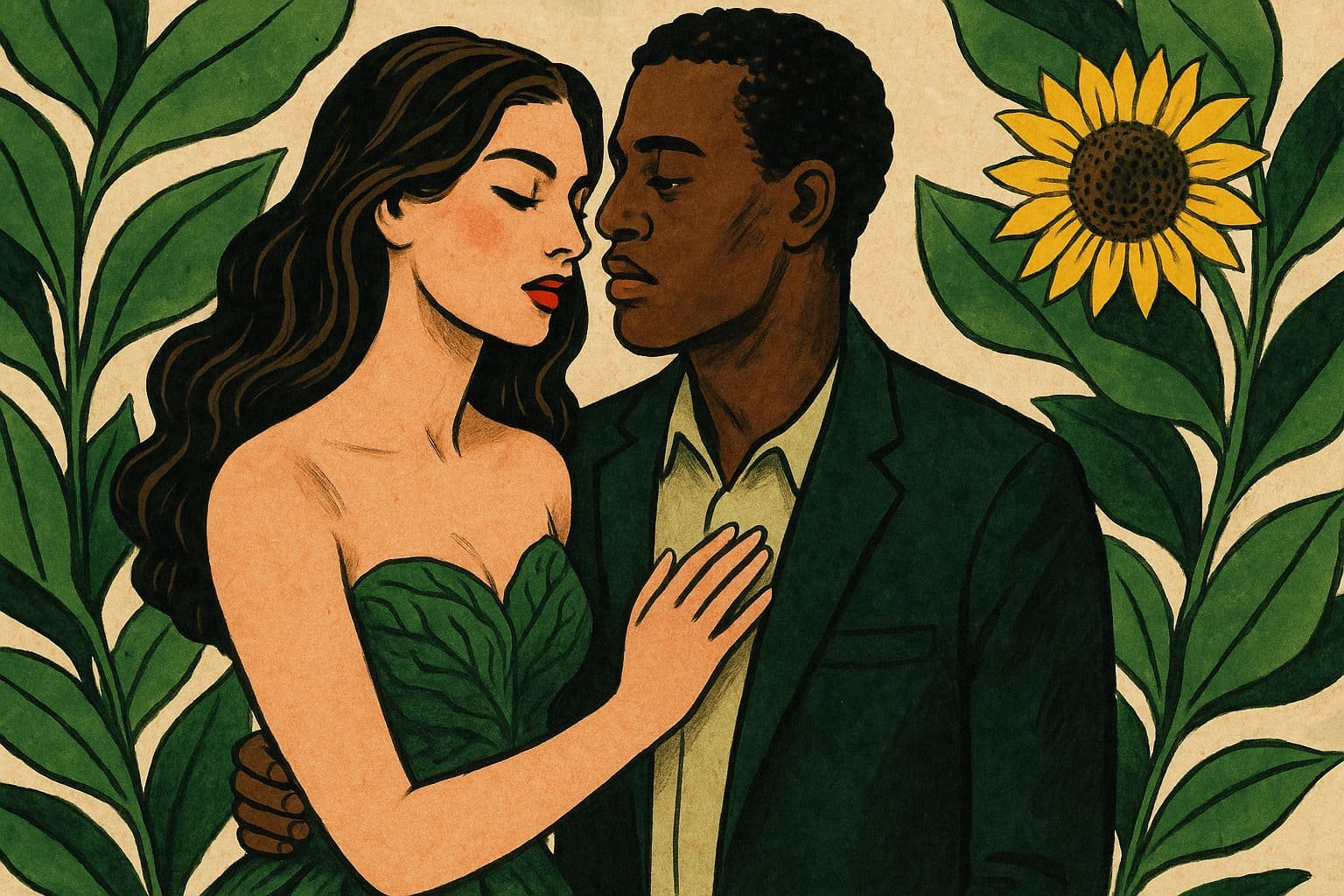
Beneath the golden glare of a gallery’s opening night, a crowd sways in slow motion, glasses clinking, eyes darting between canvases and the flash of high-top sneakers—organic, of course—worn by a tech founder who just closed a seed round. Someone fingers a jacket woven from upcycled parachute silk, its sheen outshining every suit in the room. Green here isn’t the backdrop; it’s the headliner, the celebrity nobody wants to admit they’re copying. The air carries a subtle tension, equal parts envy and curiosity, as if each guest suspects their neighbor knows a secret shortcut to immortality, or at least Instagram virality. No one mentions climate change or circular economies, but every conversation dances around one obsession: who looks the part, who walks the talk, and who just arrived to watch the world’s oldest virtue—virtue itself—get a glossy, irresistible reboot. In this room, sustainability isn’t just a cause. It’s a status symbol that seduces.
A designer slides her hand along a wall of reclaimed wood, as if testing its pulse for hidden stories. The whisper of renewable bamboo flooring beneath thousand-dollar boots draws an unspoken comparison between old-world decadence and new-age virtue. At the bar, an architect lifts a drink poured from a compostable bottle and jokes that the new luxury is not owning more, but leaving less behind. The laughter it sparks is sharp, tinged with relief, as if they’re all in on a collective inside joke: green is no longer about guilt or sacrifice. It’s about desire, pleasure, and the thrill of signaling you know what’s next.
Through the glass, a Tesla glides up, neon reflected in its curves. A former finance executive, now a sustainability coach, steps out, phone in one hand, linen tote in the other, eyes scanning for recognition. Each detail in this tableau is curated, each choice a billboard for status and values. The invisible metric is no longer net worth but net impact, measured in the shade of green you wear and the story you can sell about it.
Down the hall, a mural of moss and living plants hums beneath soft lighting. A startup founder poses for a story, coat collar popped, smile sharp, whispering, “It’s all biodegradable, even the lining.” The photographer nods, snapping a shot destined for a glossy spread on the future of cool. Yet behind every aesthetic flourish is a question no one asks aloud: if everyone’s going green, who decides what looks good—and what changes the world?
One entrepreneur sips her matcha, turning a simple gesture into a manifesto. In her gaze, there’s something ancient—a hunger for relevance, the drive to belong, the need to matter. Sustainability has slipped into something more dangerous, more seductive. It’s not just business. It’s personal. And that’s why, in this new age of Eco Chic, you’re not just buying a product. You’re buying a piece of the future, dressed for the front row.
Quick Notes
- Eco Is Status Now: The green revolution got a glow-up—today, it’s more desirable to be seen with an upcycled duffel bag than a diamond clutch. Social capital is measured in compostable coffee cups and linen sneaker drops.
- Design Drives Desire: Sexy wins hearts before science wins minds. Sustainability becomes irresistible when designers make it sleek, not preachy—see the electric Mustang that outsells gas-guzzlers just because it looks good in selfies.
- Tech Makes It Stick: Smart companies use AI, blockchain, and biomaterials to make “green” not just better, but unavoidable. Even McKinsey’s top consultants now wear T-shirts printed with algae ink to look relevant in boardrooms.
- Culture Is the Trojan Horse: A-list rappers drop verses about biodegradable bling, TikTokers film thrift flips that go viral, and even reality TV stars flex green credentials. Mass adoption sneaks in where you least expect it.
- Money Follows Meaning: Investors back brands with an ethical edge. The new unicorns build empires on eco-aspirations, flipping the script from “save the planet” to “make desire the engine of change.” If you want to win, you have to make green irresistible.
Why Virtue Is Now a Luxury Good
Eco chic is not a trend; it’s a global reset in how value, status, and cool are defined. Once, a Hermès bag or a Porsche key fob signaled your worth. Now, the right bamboo phone case or vegan sneakers spark more conversation and envy than diamonds ever did. The new elite want to signal that they care, not just that they can afford things. Brands like Stella McCartney and Allbirds made sustainability fashionable, turning recycled materials into runway essentials and demonstrating that green can drive the same FOMO as limited sneaker drops.
One Friday night, a Paris startup founder named Luc arrives at a rooftop party carrying a briefcase made from old fishing nets. People ask about the bag before they ask about his app. That’s the new currency of cool: signaling climate awareness is as vital as having a killer pitch deck. Each gesture—a thrifted blazer, a reusable water bottle—telegraphs an allegiance to the future, and to a tribe that values meaning over excess.
Social media has poured gasoline on the movement, making every ethical purchase a public act. Instagram influencers frame their avocado toast beside upcycled plates, the caption as carefully curated as the image. That sense of theater, the performative display of green choices, accelerates cultural change. It makes eco-friendly living aspirational, not austere, and suddenly everybody wants a seat at the table.
When Beyoncé wears solar-powered headphones in a music video, the message is loud and clear: green is glamorous, and you’re missing out if you’re not onboard. This halo effect ripples outward. A Gen Z coder in Nairobi now dreams of founding a plastic-free fintech startup, inspired less by lectures than by watching her heroes make it cool to care. The desire to be included, to be admired for doing good, beats almost every rational argument.
The lesson is simple and brutal. People don’t change because it’s the right thing to do. They change when the right thing is rebranded as the next big thing. That’s why the brands and founders who win are those who make sustainability feel exclusive, beautiful, and worth bragging about.
Sexy by Nature: When Sustainable Design Wins the Heart
Great design sells itself, but eco chic design rewires what people want—sometimes before they even know it. An electric car becomes a must-have when it feels like an iPhone on wheels, not a sacrifice on four tires. Think of the first time you held an aluminum water bottle from S’well or eyed an Oura ring that tracks your sleep and looks like a James Bond gadget. Desire for green products starts in the senses: touch, taste, scent, and sight.
Behind every viral eco product lies a designer who made green irresistible. At a Milan design fair, a collective called “Green Room” unveiled chairs molded from coffee grounds and sugarcane. Attendees couldn’t stop touching the texture, snapping photos, or posting stories with cheeky captions about sitting on last week’s breakfast. That’s not guilt at work. That’s seduction.
Apple’s move to recycled aluminum and bioplastics isn’t driven by shareholder letters—it’s driven by knowing you’ll show off your new device at a café, proud that it feels different, lighter, even smarter. Suddenly, sustainability is part of your story, and your story gets you attention. It’s not about sacrifice; it’s about self-expression.
Brands that nail eco chic don’t talk about melting glaciers. They talk about how their shoes breathe, how their shampoo smells like a forest after rain, how the experience feels better because it’s sustainable. This emotional trigger—pleasure—replaces the old emotional trigger of fear or shame. Beauty, not duty, drives loyalty.
Designer Mara Vega recalls her breakthrough: “We made a handbag out of recycled billboards. It wasn’t just sturdy; it had attitude. Buyers lined up because they wanted something edgy that nobody else had, and the eco story sealed the deal.” That’s how green becomes an object of desire: not by appealing to the conscience, but by seducing the senses.
Next time you spot a friend showing off their new solar-powered backpack, notice the pride, the thrill of novelty, and the quiet pleasure of being ahead of the curve. That’s the magic formula: design so compelling that green becomes the only choice that feels right.
The Algorithm Wears Prada: How Technology Makes Sustainability Stick
Sustainability, once seen as slow and costly, now moves at the speed of an app update. The world’s smartest startups weaponize tech to make green the default, not the exception. Algorithms optimize supply chains to cut waste, blockchain certifies the source of every drop of fair-trade coffee, and AI models scan Instagram to predict the next upcycled trend before it explodes. If design is the face of eco chic, technology is its nervous system.
In Shanghai, software engineer Jiao Chen led her team at “GreenCart” to automate carbon labeling on grocery sites. Shoppers could see at a glance which products were locally sourced or came in compostable packaging. The result? An instant spike in sales for anything green, as convenience trumped inertia. Green wasn’t just available. It was obvious, easy, and one click away from gratification.
Tesla’s “over-the-air” updates did more for electric car culture than any ad campaign. Drivers felt their vehicle was alive, evolving, always fresher, always smarter. In that moment, buying green stopped being a political statement and became a flex—a badge of early adoption.
Tech’s impact runs deeper than gadgets. Biomaterials make it possible for designers to work with mushroom leather and algae foam, while 3D printing slashes waste and lets consumers co-create their next pair of custom shoes. Suddenly, every purchase can feel like a Kickstarter reward—exclusive, personal, and dripping with social currency.
At the annual Web Summit, investor Ada Karlsen put it bluntly: “If your sustainability play can’t scale with software or show up in someone’s feed, it’s not going to change the world. Make it smart, make it sexy, or watch it die.” The crowd nodded, phones raised, scanning for the next app that would let them swipe right on eco chic.
If you’re building a brand or a business, the lesson is brutal but liberating. Stop selling sacrifice. Code green into every convenience, every update, every habit. Make the sustainable choice the path of least resistance—and you’ll own the future before your rivals know what happened.
When Eco Hits the Mainstream (and Changes Everything)
Eco chic went viral the moment pop culture decided green was hot. Forget lectures and laws; it’s rappers, actors, and Twitch streamers who are rewriting the rules of cool. Billie Eilish swaps fast fashion for upcycled couture, sending fans scrambling for thrift finds. Gucci launches “Off The Grid,” a collection crafted from scraps and castoffs, making luxury feel rebellious again. The message is everywhere: if it isn’t sustainable, it’s not just uncool—it’s invisible.
One winter, streetwear label “Neon Moss” dropped a limited run of jackets using leftover tent fabric from music festivals. The jackets sold out in hours. Customers lined up not just for warmth, but for the story: every piece had a barcode showing which festival the fabric came from. Wearing the jacket felt like wearing a slice of pop history—exclusive, nostalgic, and green by design.
Reality TV crowned its first “Sustainability Queen” when influencer Tyra Vale built her TikTok empire on thrift flips and plant-based recipes. Her followers doubled overnight after she challenged rivals to spend a week without plastic. Cultural gatekeepers didn’t just join the party; they made eco living aspirational. The more outrageous the challenge or the story, the faster it spread.
Even Hollywood leaned in: superhero franchises began featuring heroes who powered their gadgets with sun and wind, while film festivals celebrated shorts shot entirely on solar power. Kids started swapping Marvel T-shirts for ones made from recycled bottles. Culture, not regulation, is how green ideas became mainstream, sticky, and impossible to ignore.
The takeaway for any leader or founder is as clear as it is ruthless. Embed your green story in pop culture, not just policy. If your eco move isn’t meme-able, quotable, or wearable, it will be forgotten. Make it fun, viral, and loaded with identity—then watch it scale in ways policy never could.
From Burnout to Buy-In: Why Money Flows to Eco-Desire
Green isn’t just a marketing trend. It’s the new business imperative, and the ones who profit most are the brands that make it impossible to look away. Investors now hunt for companies that turn climate anxiety into aspiration and status. The most valuable startups don’t just lower carbon footprints—they help people look good doing it. That flips the traditional business script and writes a new rulebook for leadership, growth, and loyalty.
After years in luxury retail, Alix Renard co-founded “PlushLoop,” a label turning used hotel sheets into upscale loungewear. Early investors balked until Renard staged a fashion show in a warehouse with models emerging from laundry baskets, strutting to dance beats as clouds of linen scent filled the air. The stunt went viral. Orders spiked, investors returned, and every piece sold out. Renard later said, “If you want people to care, you have to seduce, not scold.” That became PlushLoop’s mantra.
The financial markets responded. Banks started rewarding companies with sustainability-linked loans, but only if their strategies came with irresistible branding. Suddenly, purpose wasn’t just a moral advantage; it was a competitive one. Brands that made green sexy won better deals, higher retention, and a magnetic pull on talent.
Customers vote with their wallets, and today they’re buying hope, identity, and meaning along with their products. The brands that last will be the ones that let you wear your values, flaunt your ethics, and join a movement that feels larger than life. The alternative—selling the same old stuff, shaming the consumer—will fade, irrelevant and ignored.
So the playbook is set: package impact as desire, sell transformation as status, and build businesses that are as irresistible as they are responsible. The brands that get this right won’t just change the market—they’ll change the world.
Desire Is the Ultimate Disruptor
A silent gallery, long after the guests are gone, flickers with leftover laughter and the ghost of ambition. In the shadows, a single green sneaker sits beneath a neon sign that reads “Tomorrow’s Icons.” The hum of refrigerated air, the lingering scent of bamboo and champagne, the memory of a mural still alive with moss and light. This is the altar where the old world ended and the next one seduced its way onto the stage. The designer who started it all stands at the threshold, jacket collar up, half-smile at the memory of a room changed by beauty.
Across the city, a founder wakes up in a sunlit loft, feet sinking into a rug woven from ocean plastic, phone buzzing with orders. Investors plot, designers sketch, influencers hunt for the next thrill—each chasing a feeling that has nothing to do with sacrifice, and everything to do with seduction.
A mural waits for morning, every green strand promising a secret only those who dare can unlock. The world turns, slow and deliberate, as if dressing for an encore.
You’re left with one question: When green is this sexy, who gets left behind if you miss the moment?
Partnered. Provocative. Worth Your Scroll.
This is a Promoted Post by ESYRITE—yes, it’s paid, but never filtered. Our voice stays raw, real, and razor-sharp. We team up with bold ideas, game-changers, and stories that spark something real. If it’s here, it earned its place—no fluff, just impact. We don’t just promote—we provoke. Stay sharp. Dive deeper.
