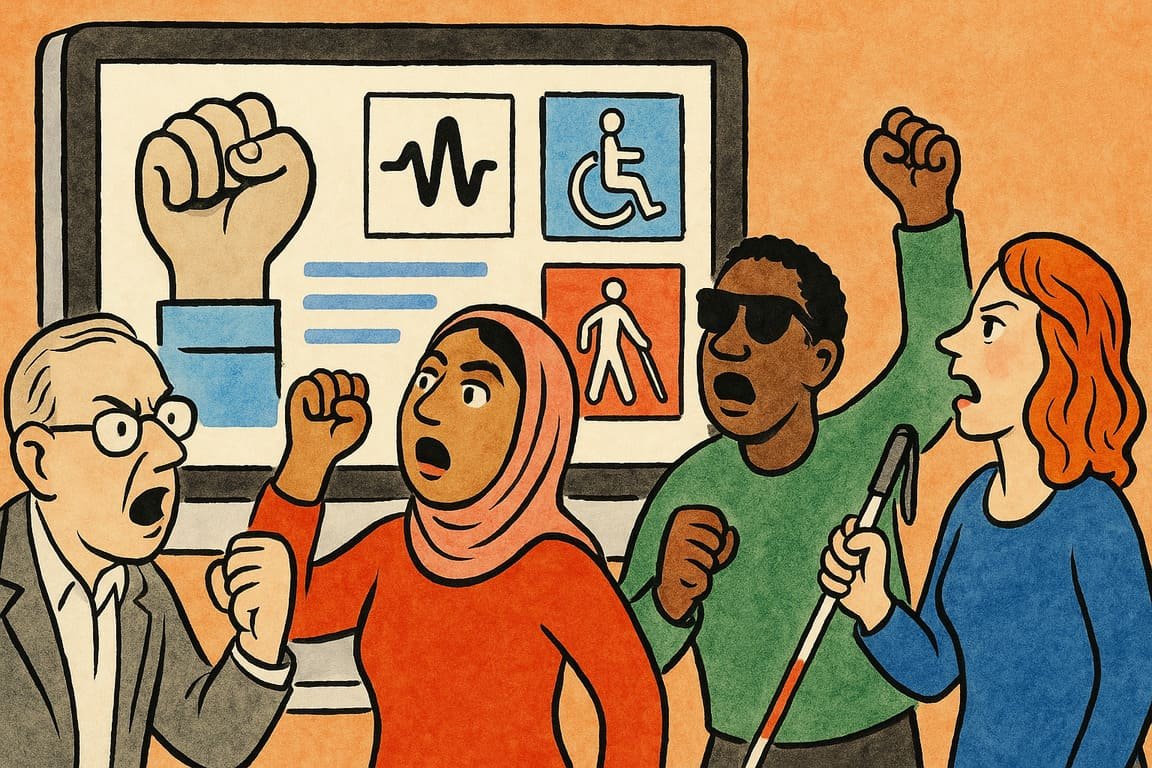
Morning sun filters through glass walls at an innovation hub, casting rainbow light over a gathering of designers, advocates, and entrepreneurs. Here, the usual suspects—minimalists, maximalists, rebels—pause for something bigger: the radical idea that design belongs to everyone. For years, interfaces were made for “the average user,” a mythical creature who never needed glasses, spoke the default language, or moved through life with a wheelchair or a screen reader. Now, the world awakens to a new revolution: true inclusion, where nobody waits outside.
Designing for all is not charity. It’s overdue justice and untapped opportunity. You can feel it when a ride-hailing app lets you toggle voice commands, or when captions flow smoothly across your favorite videos. The best teams realize that barriers, once invisible, become obvious once you listen. Molly Tran, an accessibility consultant who lost her sight in college, tells it straight: “If you design for me, you make it better for everyone.”
You see it every day. As colorblind users flag confusing charts, designers scramble to swap red for blue, not just for the few, but for the many. When a banking app ditches jargon, the ripple effect lifts thousands who always struggled in silence. Each tweak sends a message: you matter. The small victories, the details sweated, the emails answered—this is how the revolution grows.
Sometimes, the revolution is loud. Disability activists stage virtual sit-ins, flooding brands with calls for accessibility audits. Companies respond with promises and press releases, but the real work happens in quiet user tests, where real people try, fail, and try again. The lesson comes quickly: you can’t fake inclusion, and the world will call you out when you do.
Inclusivity brings its own challenges. Universal design must serve conflicting needs—large text for the elderly, simple language for the young, sign language for the deaf. There is no perfect solution, only progress. Teams who lead the charge hire more voices, run more pilots, and admit what they don’t know. In Stockholm, a design collective called VIVID built a calendar for neurodiverse users, guided by weekly workshops with teens who see the world differently. The result? An app that helped everyone, not just the intended audience.
Economic power follows inclusion. The companies that embrace accessibility don’t just win applause—they unlock vast new markets. In Brazil, when a telco added audio navigation for the visually impaired, usage soared across all demographics. The cost of exclusion is invisibility. The profit of inclusion is relevance, growth, and brand love that cannot be faked.
Still, inertia fights back. Some managers grumble about the extra cost or timeline. Others fear the unknown, believing accessibility is “nice to have.” In the face of resistance, advocates persist. They share data, human stories, and sometimes, just pure stubbornness. “It’s not a feature, it’s a right,” insists Liz Castillo, who campaigned for voice-first interfaces at a global health NGO.
You might worry about complexity. That’s fair—designing for everyone demands more empathy, more testing, more humility. Yet the world’s greatest interfaces were born from constraint. Think of closed captions becoming standard, curb cuts helping both wheelchairs and strollers, or simple language apps reaching millions. Inclusion doesn’t weaken design. It forges it in fire.
Technology acts as both amplifier and equalizer. AI reads text aloud, smart sensors adjust screens for low vision, and voice commands break down barriers. But automation alone cannot substitute for human understanding. The revolution demands listening, learning, and failing forward.
The momentum is global. From Lagos to Los Angeles, teams of every size are tearing down old “best practices” to rebuild on a foundation of empathy. Each market, each city, each community holds its own needs. The revolution spreads not by diktat, but by a thousand local victories. Design for all is never finished. It only expands, wave after wave.
Victory will not be a single launch, but a world where everyone moves freely, buys confidently, laughs, learns, and belongs. Each person invited into the circle is a seed for the next story. Each small act of inclusion reshapes what design can be—and whom it is truly for.
In a crowded auditorium, a child with a tablet grins as a story app reads aloud in her language, her father signing beside her. Around them, strangers see possibility: a future written by many hands, for every heart. The lights linger on faces once left behind, now radiant in belonging. A hush settles, not from exclusion, but anticipation. The room holds its breath, waiting: will you unlock one more door, or leave it closed for someone else?
