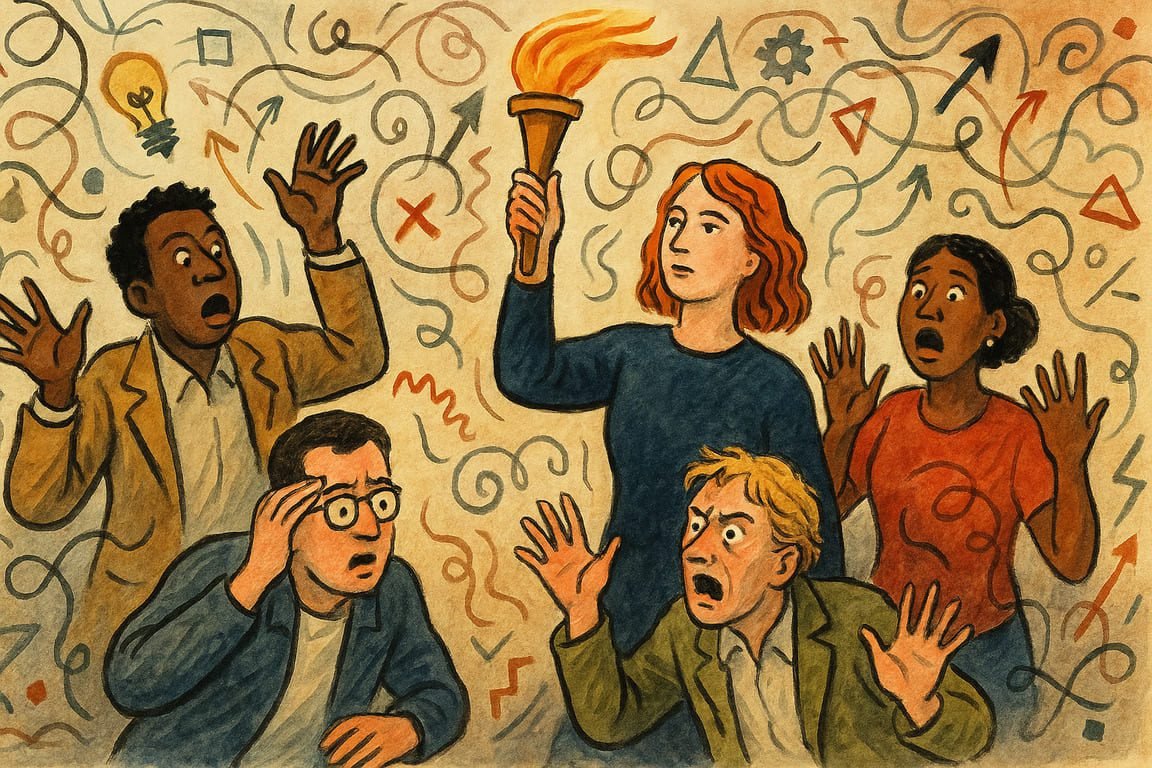
An old printshop buzzes with midnight energy, every surface cluttered by sketches, ink stains, and a tangled mess of prototypes. In the corner, a team debates over pizza crusts and half-drained mugs, tossing out wild concepts as quickly as they appear. Ideas collide, merge, and sometimes explode. Out of this beautiful disorder, real direction emerges—not from rules, but from a stubborn sense of purpose that glues chaos into meaning. In the new era of design, creativity flourishes not despite the mayhem, but because of it.
Disorder isn’t the enemy of innovation; it’s the spark that fuels originality. You notice it when a startup pivots three times in six months, each failure a stepping stone. Or when artists like Nia Obong, who began as a graffiti writer, now consults for global brands, credits “the mess” for her breakthroughs. The wildness, she says, forces people to choose what truly matters. Creativity without aim becomes noise, but chaos, channeled by purpose, becomes art.
Purpose is what separates a viral trend from a lasting movement. It’s the difference between a meme app and a platform that sparks community. Teams that know why they create can weather any storm. At the Nairobi design incubator StudioHive, early concepts were dazzling but scattered. Only when the founders named their mission—to democratize online education—did the product find its legs. Growth followed not from luck, but from clarity through confusion.
You’ve probably felt the pressure to tidy your process, to plan every move, to suppress all randomness. Yet the world’s boldest brands are built by rebels who let ideas roam. Pixar’s Ed Catmull once said, “Early on, all our movies suck.” Only by embracing failure—by dancing in the chaos—do teams uncover gold. The trick is having a “north star,” a reason so clear that all improvisation moves toward it.
But chaos alone isn’t enough. Without a cause, creative freedom breeds burnout, indecision, or bland imitation. When a global shoe company lost its way, launching dozens of disconnected styles, sales nosedived. A new creative lead brought everyone back to the core mission—comfort and sustainability—and suddenly, the noise turned into music. The lesson: creativity needs boundaries, and boundaries need belief.
The digital age throws more fuel onto the fire. Algorithms encourage experimentation, new tools drop daily, and everyone becomes a maker. This flood of possibility can overwhelm, but it also empowers. Purpose, then, is the anchor. It keeps a TikTok trend from becoming a one-hit wonder and helps brands resist the temptation to jump on every fleeting hashtag.
Collaboration thrives in the mess. The most groundbreaking work emerges when teams with wildly different backgrounds collide. Techies argue with artists, strategists push back on dreamers. The clash can feel brutal, but in the friction, new ideas crystallize. Real breakthroughs often arrive just after the biggest arguments, when exhaustion forces honesty and only the true priorities remain.
Yet purpose isn’t a slogan on a wall. It’s a habit, a compass checked every morning. Netflix’s product team famously starts meetings by restating their “why.” When they drift, so do their shows—and viewers. The magic happens when every designer, coder, and marketer can answer the question, “What are we actually trying to do here?” Real purpose makes decisions easy.
For many, the pandemic tested the role of purpose more than ever. As chaos erupted globally, some companies wilted. Others found their calling—like Canva, which saw surging use for teachers and nonprofits and shifted its priorities to serve them. When noise surrounds you, purpose clarifies which voices to follow and which distractions to ignore.
Individual stories reveal the same truth. Mia Tran, a junior designer in Hanoi, admits her breakthrough came when she stopped copying Pinterest boards and asked, “Who am I designing for?” Her empathy, more than any process or style, turned her chaotic drafts into client favorites. Her journey echoes that of every creative who’s wrestled with doubt only to find their footing in service to something bigger than themselves.
There is power in embracing mess. Creative chaos isn’t about losing control; it’s about trusting the process and trusting that purpose will draw the line between what matters and what doesn’t. The wild ride is what transforms work into a mission and a job into a calling.
A late-night studio glows with the warm light of possibility. Crumpled paper fills the wastebasket, and the whiteboard is crowded with dreams. A designer, eyes rimmed with fatigue and hope, watches a single phrase on the board—the reason that outlasts every failed draft. As dawn breaks, the chaos hums like a hidden orchestra, waiting for meaning. The only question: will you choose the comfort of silence, or the messy symphony of a mission worth the noise?
