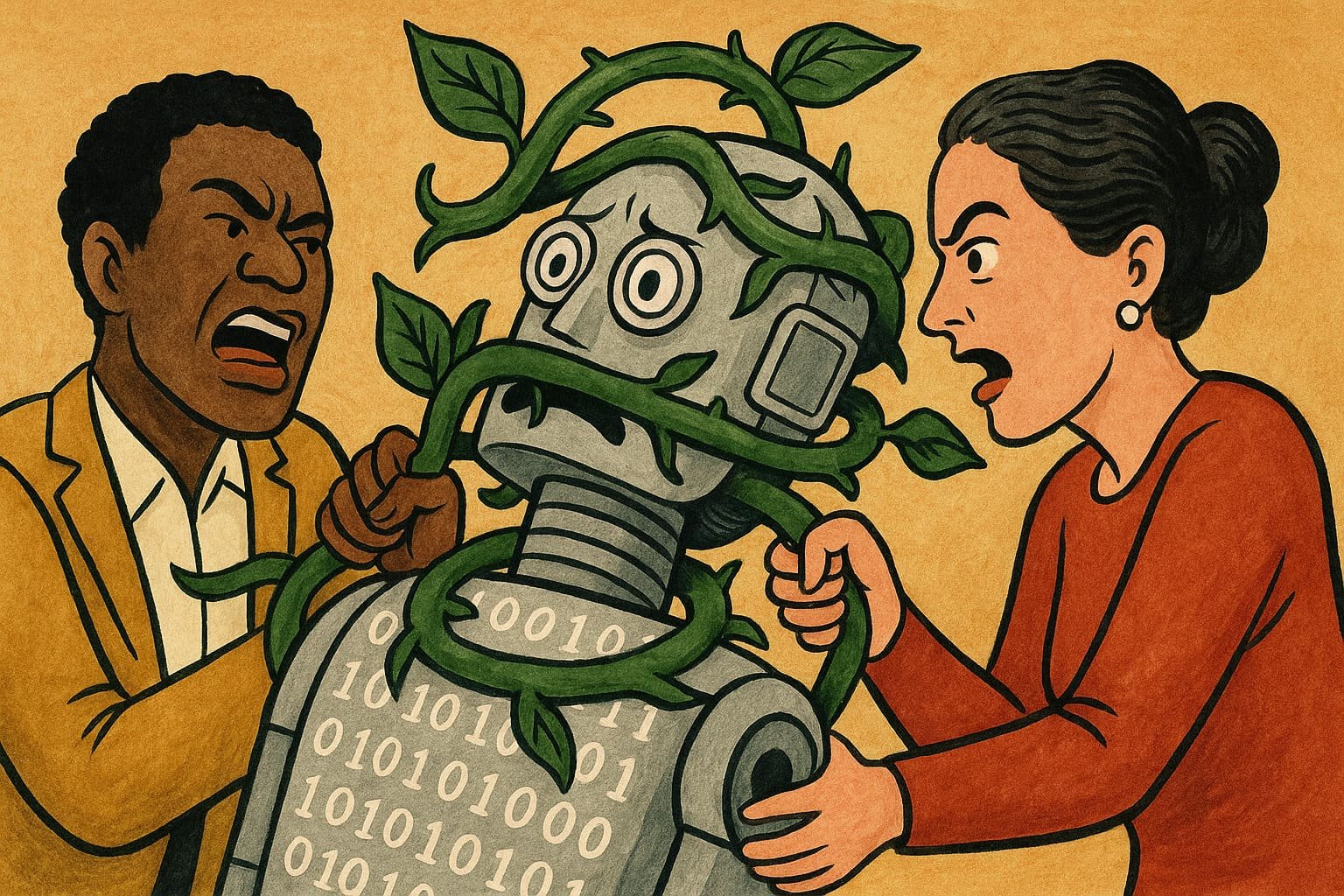
A storm blazes over the city’s skyline, where screens shimmer like beacons on a sleepless night. In one high-rise, an engineer’s fingers race across a keyboard, chasing perfection but haunted by the memory of a bug that slipped through last quarter. Flickering monitors pulse with streams of code, each line a brick in an invisible wall. Beneath the synthetic glow, coffee grows cold, and the hum of servers fills the silence. Behind every click, a question lingers: What if the code itself is sick, and nobody sees it coming?
Across the world, boardrooms and bedrooms alike echo with talk of artificial intelligence—this shimmering promise of a flawless, unbiased mind. Experts parade neural networks and algorithms as if technology can cleanse human imperfection, all while the poison seeps quietly in. It’s not a malicious actor typing secret commands or a villainous line in the source code. The real culprit slips in softly: hidden bias, coded with the best intentions, mutating as it passes from mind to machine.
AI systems now shape the hiring of tomorrow’s leaders, sort life-or-death hospital triage, scan resumes with the cool detachment of a judge, and predict who will pay a loan or skip bail. Investors, teachers, doctors, and entire police departments trust their verdicts. Yet, somewhere in the chain, a little mistake, an overlooked assumption, or a gap in the data plants a seed. Sometimes, it’s a ghost in the system—a voice never represented, a pattern the code can’t recognize. The code still runs, the world keeps moving, and decisions get made. But something is quietly strangling progress.
The air is thick with unspoken fear: What if the very thing built to rescue us from bias is learning, every day, how to make those biases permanent? The question is not just technical. It’s deeply human, messy, and urgent. Somewhere out there, a researcher stares at a wall of metrics, feeling a chill she can’t explain. Because the code has changed. The question is, who changed with it?
Quick Notes
- Bias Is Not a Bug, It’s a Feature: Every AI, no matter how advanced, inherits the invisible fingerprints of its creators and their data. You can’t debug what you don’t see.
- Clean Data Is a Dangerous Myth: Data scientists preach cleansing rituals, but no dataset is ever free of the world’s dirt. Every “objective” dataset carries a ghost story.
- Code Mirrors Culture: From hiring tools that favor certain schools to chatbots that parrot prejudices, AI reflects the subtle prejudices and priorities of the world around it.
- Fixing Bias Can Backfire: Attempts to “debias” can introduce new distortions. Sometimes the cure is worse than the disease.
- Human Accountability Is the Only Firewall: Machines can’t apologize, adapt, or stand up to power. Only humans can own mistakes and change the rules.
The Invisible Hand—Where Bias Hides and Why You Don’t See It
A boardroom in San Francisco buzzes with excitement as a tech giant unveils its new AI-powered recruitment platform. Executives celebrate the arrival of “objective hiring,” touting the system’s ability to find overlooked talent. No one notices the problem until a whistleblower, Maya Collins, surfaces months later. Her story becomes legend: the system weeded out female candidates at twice the rate, all because the training data came from years of male-dominated resumes. Maya’s courage sparks a debate, but the machine never felt a thing.
Bias thrives in places no one wants to look. It seeps into training data—what’s left out, what’s overrepresented, what’s “normal.” When an AI learns from patterns, it absorbs everything, even the bad history. Netflix once faced backlash when its recommendation algorithm buried Black-led films for certain user profiles, not by design but by inertia. The code reflected what viewers had chosen before. Hidden inside the “objective” math, human habits snuck in and shaped what millions saw.
Culture plays puppet master. If society values speed over fairness, the code optimizes for quick results, not equity. A Boston startup tried to automate criminal sentencing recommendations and discovered its tool perpetuated racial disparities from old court records. The team’s lead, Marcus Lin, publicly admitted: “We didn’t realize the algorithm was picking up on zip codes as a stand-in for race.” The model learned from the world it saw, not the world people hoped for.
Some biases wear camouflage. Small language quirks or regional accents fool voice assistants and translation tools. Amazon’s Alexa once misinterpreted commands from customers in Scotland and Mississippi, sparking ridicule and real frustration. The company’s engineers worked overtime to patch the software, but the world kept spinning. No apology from Alexa ever made headlines.
The most dangerous bias is the kind nobody suspects. Consider the facial recognition startup that sold its software to airports. Security teams praised its accuracy, unaware that the algorithm struggled with darker skin tones and aged faces. The mistake only surfaced after travelers began missing flights. One story, one missed connection, changed nothing for the machine.
Broken Mirrors—How Code Multiplies Mistakes
Picture a university classroom, fluorescent lights flickering as students argue about fairness in AI. In the corner, a project team celebrates their algorithm’s impressive “accuracy,” not knowing it’s flagging one group of students for review at triple the rate of others. The teacher, Professor Elaine Ruiz, steps in and quietly points out the real score. Her words become legend: “Accuracy without fairness is just luck with a press release.”
Algorithms do not just freeze bias. They multiply it, making every small error a systemwide epidemic. When social media platforms used AI to detect hate speech, Black users saw their posts flagged and deleted at rates far higher than their white counterparts. The platforms insisted on neutrality, but the damage was done. Lawsuits followed, and the narrative changed: bias wasn’t accidental. It was woven in.
Financial services feel the pain too. Banks deploying AI-powered loan approval tools watched as longstanding disparities got worse, not better. In one city, a local credit union traced their spike in loan denials to an old formula that weighted zip codes and credit histories. The result: entire neighborhoods found themselves shut out. As customer complaints mounted, the bank’s CEO, David Choi, finally called a meeting: “We built a smarter system and ended up with dumber results.”
Sometimes, the urge to fix bias backfires spectacularly. After criticism, one company tried to “correct” their hiring AI by boosting underrepresented candidates. The tweak triggered a new wave of rejections for mid-career professionals. Social media roasted the company for trading one form of bias for another. For months, their brand became synonymous with “good intentions, bad math.”
Even the best minds are not immune. Tech giants parade their “ethics boards,” but stories leak of experts quitting over ignored warnings. Whistleblowers speak up, get silenced, and move on. The code remains, quietly working in the background, teaching the world to trust its wisdom. The mirror stays cracked.
Myth of the Machine—The Lie of Objectivity
The lights in a sprawling data center never turn off, bathing rows of servers in a cold blue haze. Somewhere, an algorithm is being fine-tuned to select scholarship recipients, sifting through applications with robotic precision. On the surface, it all looks fair. Underneath, a single misplaced variable tips the scales, nudging candidates with certain zip codes or last names to the top of the pile. The story leaks, and a university spokesperson scrambles for an explanation. “The algorithm doesn’t know race or gender,” she insists. The damage is done.
People love the myth that technology, once unleashed, escapes human flaws. In boardrooms and newsrooms, the narrative is the same: AI is pure, untainted, objective. Reality is much messier. Algorithms are not impartial. They are amplifiers, absorbing every scrap of context, culture, and compromise.
Consider the insurance industry. Automated fraud detection flagged an elderly customer, Margaret Ellis, for “suspicious” behavior after she switched pharmacies. The flag came not from malice but from a pattern hidden in the data. When her daughter, a software engineer, traced the code, she found the system penalized anyone with irregular purchase times. Margaret’s story hit the evening news, and public trust in AI-driven healthcare took a hit.
Social networks, eager to curb misinformation, rolled out AI moderators trained on old datasets. Activists discovered the bots were more likely to censor posts about protests or political movements, regardless of context. In one viral moment, a digital artist’s call for peaceful protest vanished into the algorithm’s void, sparking outrage and debate.
Education faces its own reckoning. Standardized test scoring engines, meant to “level the field,” sometimes punish creativity or nontraditional answers. Students, like Samir Patel, learned to game the system—choosing safe responses over bold ones, fearing the cold logic of code that didn’t understand nuance. Schools chased efficiency, and the code quietly taught students to think smaller.
The myth of objectivity is comfortable but dangerous. Every model reflects priorities, values, and fears—those of its makers, users, and the data it consumes. AI cannot escape the story of its creators.
Resistance and Reckoning—Voices That Change the Code
A young programmer, Jamila Hassan, stands in a conference hall filled with industry titans. Her voice carries above the murmur: “Who here owns their mistakes?” The room falls silent, and the question lingers. Jamila’s team once built a loan algorithm for a microfinance startup in Nairobi. Early results looked promising, but complaints rolled in. Women entrepreneurs faced higher denial rates, not because of their risk but because the training data lacked their stories. Jamila and her team rewrote their code, not just to fix a bug but to rewrite history. That courage became their legacy.
Real change does not start with a patch or a press release. It begins when people look honestly at what they’ve built. Netflix overhauled its recommendation system after critics called out its blind spots. The company brought in new teams, rebuilt their models, and started including diverse voices in every phase. The move paid off, with viewers noticing more inclusive content surfacing on their home screens.
The medical field, once slow to question AI, now leads some of the toughest conversations. A group of doctors in Boston pushed for transparency in a popular diagnostic tool. Their campaign forced the manufacturer to reveal that its algorithm weighted certain symptoms from white patients more heavily than others. Public outcry led to a redesign and sparked industrywide reforms.
Resistance is growing inside the industry too. Google famously faced walkouts after employees protested the use of AI for military contracts. Those actions sent a message: talent will leave if ethics are ignored. The company responded by instituting a public set of AI principles and began to prioritize ethics reviews, though not without controversy.
Grassroots groups are fighting back. Algorithmic Justice League, led by Joy Buolamwini, has made headlines exposing racial and gender bias in facial recognition. Their work inspired cities to ban the use of such software in law enforcement. Suddenly, the debate shifted from code to accountability.
Building Better Machines—Lessons From the Battlefront
A product team at a fintech startup huddles over takeout containers, debating how to balance “speed” and “fairness” in their new loan tool. One developer recalls how an unchecked model at his last job shut out small-business owners from immigrant backgrounds. Their lead, Alvaro Sanchez, insists: “We’ll slow down and get it right.” The tension is real, but so is the resolve.
Transparency is now seen as a virtue, not a weakness. Startups like OpenAI publish their model cards, laying bare limitations and known risks. This openness invites criticism, but it also builds trust. Public scrutiny means mistakes get caught sooner, and the cycle of harm is shorter.
Companies are investing in “red teams”—groups designed to break, stress, and challenge new systems. At one cybersecurity firm, team lead Priya Menon runs “attack drills,” trying to force the AI to make biased decisions. Every time they find a flaw, they treat it like a fire drill, learning how to respond quickly and ethically.
Diversity is no longer a buzzword; it’s survival. Teams with different backgrounds catch problems faster and design more robust systems. Microsoft learned this when a racially diverse review board caught a subtle bug in a language translation tool. The fix prevented a cascade of embarrassing headlines and protected their brand.
The most important shift is cultural. Leaders willing to admit “We got it wrong” are rare but powerful. Their vulnerability sets a standard. When Satya Nadella, CEO of Microsoft, publicly apologized for an AI failure, it sent shockwaves through the industry. Trust is built not by pretending the code is flawless, but by owning every mistake and changing what comes next.
The Poisoned Well
Deep in a silent server room, blue lights flicker across polished metal, the hum of machines drowning out distant thunder. A single security guard walks the aisle, eyes darting over screens, searching for anomalies in the calm. The machines do not judge, do not care. Somewhere, a flaw quietly loops in the background, undetected but not harmless.
A janitor named Evelyn pauses by a waste bin overflowing with crumpled printouts, discarded prototypes, and forgotten passwords. She wonders about the stories hidden in every line of code, the secrets the machines keep, and the people who trust them. Above, the city sleeps, unaware that the future is being rewritten in silence.
An old engineer, Miguel Torres, sits at his kitchen table, staring at an email chain about an overlooked bias in a product shipped years ago. His regret is heavy, but his hope is stubborn. The battle against bias never ends, but neither does the chance to choose differently.
The world aches for certainty, but the machine only learns what it’s taught. The code may be poisoned, but the antidote has always lived outside the machine.
You can walk away, or you can look in the mirror and ask: What kind of world do you want your code to create?
