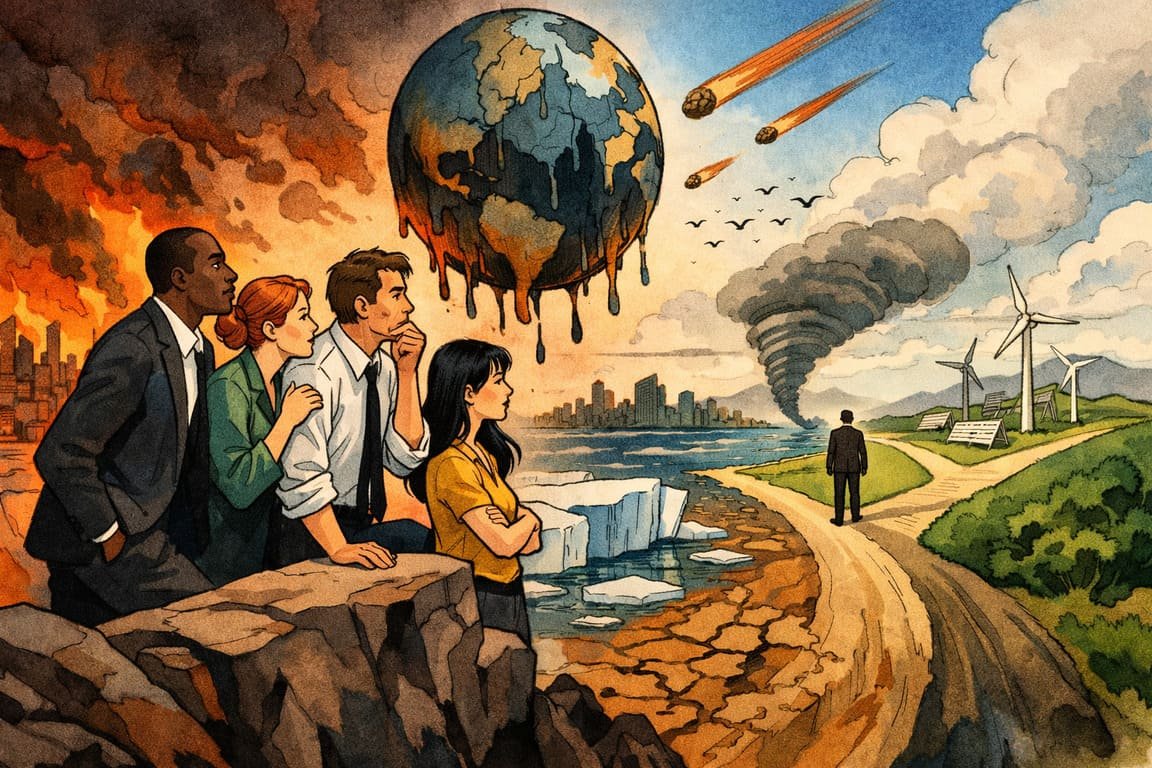
The air feels heavier in ways statistics struggle to explain. Heat lingers longer than expected. Seasons arrive confused. Storms carry unfamiliar fury. None of this shocks anymore. What shocks is how ordinary it has become. Climate crisis no longer announces itself as a future threat. It hums in the background of daily life, subtle yet relentless, like a warning alarm everyone learned to ignore. The world watches leaders speak in confident tones while reality keeps interrupting. The gap between promise and action widens quietly, and in that space, urgency begins to feel personal rather than political.
For decades, climate change lived comfortably in conferences and projections. It belonged to specialists, reports, and long timelines. That distance made delay easy. Now the distance has collapsed. Farmers adjust planting calendars blindly. Coastal towns plan retreats instead of growth. Insurance markets rewrite risk models faster than legislation can follow. A city emergency planner once admitted that climate scenarios previously labeled extreme now serve as baseline assumptions. The future arrived early, and governance still speaks as if time remains generous.
Leadership struggles not from lack of knowledge but from excess caution. Climate solutions disrupt entrenched interests. Energy systems, transportation networks, food production, and urban design resist sudden change. Political cycles reward postponement. Long term thinking feels risky when elections loom. A former advisor once described climate action as the policy equivalent of renovating a house while living inside it. Necessary, expensive, and guaranteed to anger someone at every step. Delay feels safer. Until it no longer does.
Economic narratives complicate courage. Climate action often frames itself as sacrifice rather than investment. Costs receive attention. Benefits feel abstract. Yet inaction carries hidden expenses that surface slowly. Disaster recovery drains budgets. Health systems strain under heat and pollution. Productivity declines quietly. A manufacturing executive once noticed energy efficiency upgrades saving more money than expected, yet hesitated to publicize it, fearing shareholder skepticism. The myth persists that sustainability and prosperity compete, even as evidence increasingly suggests the opposite.
Culture mirrors this contradiction. Climate anxiety grows alongside consumption habits that accelerate damage. People recycle while flying frequently. They support environmental causes while purchasing convenience. Cognitive dissonance thrives. Leaders reflect rather than reshape this tension. Messaging softens. Targets stretch. Accountability blurs. A climate activist once observed that urgency becomes diluted when framed politely. Alarm sounds rude. Calm reassurance wins airtime. The planet responds only to physics, indifferent to tone.
Philosophically, the crisis tests moral imagination. Responsibility spans generations. Those least responsible often suffer first. Future citizens remain voiceless. This stretches traditional ethics beyond immediate reciprocity. A moral philosopher once compared climate responsibility to caring for an inheritance never personally enjoyed. Acting requires valuing unseen lives. Politics struggles with that demand. Short horizons dominate. Long consequences feel optional. Yet climate change does not negotiate with attention spans or electoral calendars.
Technology offers hope and distraction simultaneously. Renewable energy accelerates. Storage improves. Innovation flourishes. Yet optimism sometimes becomes excuse. Faith in future breakthroughs delays present action. A climate scientist once warned against treating technology like a time machine, capable of fixing tomorrow what remains neglected today. Tools matter. Timing matters more. Deployment lags ambition. Solutions exist but scale slowly against accelerating damage.
Global inequality deepens the challenge. Wealthy nations debate pace. Vulnerable regions face survival. Adaptation funding lags rhetoric. Losses accumulate. A humanitarian worker described rebuilding the same village repeatedly, each time after stronger floods. Resilience sounds empowering until resources run out. Justice demands more than pledges. It demands transfer, trust, and follow through. Without them, climate diplomacy risks becoming performance rather than partnership.
Youth movements inject moral clarity where institutions hesitate. Students strike not from ignorance but from awareness. Their anger reflects betrayal more than impatience. A teacher once described classrooms where climate discussions carried grief rather than curiosity. That emotional weight reshapes politics eventually. Generational pressure rarely disappears. It waits. Leadership can respond early or confront upheaval later. The choice remains open, though narrowing.
Corporate behavior shifts unevenly. Some firms innovate genuinely. Others greenwash expertly. Transparency lags marketing. Consumers struggle to distinguish progress from promise. Regulation chases claims slowly. A sustainability officer once admitted that reporting frameworks feel like language lessons without grammar enforcement. Without standards, credibility erodes. Trust weakens. Climate action requires verification as much as vision.
The climate story no longer asks whether change is needed. It asks who leads first without hiding behind consensus. Courage looks unglamorous. It involves saying no to profitable habits. It involves planning beyond applause. History remembers leaders who act before certainty, not after catastrophe. The window for comfort has closed quietly. What remains is responsibility.
Somewhere between a melting glacier and a boardroom presentation, a decision waits. Not dramatic. Not heroic. Simply necessary. The crisis does not demand perfection. It demands movement. Delay multiplies cost. Action multiplies possibility. The planet will continue responding to choices made or avoided. The only unanswered question is whether leadership will finally meet the moment or remain articulate, cautious, and tragically late while the future grows hotter, louder, and far less forgiving.
