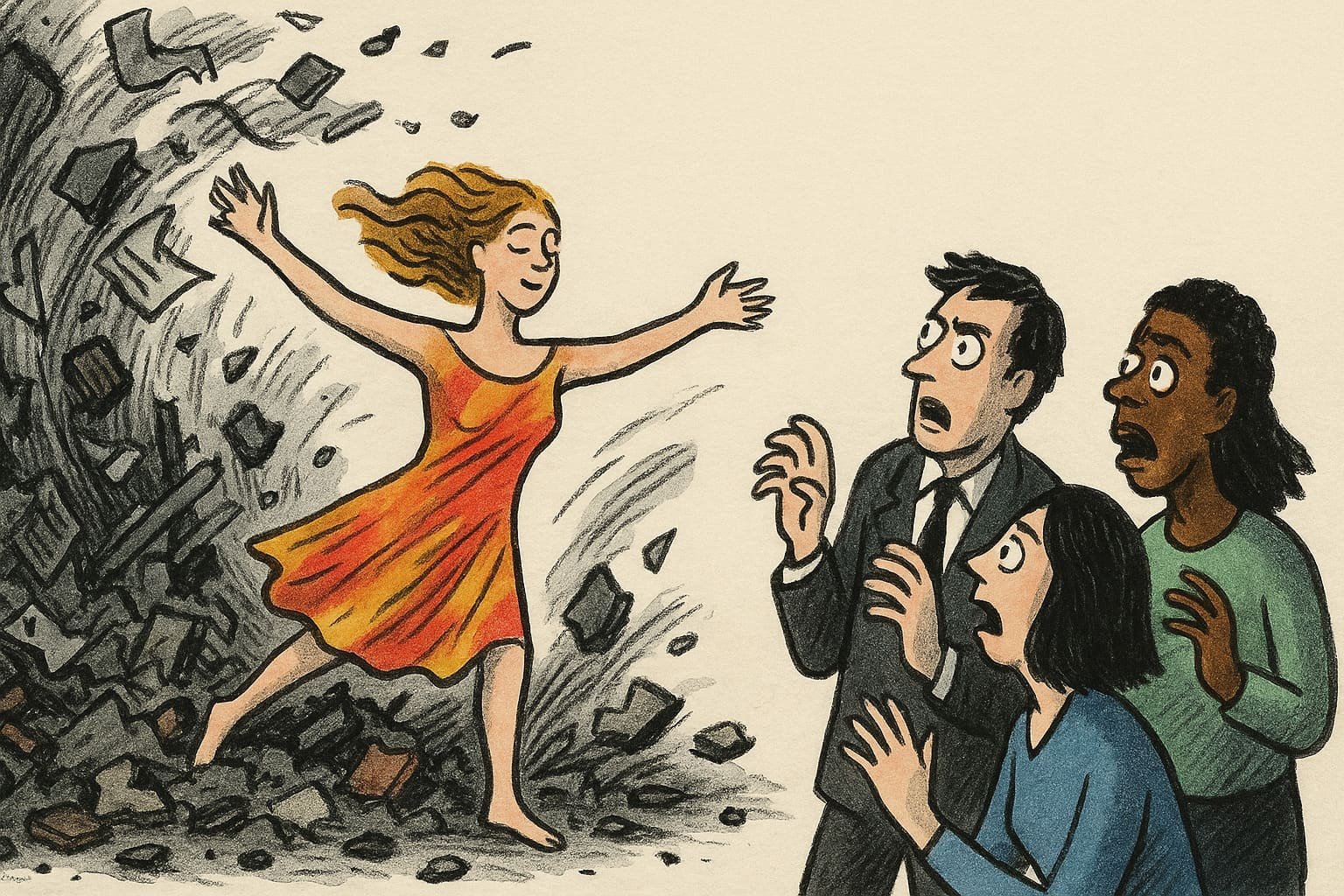
Inside a high-rise boardroom with glass walls shimmering in the city’s evening light, designers gathered, sleeves rolled, eyes bright, ideas colliding like molecules in a supercollider. The scene felt more like a backstage dressing room before a runway show than any board meeting. Sweaty coffee mugs sat beside art books stacked at impossible angles, the hum of fluorescent bulbs mixing with the background music of a nearby marketing team’s playlist. Creative directors, strategists, and interns argued in bursts; sometimes loud, sometimes in hushed, conspiratorial tones as sketches, sticky notes, and unruly models splayed across the table. Nothing here followed a script, yet from this glorious disorder, visions were born: logos destined to outlast empires, campaigns that would haunt social feeds, patterns that would redefine what people called beautiful.
The uninitiated might mistake the chaos for confusion, but something electric pulsed in the atmosphere, a thrill that always followed risk. A junior designer, fresh from a stint at an indie video game studio, once said, “It’s like painting with lightning.” The feeling was real; the sense that every creative leap into the unknown could spark an idea that would outlive its creator. Brands that play it safe fade into wallpaper, but those who dance in the storm; the Patagonias, the Virgil Ablohs, the quietly rebellious street artists, remake culture. Somewhere, the ghost of David Bowie, who never met a comfort zone he didn’t obliterate, would have nodded in approval.
Walk into any great gallery, whether it’s filled with Banksy’s playful menace or the serene violence of a Basquiat, and you sense it: beauty forged in struggle, shape-shifting with every glance. In the realm of design, perfection is overrated. Chaos is the invisible hand behind the world’s most beloved visuals, the flaw that flips expectation, the crack that lets the magic in. The old guard still whispers about harmony and order, but you know the truth: real beauty is messy, wild, unpredictable.
Somewhere in the city, a muralist named Kioni worked by moonlight, slapping color on cracked concrete, trusting the splatter more than the plan. Commuters stumbled upon her murals each morning, pausing, transfixed, before snapping a photo and rushing off. They couldn’t explain why her work lingered in their minds long after. Kioni knew: beauty that shocks, stirs, or disorients always starts as chaos. In the art world’s secret language, mess is a muse, not a mistake.
The lesson is everywhere: chaos is a breeding ground, not a battlefield. Out of tangled intentions and clashing visions comes something nobody expects, something raw, real, and impossible to fake. Only those brave enough to swim in the whirlwind ever see what beauty really looks like when it isn’t filtered, staged, or tamed.
Quick Notes
- Mess is the Mastermind: All creative breakthroughs begin in chaos. Perfectionism is just another word for fear. The wildest sketches and offbeat brainstorms usually spark the ideas that break through.
- Vulnerability is Viral: Letting flaws, mistakes, and raw emotion into your work invites others to care. When art and design reveal what’s real, they stick, think of Billie Eilish’s bedroom pop or Apple’s ad campaigns that traded slick for soul.
- The World Rewards the Brave: Playing it safe rarely pays off. Those who throw themselves into risk, discomfort, and contradiction become icons, not footnotes.
- Beauty Grows in Contradiction: Great design is not about harmony alone; it’s about tension, surprise, and conflict. Like a plot twist in a Christopher Nolan film, real impact hides in the unexpected.
- Transformation Thrives on Chaos: True creativity doesn’t just survive mess, it needs it. Embrace uncertainty, break patterns, and trust the process. Only then does your work become more than decoration, it becomes unforgettable.
Breaking the Mold: Chaos, Not Order, Shapes Legends
Step into the shoes of every designer who’s been told, “Keep it simple, stay on brand, follow the rules.” You can almost taste the tension, a bitter tang that sits at the back of your mouth during meetings. The truth is, those rules rarely sparked anything people wanted to remember. When chaos walks in, that’s when the magic begins.
Imagine staring at a blank canvas or a blinking cursor, feeling the pressure to deliver something flawless. It’s a lie that perfect equals memorable. Instead, you discover that greatness starts the moment you let loose. The legendary New York graffiti duo, Lady Pink and Crash, once painted subway cars with nothing but instinct and adrenaline as their guides. Their wild, unpredictable lines became iconic, transforming what many called vandalism into coveted art. It wasn’t polish that made them legends, it was their willingness to court disaster.
Think about the offices where people actually want to work. You never see the dull ones trending on TikTok or filling up Pinterest boards. Studios like IDEO and Pixar let mess pile up because they know what it brings: sticky notes littering whiteboards, half-finished models, jokes scribbled on the wall. Employees who can make each other laugh at 3 a.m. solve bigger problems. The mess isn’t a distraction, it’s a secret weapon.
Sometimes, the best ideas are hiding in the accidents. Pixar’s “Toy Story” script changed overnight when a software bug made Woody look mean and terrifying instead of charming. Instead of scrapping everything, the team leaned into the mistake. That glitch forced a rewrite, and Woody’s new edge became the emotional core of the film. Viewers didn’t want another bland hero, they wanted someone with rough edges.
Study the work of Virgil Abloh, the late creative director of Louis Vuitton’s menswear and founder of Off-White. His designs broke rules by mixing streetwear with luxury, sparking debate and sometimes outrage. Fashion critics didn’t know what to do with him. That’s exactly why he worked, his unpredictable vision broke the mold, and in breaking it, built a new one.
Legendary chef Massimo Bottura rescued a restaurant from obscurity with “Oops! I Dropped the Lemon Tart,” a dessert born from a kitchen disaster. When a pastry shattered, he plated it as art, perfectly imperfect. That story traveled the world, teaching everyone that mistakes can taste like victory. Sometimes, a little chaos isn’t a setback but a spotlight, shining right where the magic happens.
Beauty’s Secret Weapon: Embracing Flaws in the Spotlight
You’ve been told since childhood to color inside the lines, but every breakthrough starts when someone ignores that advice. Today’s greatest artists and designers win big by letting imperfections show. Real beauty doesn’t arrive dressed in a crisp white shirt; it walks in late, paint-stained, wearing mismatched socks and a grin that dares you to look closer.
Social media may filter life to death, but people crave what’s real. When Huda Kattan, founder of Huda Beauty, began showing her makeup mistakes and skin flaws online, her audience exploded. She stopped hiding behind the mask of perfection. Her vulnerability became her signature. Followers felt seen and started copying her candor. Imperfection, once taboo, turned into a trend with staying power.
Inside startup culture, the rule-breakers attract the best minds. At the headquarters of an up-and-coming tech company, employees swapped stories of failure every Friday. Laughter bounced off the glass walls as team members shared embarrassing product demos and botched code. These stories built trust faster than any motivational speech. Teams that can laugh at their mistakes bounce back stronger, their creativity unchained.
Across the world, the Japanese art of kintsugi repairs broken pottery with seams of gold. Instead of hiding cracks, artists highlight them, making flaws the star of the show. The result isn’t just beautiful; it’s unforgettable. Designers who embrace kintsugi thinking never throw away a project for its imperfections, they mine it for gold.
In branding, the most unforgettable campaigns are often unscripted. Think of the Nike “Nothing Beats a Londoner” campaign: kids chased dreams on crowded streets, dodging chaos, sweating, shouting, winning anyway. The city’s grime and unpredictability made the ad iconic. It didn’t show an ideal world, but the real one, raw, flawed, beautiful.
A branding agency in Amsterdam decided to record every brainstorming session, no matter how unruly. Listening to the wildest ideas, half-jokes, rapid-fire rants, accidental brilliance became a ritual. The agency’s biggest success came from a joke suggestion that became their client’s most viral campaign ever. Sometimes, beauty just needs someone brave enough to notice the genius hiding in a mess.
Rebel Hearts and Renaissance Minds: Turning Tension Into Triumph
Every creative person faces resistance, the kind that turns up just when a breakthrough is close. Sometimes the enemy is doubt. Sometimes it’s a stubborn client or a manager who wants safe, familiar work. You know the pattern: first, they ask for innovation, then recoil at anything new. But the real rebels keep pushing, using tension as fuel.
Artists in Berlin’s street art scene live this paradox daily. Armed with spray cans and a conviction that beauty can bloom on any surface, they scale rooftops and train cars under threat of arrest. Their canvases change with the weather, the news cycle, the police. Each mural is a dare: will you celebrate the mess or wish for tidiness? The world keeps watching, snapping photos, and copying their style.
At Pixar, director Pete Docter tells the story of “Inside Out.” Early drafts were messy, full of contradictions. Docter fought for a story about sadness, an emotion studios feared would flop. By trusting the mess, Docter’s team transformed vulnerability into a triumph. “Inside Out” became a global phenomenon, proving that honoring confusion can lead to greatness.
History shows that every creative revolution started as a contradiction. The Impressionists were mocked for painting sunlight with short, chaotic brushstrokes. The Bauhaus school blurred the line between art and craft, infuriating critics who wanted clear boundaries. Each time, those who broke the rules became the heroes history remembers.
In the modern boardroom, innovation springs from tension between departments. Product teams want speed. Legal teams want safety. Marketing teams want bold. The companies that thrive don’t force compromise. They let ideas clash, trusting the friction to spark something unforgettable. Facebook’s early team meetings were famously heated arguments turned into blueprints for global platforms.
A music producer in Lagos once told her interns to bring their wildest beats to every session. The result: a chaotic sound nobody had heard before, blending afrobeats with electronic dissonance. Within months, artists across continents copied the style. Sometimes the world just needs someone bold enough to make noise.
Order Is Overrated: When Chaos Cultivates Genius
Orderly plans often create bland results. When chaos gets a seat at the table, genius slips in unnoticed. The greatest creative teams don’t just tolerate disorder, they make space for it. They know that every brainstorm, every late-night debate, every wall of half-baked ideas is an investment in surprise.
Imagine a startup in Nairobi that built their brand not with a mission statement, but with a manifesto scrawled on their breakroom wall: “If it feels too safe, throw it out.” Employees used sticky notes as armor against routine, layering color over the predictable, daring each other to get weirder. The company’s first product, a tech-enabled bicycle helmet broke every rule in the manual. It looked odd, but cyclists loved it. The quirk became a trademark, copied by giants who never understood the power of originality.
Some of the world’s most iconic logos, think Google’s playful lettering or Airbnb’s “Bélo” symbol emerged from tense debates and late-night coffee runs. The process was never pretty. Ideas were tested, trashed, and revived until something new emerged. Those logos now live in millions of pockets, proof that chaos breeds the kind of beauty that feels inevitable in hindsight.
Genius thrives when you allow room for surprise. No one ever wrote a chart-topping song by following a template. Ed Sheeran’s earliest hits were recorded in a cramped London apartment, with borrowed microphones and ambient city noise bleeding into the tracks. Fans didn’t care about the mess. They loved the honesty and unpredictability, replaying the songs until they became anthems.
Inside creative agencies, the best work often comes from chance encounters. An art director grabs coffee at the exact moment a strategist needs feedback on a half-finished storyboard. Their five-minute chat flips a dull idea into a campaign that wins awards. It’s never a spreadsheet or process that does the trick, it’s the chaos of connection.
Order gives comfort, but chaos gives birth to the unforgettable. Genius is not the product of neat diagrams, but of accidents, tangents, and the willingness to embrace the unknown. Beauty never asks for permission; it just crashes the party and makes itself at home.
Magnificent Mayhem: True Beauty Lives on the Edge
Step behind the curtain of any world-changing project and you’ll spot it: the mess nobody wants to admit, the clutter that makes miracles possible. The teams who celebrate this chaos, rather than hide it, become legends. They transform the uncertainty of the unknown into a breeding ground for breakthroughs, knowing that only through the friction of difference does something original appear.
During the making of the legendary Nike Air Jordan campaign, designer Tinker Hatfield sketched wild concepts late into the night, filling notebooks with ideas that seemed too radical for the time. When executives finally took a chance on his boldest vision, the world’s most iconic sneaker was born. Chaos; messy, uncomfortable, exhilarating became the heartbeat of a cultural revolution.
In every thriving creative city, from Seoul to São Paulo, underground art collectives gather in basements and rooftops. They build installations from scavenged materials, perform impromptu shows in public squares, and write manifestos in neon paint. These scenes don’t wait for perfection; they let chaos do the heavy lifting. When outsiders finally notice, they marvel at the energy, not the order.
The beauty that moves people is never sterile or sterile. It’s wild, electric, alive. A single stroke of unpredictable genius; a bold color choice, an unfinished edge, a lyric that sounds wrong but feels right can stop people in their tracks, force a double-take, or spark a movement. That’s the magic of magnificent mayhem.
At an advertising agency in Singapore, a junior copywriter once crashed a pitch meeting with a last-minute idea written on a napkin. Her chaotic, unpolished story became the campaign’s core, driving record engagement. The agency kept her napkin, framed above the door, a reminder that beauty never comes quietly.
The lesson is simple but hard to live: the greatest art, design, and innovation never emerge from control. They are born in the glorious mess, waiting for someone brave enough to welcome them home.
Shattered Mirrors: When Chaos Shows the Real You
Inside a silent, shadowy museum after closing, a lone curator studies a fractured sculpture bathed in moonlight. Cracks zigzag across marble, splinters catching the silver glow, each break mapping a journey from ambition to accident. Far from ruin, the sculpture radiates a new kind of power; the kind only chaos can create. Every fracture whispers a secret: nothing truly beautiful survives untouched.
Crowds will line up in the morning, drawn by rumors of the shattered masterpiece. They’ll stand in awe, drawn closer by flaws that make the work feel alive, breathing, honest. Cameras click, eyes widen, but nobody leaves unchanged. In the fractured surface, people see themselves beautiful because of the chaos, not in spite of it.
Elsewhere, a young designer flips through her old sketchbooks, pages wrinkled and torn. Her best ideas wait in the margins, born on days when nothing made sense. Those sketches hold more power than any polished portfolio, living proof that only the brave invite chaos to the table. The world won’t remember her for perfection, but for the courage to let things fall apart and find beauty in the wreckage.
A city mural splattered by rain grows more vibrant with every storm. Residents stop and stare, realizing that each new streak and drip adds another layer to the story. The chaos of weather becomes part of the work, proof that beauty endures only when it’s open to surprise, change, and a little bit of trouble.
You stand at the edge, staring into the mosaic of your own journey, and realize that every scar, every misstep, every wild, untamable idea has made you unforgettable. Perfection was never the goal. Chaos is the crucible that reveals what’s real.
You, too, are the masterpiece that chaos has been waiting for; will you let the mess make you magnificent, or spend a lifetime wishing for order and missing the beauty right in front of you?
