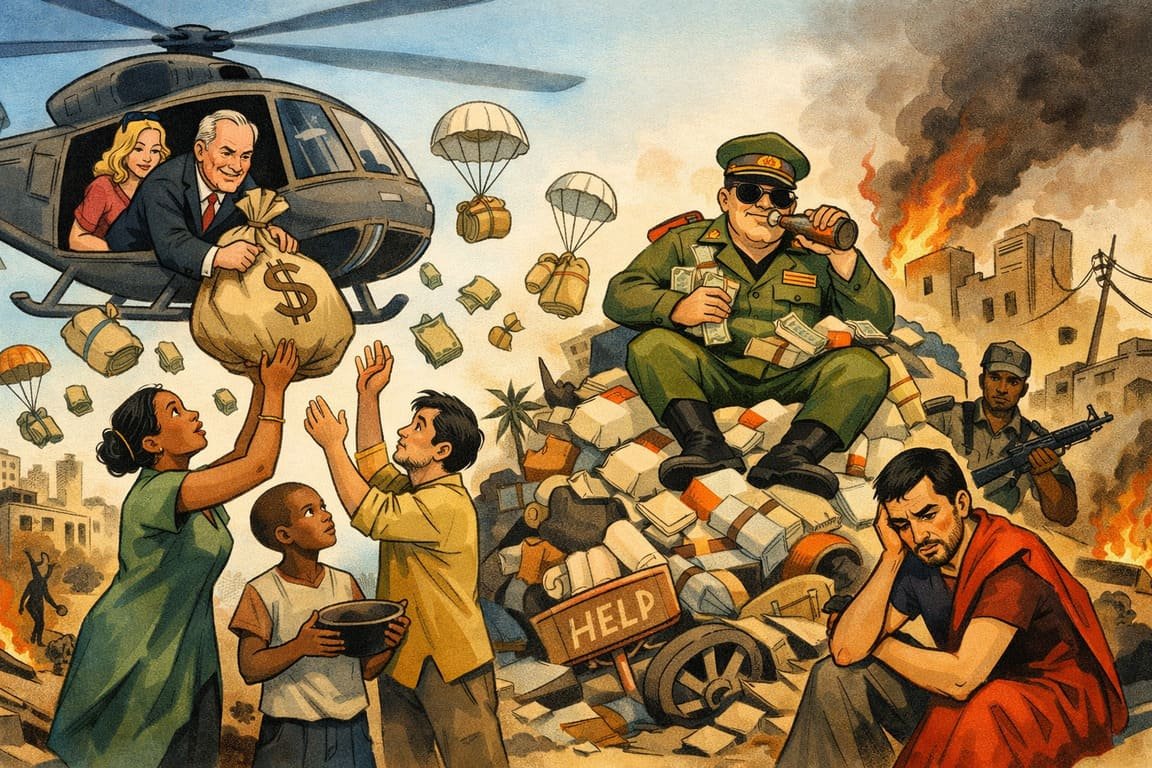
The convoy arrives clean and efficient, logos aligned, intentions unquestioned. Boxes move from truck to ground with practiced ease. Cameras capture relief in motion. Gratitude is expected. What rarely appears in the frame is the shopkeeper who closes early, the civil servant who learns where loyalty now flows, or the young graduate who realizes the safest career is proximity to donors rather than service to neighbors. Help has arrived, and something essential has shifted.
Charity saves lives. That fact deserves respect, not qualification. Emergency relief, famine response, medical intervention, these acts are moral obligations. The damage begins when rescue loses its endpoint. When aid becomes permanent, it stops behaving like support and starts behaving like structure, reshaping incentives in ways that rarely appear in annual reports.
Long-term aid rewires accountability with quiet efficiency. Governments funded externally feel less pressure to earn revenue internally. Taxation weakens. Representation thins. Leaders learn that survival depends more on donor satisfaction than citizen trust. The state remains visible, but the social contract erodes from the inside.
Markets absorb the next blow. Free goods undercut local producers who cannot compete with zero cost imports. Skills decay when demand disappears. Pride follows. Dependency is not laziness. It is adaptation to a system that punishes initiative and rewards waiting. Over time, economic agency migrates outward.
There is also a psychological toll that spreadsheets cannot capture. When solutions arrive prepackaged, ambition recalibrates. Innovation feels unnecessary. Creativity feels risky. Talented people learn that navigating aid systems matters more than building durable value. The culture shifts from problem solving to compliance.
Aid institutions themselves operate under conflicting pressures. Staff rotate quickly. Programs chase measurable outcomes. Success stories are amplified. Failure dissolves into documentation few reread. Good intentions collide with structural blindness. Feedback arrives too late to matter.
Defenders of aid point to the alternative. Without assistance, suffering would surge. They are right. The critique is not against compassion, but against permanence without ownership. Help that never plans its exit replaces growth rather than enabling it. The line between support and substitution blurs until local capacity quietly withers.
Infrastructure projects reveal the pattern clearly. Roads appear but crumble once maintenance budgets vanish. Clinics open but close when supply chains break. The visible wins mask invisible decay. What looks like generosity from afar feels like instability up close.
Philosophically, charity drifts into moral theater when it reassures donors more than it empowers recipients. Giving becomes identity. Help becomes performance. Meanwhile, dignity erodes quietly, even when gratitude remains sincere.
The rare success stories share an unglamorous trait. Aid shrinks as institutions strengthen. External support focuses on rules, enforcement, and capacity rather than goods. Money follows accountability. Exit becomes the goal, not abandonment. These stories lack drama, which is why they struggle for attention.
Late afternoons in aid-dependent capitals feel strangely suspended. Offices hum with activity, yet decision-making feels hollow. Policies wait for external approval. Futures feel borrowed. The nation functions, but ownership remains thin.
None of this argues for indifference. It argues for humility. Real help is uncomfortable because it transfers control, not comfort. Sustainable progress grows when people solve their own problems with tools they control, even if the path is slower and messier.
As the next fundraising campaign launches with urgency and sincerity, the harder question lingers beneath the generosity: are we building nations that can stand on their own, or perfecting a system that ensures they never have to?
