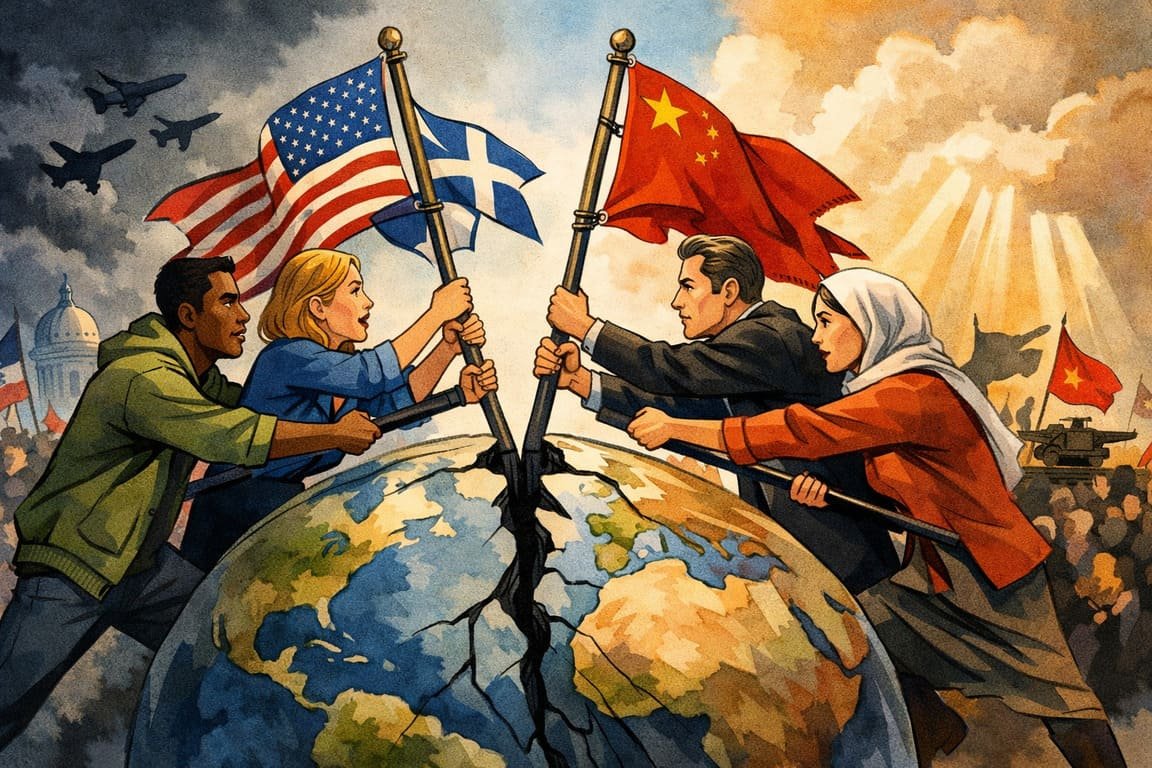
The hall fills with applause that sounds confident but edged with something sharper. Flags ripple. Promises echo. The language is familiar, yet the mood feels altered, heavier, more intentional. Nationalism is no longer knocking on the door of politics. It has taken a seat at the table, calm, disciplined, and very aware of its leverage. What once looked like a reaction now behaves like a governing philosophy.
Globalization promised frictionless progress. Borders would soften. Markets would reward efficiency. Cultures would blend without losing themselves. For some, that future arrived. For many others, it stalled. Factories closed. Towns hollowed. Identities blurred faster than replacements formed. Nationalism reentered not as nostalgia, but as an answer to disorientation. It offered certainty where complexity felt like abandonment.
This new nationalism is not built on isolation alone. It is built on belonging. When systems feel remote and decisions feel imposed, people gravitate toward symbols that feel close and familiar. Flags, language, tradition. These are not policy tools, but they are emotional anchors. Politics followed emotion because emotion votes reliably.
Leaders learned quickly that clarity beats nuance. A simple story outperforms a careful explanation. Nationalism thrives on that advantage. It turns abstract problems into moral narratives. Someone is responsible. Something was taken. Something can be restored. Whether the story survives scrutiny matters less than whether it feels true to those listening.
Institutions designed for cooperation strain under this pressure. Multilateral agreements require compromise and patience, two qualities nationalism treats with suspicion. International bodies begin to look distant, procedural, and unresponsive. Reclaiming sovereignty becomes a rallying cry, even as sovereignty itself has evolved into something shared, fragmented, and interdependent.
Culture absorbs the shift before law ever does. Popular media leans into defiance. Online spaces reward outrage framed as patriotism. Criticism gets recast as disloyalty. A university student once described hesitating before questioning a national policy, not because of censorship, but because dissent felt socially risky. Nationalism does not always silence speech. Sometimes it crowds it.
There is a quiet irony at the center of this movement. Nationalism speaks of roots and tradition while relying heavily on modern technology. Data analytics, targeted messaging, and viral amplification drive its reach. The message looks backward. The machinery races forward. That contradiction rarely weakens appeal. It strengthens it, blending comfort with precision.
Economic promises complicate matters further. Nationalism pledges protection. It talks about jobs, industries, and control. In practice, trade barriers often raise costs and reduce choice. Supply chains tighten. Consumers absorb pressure gradually. When outcomes disappoint, rhetoric hardens. Outsiders take the blame. Reflection rarely does.
History shows nationalism is not inherently destructive. It has unified societies during existential threat and fractured them during relative peace. The difference lies in definition. Inclusive nationalism builds shared purpose around values. Exclusive nationalism narrows identity until difference feels dangerous. Politics decides which version gains momentum.
The philosophical tension cuts deeper than borders. Nationalism questions whether moral obligation stops at citizenship. In an age of climate crises, pandemics, and digital spillovers, that question carries consequences. Problems ignore passports. Solutions cannot afford to. Emotional satisfaction and practical necessity drift apart.
Voters feel this contradiction instinctively. Pride coexists with unease. Belonging feels good. Isolation feels risky. A schoolteacher once said she loved her country fiercely but worried about the way love was being weaponized. That unease defines this era more accurately than any slogan.
Nationalism has rewritten campaign strategies, diplomatic language, and public debate. It did not seize power by force. It earned it by speaking to anxiety that went unanswered too long. Whether it becomes a stabilizing force or a dividing one depends on restraint, leadership, and honesty that is currently in short supply.
Somewhere, a rally disperses. Flags fold. Voices fade into traffic. The energy lingers, unresolved. Nationalism is not going away. The real question now is whether it evolves into a framework that protects dignity without shrinking the world, or whether it continues narrowing belonging until politics becomes a contest of walls rather than a negotiation of shared futures.
