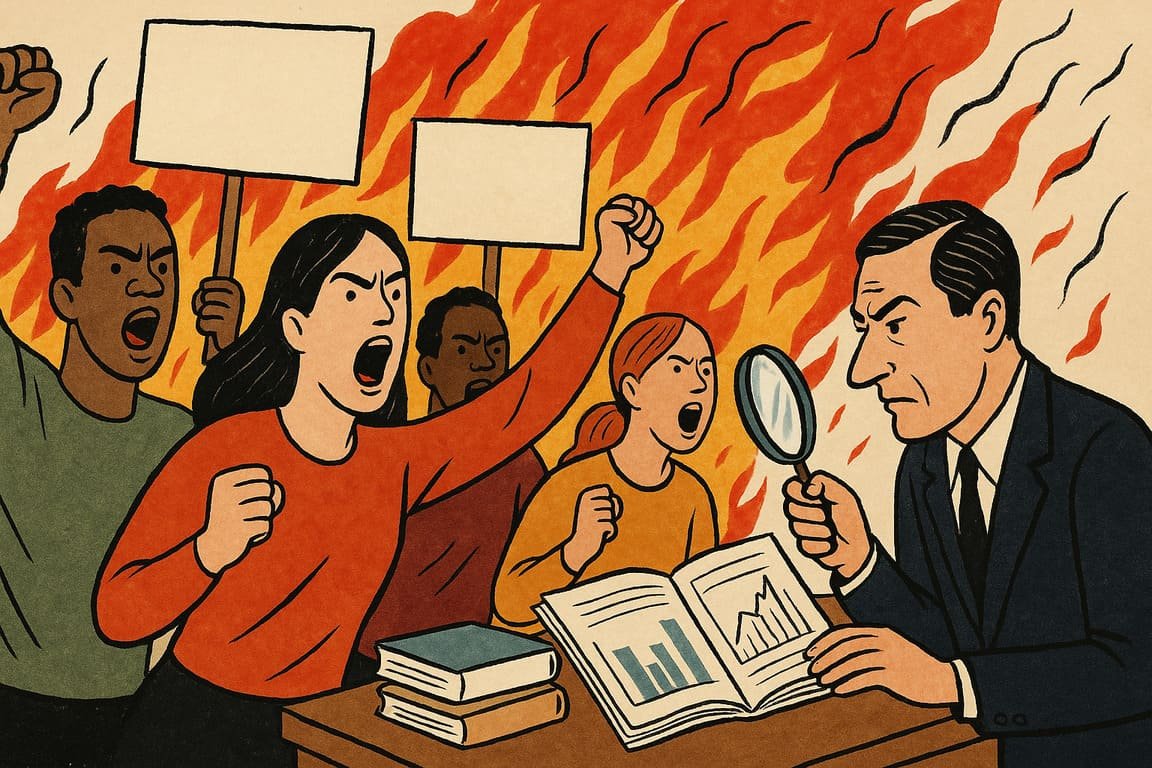
Outside the city’s glass towers, a river of protest moves through the rain-slick streets. Neon signs flash slogans alongside hashtags, umbrellas bob in the crowd, chants rebound off walls polished by centuries of commerce. In a conference room high above the demonstration, a group of executives tries to concentrate on their quarterly review. But the energy below cuts through the floor, vibrating the glassware, sneaking into every carefully balanced spreadsheet. The old divide between boardroom and boulevard is crumbling. Tonight, the heartbeat of the market is set by those marching outside, not those negotiating inside.
The world has entered a new era where research doesn’t just follow the market. It races to catch up with the demands of people united by purpose. Social movements have become shockwaves, shattering old models and forcing the business world to study not just what’s trending, but what’s true. Gone are the days when brands could ignore the voices outside their window. Now, every viral petition, every grassroots fundraiser, every global hashtag becomes urgent data for leaders desperate to avoid irrelevance.
You see the shift everywhere. Companies now commission entire teams to track social sentiment, mapping every outrage, hope, and call for justice. Decisions that once took years are now made in days, sometimes hours, as research teams scramble to interpret the pulse of a restless public. It’s not enough to know what customers buy. You need to understand what they believe. Businesses realize that the distance between a meme and a mass boycott is shorter than ever. The old walls between consumer and activist have come down.
Case studies litter the landscape. When a luxury fashion brand ignored an outcry over cultural appropriation, the backlash was swift and relentless. Analysts later revealed the company had no system to monitor activist-driven trends. Their research teams had studied markets but ignored movements. Meanwhile, a sneaker company jumped ahead, releasing a line in support of racial justice—guided by young researchers embedded in activist networks. Their campaign sold out in hours, but more importantly, it earned loyalty impossible to buy with advertising alone. “We stopped looking at trends and started listening to people,” their brand manager said. “That changed everything.”
Research is now both shield and compass. Businesses invest in digital ethnography, hiring sociologists and movement insiders to map the new territory of public opinion. In the halls of academia, courses on “protest analytics” fill up faster than old-school marketing electives. You, as a business leader, can no longer afford to treat activism as noise. It’s the weather system shaping every launch, every pivot, every apology. Social movements can create overnight heroes—or topple unprepared giants. The smartest companies don’t wait for a crisis to adapt. They build resilience into their DNA by researching the roots of dissent before it explodes.
At the heart of this transformation sits a paradox. The same research that helps a company adapt can also reveal uncomfortable truths. A coffee chain’s attempt to host open conversations on race backfired, exposing gaps between intention and reality. Internal research, released under public pressure, showed that most employees felt unprepared and unsupported. Yet, instead of retreating, the company used this data to revamp training, listen to feedback, and create a more open workplace. The lesson: research isn’t a shield from criticism. It’s a mirror that can save you from repeating old mistakes.
There’s power in humility. Research driven by social movements often starts with questions that feel dangerous: Are we part of the problem? Who are we leaving behind? The answers can sting. Yet, facing them head-on can lead to breakthroughs. One retail giant, after being called out for lack of diversity, launched a public audit of its hiring and pay practices. The findings were uncomfortable—but they became the foundation for a transformation that is now studied as a benchmark in business schools. Social movements don’t just demand research. They demand honesty, transparency, and the courage to change course.
Technology has become the megaphone. Tools like sentiment analysis, live polls, and algorithmic trend mapping give businesses a new radar for social unrest. But real understanding still comes from human connection. Consider the story of Jamal, a product manager at a ride-share company, who volunteered at a local protest after his brand faced criticism. “Sitting with people, listening to their anger and their dreams, I saw what our research missed,” he shared in an industry webinar. Jamal’s insights led his team to redesign their platform’s safety features and implement new community guidelines—turning public criticism into innovation.
For those who want to lead, not just react, research must now be participatory. Brands collaborate directly with activists, hosting co-creation sessions, crowdsourcing policy ideas, and inviting critique. This isn’t charity. It’s survival. A financial services firm, once slow to change, now runs an “impact lab” where employees and social movement leaders design new products together. The result? Products that reach underserved markets, campaigns that feel authentic, and a reputation for leadership that money can’t buy. As one team lead put it, “When you invite change in, you build a business that lasts.”
Social movements have also exposed the myth of neutrality. Research once tried to be an impartial observer, standing outside the storm. No longer. To ignore injustice is to pick a side. Modern business research must be ethical, grounded in the realities of power and privilege. The best teams now include ethicists and community advocates who guide decisions on everything from supply chain audits to ad copy. When the world is watching, you can’t hide behind the numbers.
For everyday workers, this revolution feels personal. Employees now expect their companies to take stands, and they aren’t shy about voicing concerns. Internal research—pulse surveys, listening tours, anonymous feedback channels—becomes the lifeline for honest dialogue. When leaders pay attention, morale rises, trust grows, and innovation thrives. When they don’t, talent walks out the door, often straight into the arms of competitors willing to listen.
It’s tempting to see this all as chaos, but there’s an order emerging. Businesses that align with social movements are better prepared for crisis, more innovative, and more trusted. Those that ignore the lessons are doomed to repeat the failures of the past. As a reader, you might wonder: Is your company paying attention to the street as much as the stock ticker? Are you researching what really matters, or just checking boxes on an outdated playbook?
The research revolution sparked by social movements isn’t a fad. It’s the new baseline. Tomorrow’s leaders will be those who turn outrage into insight, protest into progress, and dissent into design. This moment belongs to the curious, the brave, and the humble—the ones who see research not as an obligation, but as the key to building a future worth living in.
A street still glistens from an evening rain, empty now except for a single activist peeling posters off a lamppost, hands raw but eyes bright with the residue of purpose. Overhead, the office lights flicker on as early risers arrive, clutching coffee, glancing out the window at the paths traced by last night’s parade. The air tastes electric with possibility, as if the world has agreed to listen, if only for a moment. What remains is not the echo of chants, but a question that lingers in the silence.
Will you be the leader who researches the world outside your window, or the one who waits for the crowd to tell you what’s already changed?
