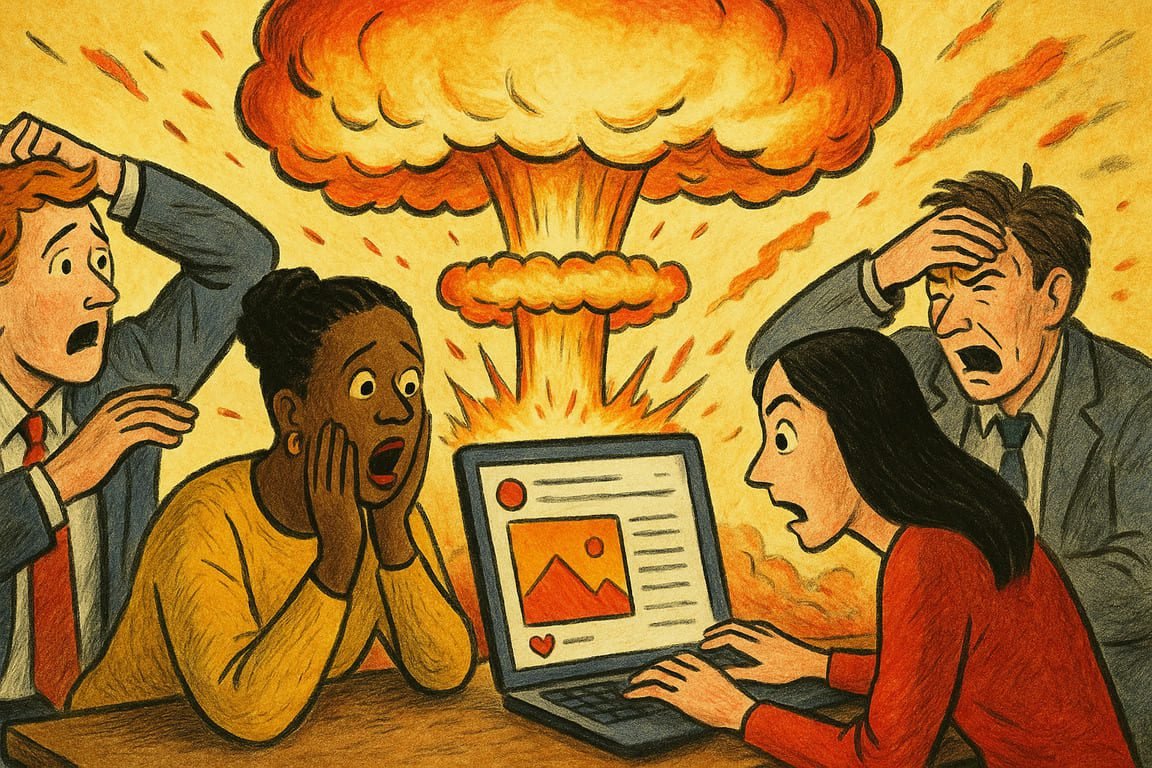
Somewhere in a shadowy apartment, city lights flash through the blinds as a designer leans over a glowing monitor, loading the next image that will break the web. Fingers drum nervously on the desk. In a split second, the post launches—then detonates across feeds, timelines, and inboxes like a supernova. The ordinary internet scroll becomes electric. Notifications buzz, comments pile up, and brands everywhere scramble to decode the secret. The internet’s quiet hum has erupted into a chorus, all because a single graphic flipped the script and hijacked the world’s attention.
You have felt this shockwave before: you scroll idly, numb to endless content, until a single post rips you from autopilot. It’s not luck. These nuclear posts are engineered to disrupt the feed’s trance. They stop the world with a punch of color, an image that tells a joke, or a meme that nails the cultural moment before anyone else dares. The glory goes to the designer who understands the speed of attention and the chaos of modern humor.
Consider how brands like Wendy’s turned playful graphics and snarky memes into global headlines. A single image roasted a rival and won millions of likes before the competition could blink. Or how Netflix drops a teaser image so striking it spawns speculation, fan art, and midnight debates across the globe. These aren’t just posts—they are online events, designed to dominate the day’s conversation.
Brands and creators now live by a ruthless rule: if you’re not igniting the feed, you’re invisible. Visual storytelling isn’t just a trick, it’s survival. You need a graphic that doesn’t simply match the trend but leaps ahead of it, owning a moment so completely that even your rivals are forced to react. Like Tesla’s infamous Cybertruck reveal—memes, mockery, mania, all feeding into millions of dollars in earned media, triggered by a single image.
Real people, not bots, drive this chaos. Meet Amani, a digital artist from Nairobi who creates Afro-futurist graphics. One day, a post about “smart city matatus” went live with a wild, sci-fi twist. Within hours, the image raced across WhatsApp, landed on TV segments, and sparked real city council debates. Her DMs overflowed with brands wanting a taste of viral glory. Amani’s genius? She made the audience feel like co-conspirators in an inside joke, not just observers.
FOMO is the silent engine behind every viral graphic. Internet glory favors those who master timing, humor, and cultural radar. When Gucci dropped an absurd, retro campaign that blurred irony and luxury, even the skeptics had to join the conversation. Great graphics don’t just impress—they challenge, confuse, or provoke. Suddenly, everyone needs to weigh in, share, remix, or defend. That’s nuclear.
Of course, every trend has imitators, but the originators endure. Brands that trust their creative teams to go weird, raw, or even controversial are the ones whose graphics linger after the echo fades. Think of Burger King’s “Moldy Whopper” post—gross, risky, unforgettable. It became a conversation about food, health, and honesty, all because the design was brave enough to make people squirm.
Mini-case stories play out daily. A fitness startup in London swapped before-and-after photos for a hand-illustrated “day in the life” comic, packed with micro-fails and small victories. Followers doubled in a week. Why? People saw themselves, flaws and all, not just an ad. Graphics that expose vulnerability often pull the strongest engagement.
This isn’t just about beauty. It’s about connection. Your graphic needs a pulse, a perspective. The internet’s favorite visuals aren’t always the prettiest—they’re the ones that say what everyone’s thinking or feeling before the crowd even realizes it. See how HBO’s “Succession” meme templates took over every major event for a season, fueling endless user-generated riffs.
Algorithm updates can’t smother originality. While platforms tweak the rules to police clickbait or spam, the nuclear post outsmarts the system by being too human to ignore. No AI detector can stop a graphic that sparks laughter, nostalgia, or outrage with a single glance. The best designers are students of chaos, always a half-step ahead.
Pop culture is your friend and foe. Miss the moment, and your post fizzles. Nail the timing, and you set off a chain reaction. Remember when Old Spice rebranded overnight with a series of wild, tongue-in-cheek graphics and GIFs? It wasn’t about deodorant—it was about starting conversations everywhere.
A nuclear post delivers a lesson: risk trumps repetition. Those who hesitate and cling to templates miss the next viral wave. Courage is the currency of internet glory. Even a small brand can topple a titan if their graphic throws a punch that nobody saw coming.
And when the dust settles, what remains is not just a count of likes or shares, but a place in digital memory. The post becomes legend—passed from inbox to inbox, quoted, remixed, and even parodied. Glory is fleeting, but the story endures.
Long after the notifications die, a single post flickers in late-night screens, burned into memory. It’s whispered about in creative meetings, referenced in future campaigns, its impact felt in every clever meme or bold campaign that follows. In the lingering afterglow, designers everywhere wonder if they have the nerve to go nuclear when their moment comes. The only question left: when the world scrolls past, will your post leave a mark or disappear without a trace?
