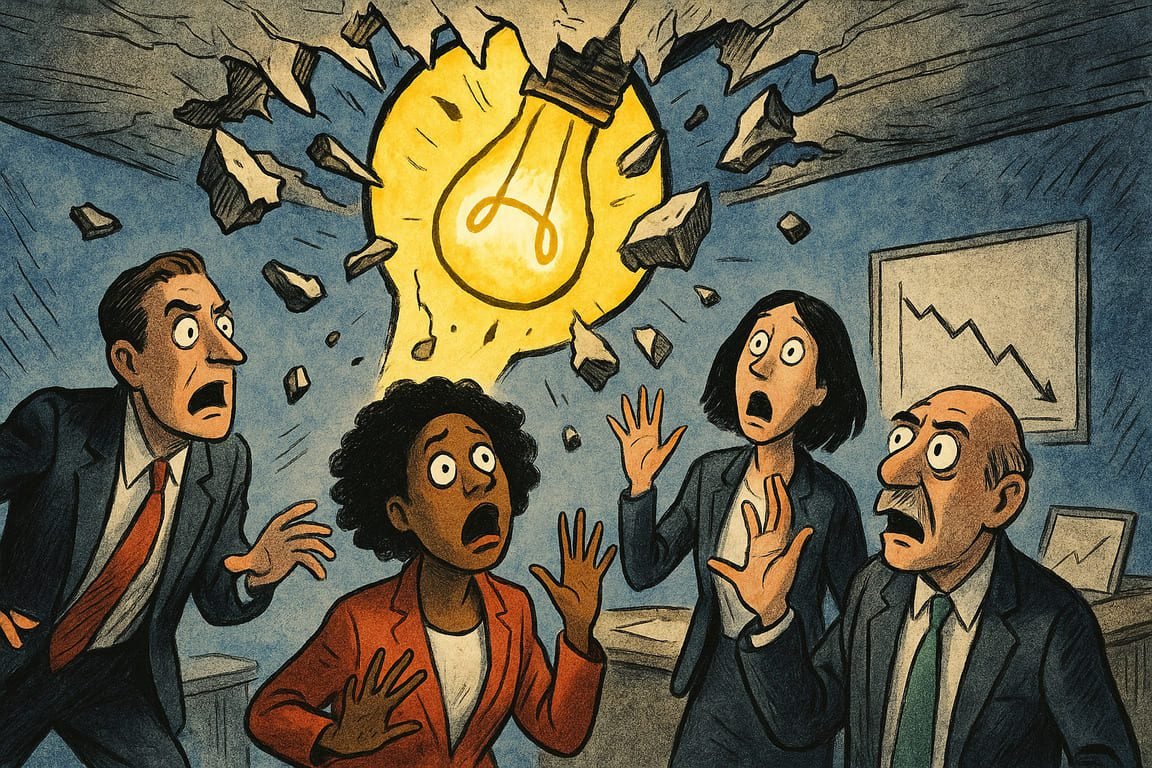
Shadows moved across a silent boardroom where old brands clung to their legacy like moths pressed against fading wallpaper. It looked nothing like the chaos you might imagine behind breakthrough ideas: a table littered with torn sketches, post-it notes curling at the edges, and the taste of burnt espresso lingering in the air. Every eye in the room flickered between panic and awe as the latest mockup hit the screen. Outside, rain tapped impatiently at the windows. The world, it seemed, waited for permission to change, but inside this scene, design had already decided to do the disrupting.
Patterns began to fall apart first. Processes built for the last decade no longer fit. It was not just technology, though gadgets hummed from every corner. A new mood pulsed: fearless, raw, almost electric. Someone once said that design was simply “making things look nice.” In this arena, design became a storm—reshaping not just websites and logos but entire business models. As headlines buzzed with the collapse of giants, a handful of teams worked through the night to make sense of what would come next.
It was never just about pretty pixels. Across the city, an indie bakery turned global sensation, Oat & Ember, credited its unlikely rise to a whimsical rebrand that put hand-drawn dragons on every croissant wrapper. A nearby fintech startup, ThreadPay, dodged a market crash by releasing an app update with a game-like interface that users could not stop sharing. In both stories, the disruptors did not wait for consensus. They trusted intuition and let the world catch up.
You have seen it: the line between designer and CEO blurs more each day. When a wild visual idea lands, sometimes everything else follows. Companies find themselves forced to reimagine culture, strategy, and even the language they use. There is an old saying in the industry: disrupt or get disrupted. The boldest move, it turns out, is not to defend what works, but to shatter it before someone else does.
Now, imagine standing in a room where all bets are off. Ideas crackle like static. Every brand must decide: double down on the old playbook, or bet the farm on what feels risky and unproven. In that split second, the energy of the disruptor wins. The world favors the brave, the ones willing to fail loudly and learn quickly.
You sense it in your own work: those moments when an unexpected visual—neon colors, playful motion, brutal minimalism—seems to rewrite the rules of engagement. Suddenly, the competitors look dull, as if they are stuck in slow motion. Businesses that once seemed untouchable now scramble to catch up with customers who crave authenticity, surprise, and delight. This is not hype; it is a reality seen on every platform, from Instagram to investor pitches.
Some will say, “Wait, isn’t this just a trend?” You already know the truth. Design disruption is not a phase. It is a mindset that spreads, infects, and transforms. Even governments have felt its pull: the city of Wellington revamped its public services using playful color schemes and empathetic wayfinding signs, turning bureaucratic spaces into welcoming hubs. Behind every viral brand lies a story of someone who refused to play it safe.
Maybe you have felt that rush—the fear and thrill of pitching a wild idea that defies what your industry expects. There is magic in those moments. Risks that feel reckless in the morning often look visionary by nightfall. Some will laugh, others will copy, and a few will ask, “Why didn’t we do that first?” You want to be in the first group, not the last.
Watch closely as new players enter the arena. They rarely ask for permission. They tear apart tired templates, remix the familiar, and make ordinary moments unforgettable. Think about how Glossier grew from a humble blog into a billion-dollar brand with pastel packaging and candid, unfiltered beauty stories. It was disruption by design—no committee, just conviction.
For skeptics, it is tempting to dismiss all this as creative overreach. But look around: stagnant design suffocates progress. When brands cling to the past, they become invisible. The disruptors, in contrast, claim attention and loyalty by being unforgettable. There is a lesson for every business: embrace bold design, or prepare to be erased.
Stories echo in every sector. When Dutch Railways replaced sterile ticket machines with playful, intuitive screens designed by a tiny agency in Utrecht, complaints dropped and smiles increased. Employees felt prouder, and tourists spent more. Behind every metric lies a creative gamble—a risk that felt foolish until it was not.
The next breakthrough could come from anywhere: a student’s side project, an overlooked junior on the team, a partnership between rivals. It does not matter who sparks the fire. What matters is how quickly it spreads, reshaping not just the look, but the meaning of business itself. That is the secret the disruptors understand: you do not just change the product, you change the story.
Courage is contagious. Once disruption enters the bloodstream of an organization, you cannot put the genie back in the bottle. The challenge is not in finding bold ideas, but in letting go of the comfort that came before. The future belongs to those who can face the discomfort, ignore the skeptics, and lean into the unknown with open arms.
A lone figure stands on the rooftop of an old factory, wind tangling their hair, the city’s neon pulse reflected in every window below. Far from the safe glow of spreadsheets and forecasts, they hold a sketchbook torn at the corners—pages filled with ideas that do not fit in boardroom slides. Behind them, the world is rearranging itself: logos flicker, colors swirl, a hundred new brands rise from the ruins of the old.
Inside, the hum of machines and the laughter of a team rewriting the script echo through the building. Every risk is etched in the smell of paint, the buzz of caffeine, the sharp tap of keys at midnight. In this place, hesitation does not survive. The disruptors are not waiting for permission. They are painting a new reality in broad, unapologetic strokes.
Change leaves a mark, sometimes gentle, often wild. Business will never look the same. Neither will you. Ask yourself: Are you shaping the future, or will you wake up to find it has already been redrawn by someone bolder? The storm is not coming. It is already here—and only you can decide whether to dance in the rain or be swept away.
