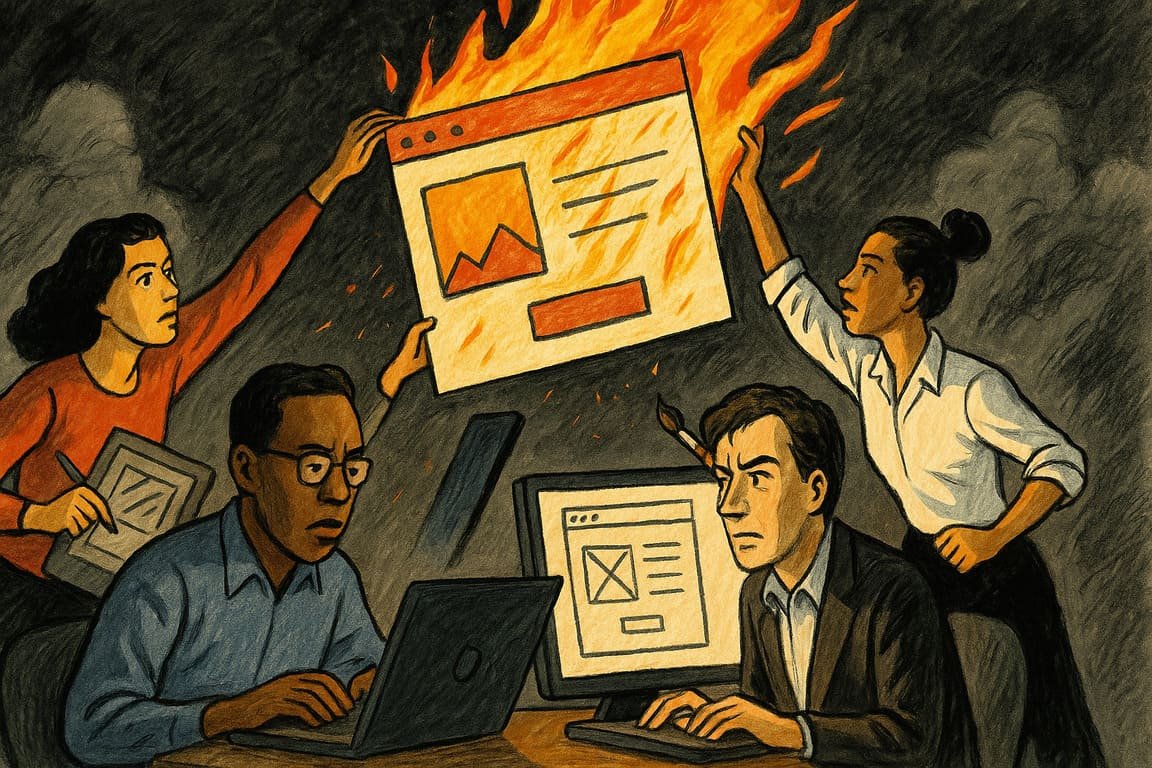
Under flickering neon, a small team of designers huddle around a battered coffee table, laptops aglow with the pulse of possibility. Beyond the rain-speckled window, the city rumbles with old ideas, but here, something new is stirring. Every line of code, every vector drawn, dares to unseat the status quo. This room isn’t an office—it’s the cockpit of a spaceship, ready to launch into the unknown. In this world, revolution isn’t loud. It happens pixel by pixel, as designers quietly rewrite tomorrow.
Gone are the days when websites meant digital brochures. Now, each new site is a living organism, constantly evolving. You notice it the moment you tap open a new brand’s homepage and feel that jolt—colors, movement, a story unfolding beneath your fingers. Today, you don’t just scroll, you wander. Every interaction is a chance to make meaning, not just make money. Designers know the stakes: the right interface can disrupt industries overnight.
You’re not just building pages. You’re orchestrating journeys, designing the invisible pathways that move people from confusion to delight. The web is a playground, a protest, and a canvas for dissent. Think of Zuri, who redesigned a government portal so seamlessly that frustrated citizens flooded social media with praise. That single act of empathy shifted an entire conversation about digital access.
The web revolution isn’t just for code wizards and pixel poets. It belongs to everyone willing to question, adapt, and reinvent. When you log on, you step into a digital bazaar where ideas collide at light speed. The designers thriving in this chaos are the ones who listen hardest—to users, to trends, to that stubborn voice whispering, “What if?” The best ones are shape-shifters. They pull inspiration from TikTok dances, sci-fi novels, and subway graffiti.
You are now competing with the world’s best, instantly and everywhere. Each click, each tap, is a global audition. Your designs must stand taller, move faster, feel smarter. Remember Ravi’s story: working out of a garage in Delhi, he built a web platform for rural artisans, connecting them to urban buyers. Within months, demand soared, and his approach to inclusive design went viral. Web revolutions don’t announce themselves—they erupt in the quiet spaces where need meets vision.
The old design rules crumble. Flat, minimal, maximal, skeuomorphic: labels lose meaning. You are free to blend, remix, invent your own playbook. The revolution rewards boldness. If you want proof, watch what happens when a brand dares to break the grid or introduces animation that feels more like jazz than code. Those who rewrite the rules aren’t just remembered—they’re imitated.
In this new landscape, accessibility is not a checkbox. It’s the foundation of impact. A web designer’s true power lies in empathy, the willingness to invite every user into the experience. Take Salma, who built a poetry site for the visually impaired using audio cues and tactile navigation. Her project drew international attention, but more importantly, it sparked a wave of similar innovations.
As the web becomes more immersive, design is turning from interface to environment. Every choice—a shadow, a font, a sound effect—shapes mood and meaning. The line between digital and physical blurs. Suddenly, shopping online feels as visceral as picking up an object in a boutique. Those who master these transitions define tomorrow’s user experience.
Failure fuels the revolution. For every viral launch, there are dozens of missteps, broken links, crashes that keep designers up at night. Embrace these scars. The most revered designers share their failures openly, treating them as badges. Why? Because every error is a catalyst. In the web revolution, the only unforgivable sin is stagnation.
Creativity is not just about invention. It’s about seeing patterns before others do, connecting the dots between trends and user needs. Great designers steal like artists, remixing inspiration from music videos, memes, and architecture. The genius of tomorrow’s web is born from today’s playful experiments.
Tools matter, but vision matters more. While no-code platforms and AI assistants empower more creators, it’s the spark behind the screen that sets legends apart. Those who treat their software like a paintbrush, not a crutch, shape culture. Ask anyone who’s witnessed a creative breakthrough at 3 a.m. and you’ll hear the same truth: the revolution runs on passion.
The web’s future belongs to those who make others feel seen, heard, and surprised. Tomorrow’s designers are not just rewriting interfaces—they’re rewriting the way people think, feel, and connect. Your browser is now a portal to infinite possibility. Every time you open a new tab, you are invited to join the revolution.
When the last code is committed, and the coffee cups are empty, the city outside remains unchanged. Yet inside that room, light glimmers off every monitor, hinting at a world about to break open. Ideas swarm like fireflies, refusing to be trapped. The revolution is not televised. It lives in the courage to create, to fail, to build something no one has seen before.
Tomorrow belongs to the restless. The only question left: will you shape it, or let it shape you?
