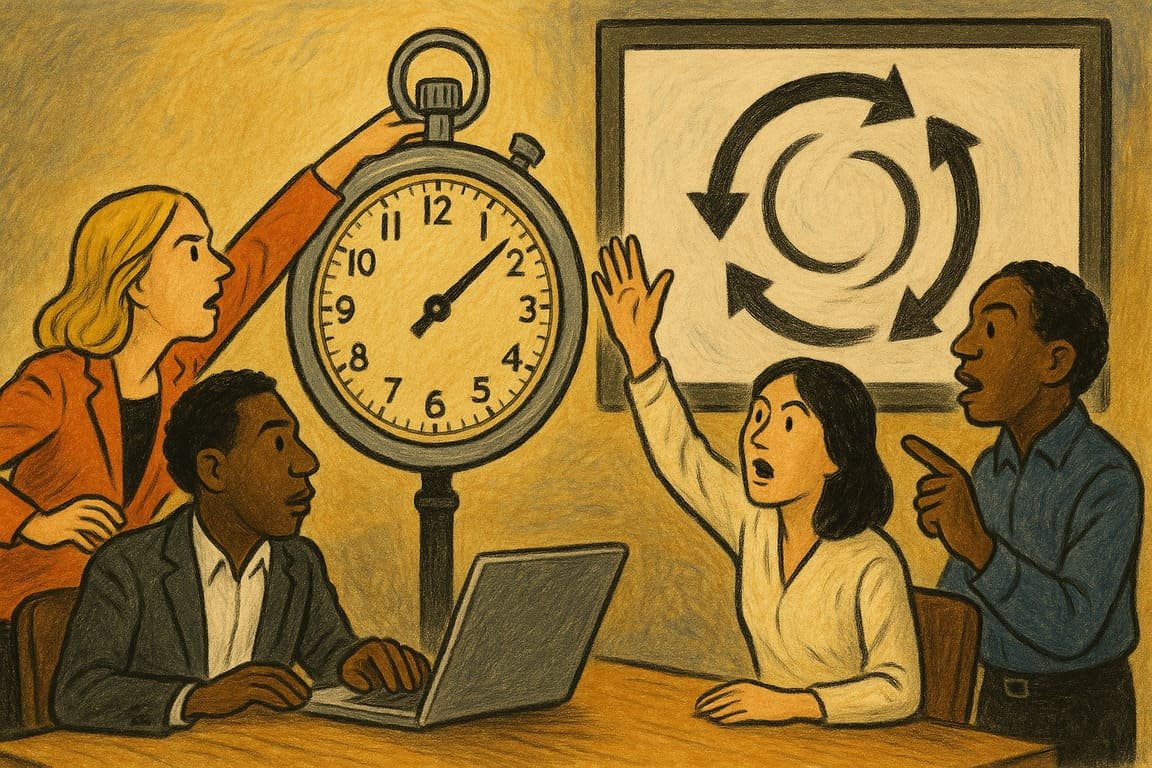
On a rainy morning in the city’s tallest tower, an office buzzes with energy that’s more restless than routine. Whiteboards drown beneath layers of color-coded sticky notes, voices ricochet off glass walls, and the air is charged with anticipation. At the center, a circle of designers and engineers huddle close, debating a prototype born only hours ago. The aroma of overbrewed coffee battles the tang of nervous sweat. Suddenly, the CTO—a woman known for her laughter and lightning-fast decisions—leaps up and scribbles a new idea onto the board, flipping an entire plan with a single sentence. In this world, strategy is not a document. It’s a living, unpredictable thing—molded, challenged, and rebuilt in real time by those bold enough to welcome change. Here, agility isn’t a buzzword. It’s survival.
Agile thinking, in this era, has become more than process. It’s a lifeline for organizations looking to outpace chaos and carve new opportunities from shifting ground. You see it in the way teams now swarm on problems, breaking down massive projects into sprints so small they barely have time to gather dust. The pressure is real, but so is the rush. The feeling of taking risks and learning fast has become the new addiction for tech leaders determined to thrive where others stall. The story of a Kenyan health-tech startup, PulseCheck, captures this spirit: when pandemic disruptions closed traditional clinics, their team pivoted in a week to launch telehealth consultations, outmaneuvering giants by trusting rapid feedback and never falling in love with a single plan.
You notice that in places where old routines once ruled, agile thinking now challenges every assumption. Meetings shrink, hierarchies flatten, and every voice counts—sometimes, it’s the junior developer who spots the bug that saves the product launch. When teams act like special forces units—moving light, fast, and with absolute clarity of mission—nothing feels impossible. Failure isn’t feared. It’s a badge of courage, proof that someone cared enough to test the limits.
For you, strategy is no longer a map you study once a year. It’s a GPS constantly recalculating, warning you of roadblocks and new shortcuts alike. Agile IT means living with uncertainty and responding not with panic, but with curiosity. Think of Toyota’s legendary “kaizen” philosophy, now reborn in tech offices across the globe, where small, relentless improvements add up to seismic change. The most successful businesses have internalized this lesson: agility rewards not the fastest, but the most flexible.
The most gripping stories come from those who resisted. Picture an insurance firm in Nairobi, nearly outpaced by nimble fintech startups. Their leaders clung to old systems, dismissing agile as a fad. It wasn’t until a minor disruption nearly toppled them that change arrived like a storm—late, but unstoppable. New teams formed overnight, processes scrapped, and what emerged was a company unrecognizable to its past self, ready to surf the next wave instead of drowning beneath it. It’s a lesson repeated in boardrooms worldwide: adaptation waits for no one.
Agile thinking does not guarantee instant harmony. There are days of tension, frustration, and dizzying uncertainty. Some team members thrive in the constant churn, others falter. But even setbacks become stories, building a collective muscle for risk and reinvention. An e-commerce founder from Lagos described the journey as “dancing in a hurricane—sometimes you stumble, but you always keep moving.” It’s this blend of grit and joy that keeps teams from unraveling when the unexpected hits.
For strategy to be truly strong, it must breathe. The smartest leaders foster cultures where questions outnumber answers and experiments outweigh tradition. When a new app feature flops, it’s dissected for lessons, not blamed on a scapegoat. When a product lands with a thud, the response isn’t despair but determination to try again—wiser, faster, less afraid. That’s the agile mindset in action: progress measured not by perfection, but by momentum.
You can feel the pulse of adaptive IT in every breakthrough. A logistics firm slashes delivery times by tweaking its algorithm daily, not monthly. A school network, battered by unreliable power, hacks together solar-powered routers in days. These stories travel fast, becoming legend. Employees share them like war tales, and the culture shifts. No longer is change the enemy; it’s the fuel.
Strategy, in this new landscape, is defined by readiness to pivot. It’s knowing when to drop a failing project and double down on a rising trend. The ones who win aren’t those with the longest business plan, but those who can rewrite their plan at breakfast, test it by lunch, and iterate by dinner. The reward isn’t just survival, but a kind of creative freedom that makes every challenge feel like a fresh start.
As the storm outside fades, a single desk lamp burns in the corner of the nearly empty office. Blueprints and sticky notes cover every surface, illuminated by the soft glow. The CTO leans back, watching raindrops race each other down the window, her mind already spinning toward tomorrow’s problems. Somewhere, the echo of laughter and the scratch of marker pens linger in the air, proof that the night’s work matters. In the silence, a single idea rises: true strength lies not in never changing, but in changing faster than fear can catch you. Will you fight the storm—or will you become it?
Partnered. Provocative. Worth Your Scroll.
This is a Promoted Post by ESYRITE—yes, it’s paid, but never filtered. Our voice stays raw, real, and razor-sharp. We team up with bold ideas, game-changers, and stories that spark something real. If it’s here, it earned its place—no fluff, just impact. We don’t just promote—we provoke. Stay sharp. Dive deeper.
