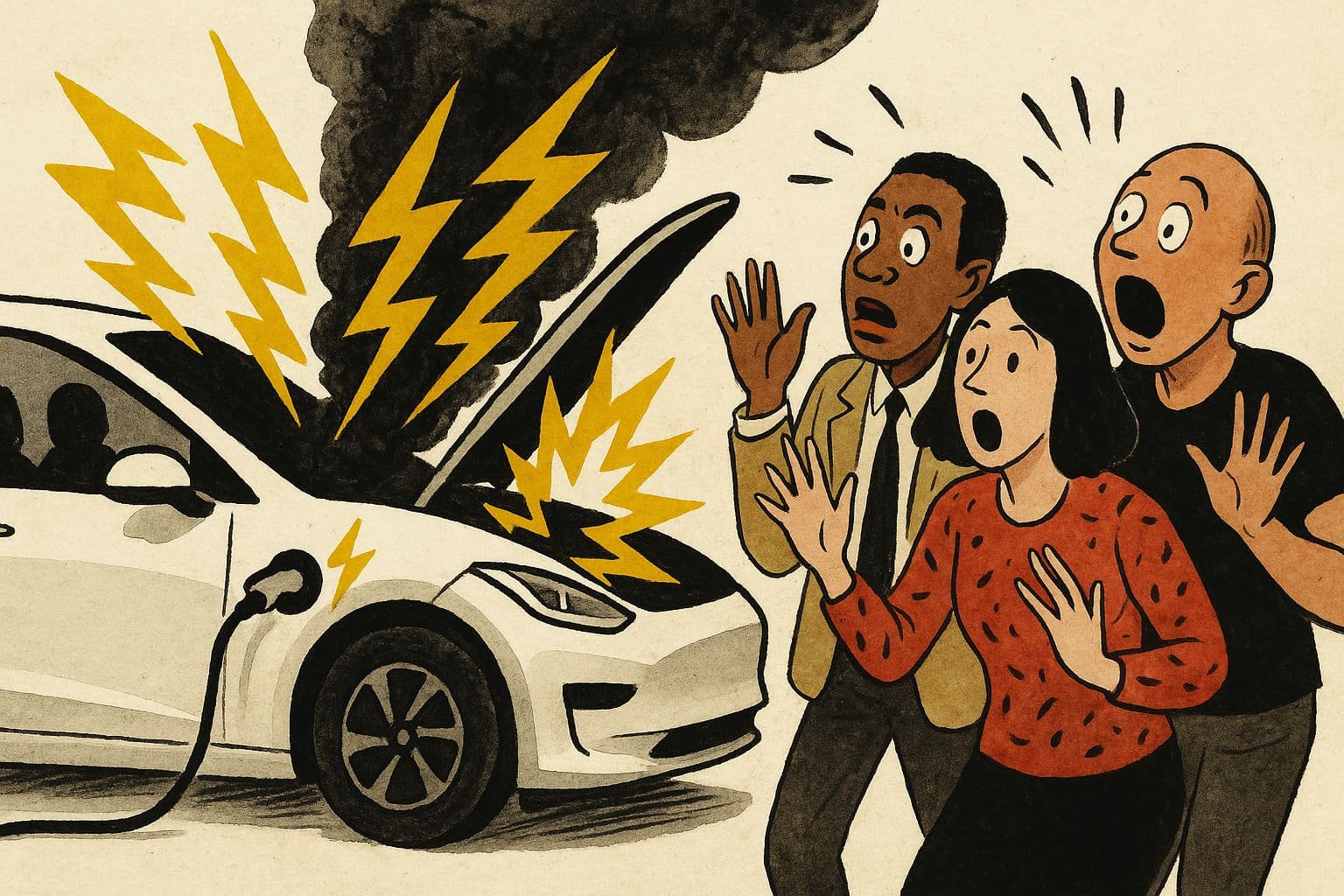
Electric cars glide silently through cities, sporting futuristic curves and promising a guilt-free tomorrow. They’ve become status symbols for the eco-conscious, painted as knights in shining armor ready to slay the climate crisis. Slick ads boast about clean driving and zero emissions, urging drivers to “save the world” with a single charge. Yet, in this high-voltage fairytale, a darker subplot simmers beneath the surface. What if electric vehicles are not the panacea we crave, but a Trojan horse carrying dangers; environmental, ethical, and social that could spark the next big sustainability scandal? The journey ahead is not what you’ve been sold. Prepare to have your beliefs challenged, your assumptions flipped, and your mind opened to what’s truly lurking behind the wheel of the electric car revolution.
Quick Notes
- Not So Clean After All: Electric vehicles come with a heavy hidden environmental cost, from mining rare earth minerals to producing massive batteries.
- The Battery Backlash: Extraction and disposal of battery materials fuel pollution, human rights abuses, and serious waste management headaches.
- Grid Strain and Dirty Energy: Charging stations rely on energy grids that still lean heavily on coal and gas, undermining the “zero emissions” story.
- Safety and Social Inequity: EV fires, silent accidents, and urban inequalities pose threats that few manufacturers dare to address.
- A Smarter Path Forward: Rethinking mobility, embracing transparency, and demanding real innovation can steer us toward authentic sustainability.
Green Dreams, Dirty Reality: The Environmental Toll of Electric Vehicles
The electric car story begins with bold promises: clean air, silent streets, and a planet on the mend. Showrooms beam with confidence as glossy vehicles whisper of a revolution on wheels. But every battery, every chassis, and every ounce of copper tells another story. The metals that make electric cars possible; lithium, cobalt, nickel must be clawed from the earth in a process anything but clean. Mining towns in Chile, Congo, and Australia bear the brunt, their landscapes scarred by gaping pits and toxic runoff.
Manufacturers tout reduced tailpipe emissions but rarely mention the devastation upstream. For a car to start life “green,” mountains must be leveled, forests cleared, and groundwater drained. In one South American village, locals watched as lithium mining devoured their water supply, transforming fertile land into cracked, lifeless earth. They gained nothing, yet the world cheered as shiny Teslas rolled off the line. This paradox haunts every environmentalist with a conscience.
Battery production adds to the carnage. Gigafactories pump out packs the size of coffins, each requiring vast amounts of energy and generating substantial emissions. Chinese battery plants, running on coal, offset the benefits electric cars promise. Even as drivers boast about their clean commute, the air around distant manufacturing hubs grows thicker and grayer. The problem is exported, not solved.
Transporting these heavy vehicles adds another invisible layer. Shipping batteries and car parts across oceans devours fossil fuels. Cargo ships spew greenhouse gases as electric cars travel thousands of miles before even reaching your driveway. The carbon math quickly grows murky, eroding the myth of zero-emission mobility.
The green image sold to consumers is less an absolute truth, more a carefully managed illusion. Scrape away the marketing, and the facts remain: electric vehicles reduce city smog but shift environmental burdens to communities and ecosystems out of sight. Until the supply chain is revolutionized, the “clean” car will remain a half-truth with a dirty backstory.
Battery Blues: The Human and Environmental Cost of Going Electric
The heart of every electric vehicle beats in its battery; a marvel of modern engineering and a magnet for controversy. Lithium-ion cells pack enormous power, but their production is fraught with challenges. Cobalt, one of the battery’s essential elements, is largely mined in places where labor protections are thin and corruption thick. In the Democratic Republic of Congo, entire families including children work in hazardous conditions, extracting the cobalt that powers first-world dreams. The ethical dilemma is not lost on those who dig beneath the headlines.
Disposal is another ticking time bomb. Electric car batteries do not last forever. Once their capacity drops, a mountain of hazardous waste threatens to spill into landfills and waterways. Some manufacturers promise recycling programs, yet many batteries languish in storage, awaiting an economic solution that remains elusive. A technician in California confessed to storing hundreds of “spent” batteries, uncertain of how or when they’d be safely processed.
The extraction process leaves deep scars. Lithium brine mining consumes immense quantities of water, often in arid regions where every drop matters. Entire lakes have vanished, leaving behind ghostly salt flats and displaced communities. Wildlife disappears, pushed out by drilling rigs and chemical waste. One Chilean farmer shared how once-productive fields now yield only dust and silence; a sacrifice made for electric mobility he can never afford.
The industry’s appetite for raw materials spurs a global rush, pitting multinational corporations against indigenous land rights and fragile ecosystems. Governments, hungry for investment, roll back regulations and cut deals that favor industry over locals. In Australia, sacred Aboriginal sites were bulldozed to make way for nickel mines feeding the EV supply chain. The emotional and cultural losses cannot be measured in carbon savings.
For all their promise, electric vehicles come with a human cost that the sticker price can never reveal. Consumers may feel empowered by their green choices, but someone, somewhere, pays the real price for our battery-powered future. The challenge is to make the invisible visible and to demand a supply chain that honors both people and planet.
Plugging Into the Problem: Grid Strain and the Dirty Energy Dilemma
Charging an electric car feels futuristic; no roaring engines, just the gentle hum of electrons filling a battery. But the reality behind that hum is anything but clean. Most countries still draw significant electricity from coal, natural gas, and oil. Plugging in at home or a public station often means tapping into a grid that’s more brown than green. The promise of “zero emissions” is, at best, a half-truth for many drivers.
Utilities scramble to keep up as EV adoption surges. In cities like Los Angeles and London, spikes in charging demand have triggered local blackouts and grid failures. Utility workers warn that infrastructure upgrades lag far behind the pace of electric car sales. As millions of vehicles plug in every night, power plants must work overtime, often reverting to the dirtiest sources when renewable supply dips. The grid is under siege, and the consequences ripple out.
Renewable energy remains a work in progress. Solar and wind are growing, but storage remains expensive and unreliable. On cloudy days or windless nights, the grid leans on fossil fuels to meet the demand especially when a sudden rush of vehicles plugs in. The effect is invisible to drivers, who see only the clean dashboard readout, not the distant smokestack billowing to keep their cars on the road.
A California couple, proud of their solar panels and electric car, learned the hard way when wildfire-driven blackouts left them stranded. Without grid power, their car became an expensive driveway ornament. Their story, echoed by thousands during power outages, highlights a new dependence on an aging, vulnerable system. Reliability becomes a privilege, not a guarantee.
Policymakers face a dilemma: push for faster EV adoption or shore up the power grid? Without bold investments and honest accounting, the electrification of transportation risks trading one set of problems for another. True sustainability demands a grid as clean and resilient as the vehicles it powers; anything less is just shifting emissions from one exhaust pipe to another.
Silent Risks and Social Gaps: The Hidden Dangers on Our Roads
Electric cars promise safer, quieter streets, but reality paints a more complicated picture. Their near-silent operation at low speeds poses a unique threat to pedestrians, especially children and the visually impaired. A London mother, Lucy, recounts how her son, used to listening for engines before crossing, was nearly struck by a whisper-quiet electric SUV. Urban planners scramble to retrofit cities with sound devices, but risks persist.
Battery fires, while rare, unleash intense blazes that challenge even the bravest firefighters. Unlike gasoline flames, lithium-ion fires can reignite hours after being extinguished. The headlines grab attention, but families living near EV parking garages worry about the unseen hazard. A Toronto apartment complex was evacuated when an EV battery smoldered for days, sending acrid smoke through ventilation shafts. The sense of security cracked.
Inequality is another shadow lurking behind the wheel. Electric vehicles remain out of reach for many due to high upfront costs and limited charging infrastructure in low-income neighborhoods. A rideshare driver in Detroit describes watching wealthy districts get shiny new charging stations while his own area languished without options. The transition to electric mobility threatens to deepen social divides, rewarding the privileged while leaving the vulnerable behind.
Insurance companies, too, have sounded alarms. The cost of repairing or replacing batteries inflates premiums, sometimes totaling a car after minor accidents. Owners discover that “affordable” electric cars can become financial nightmares after a single fender-bender. A mechanic in Berlin revealed that one scratched battery pack resulted in a $15,000 repair bill; a story repeated in shops worldwide.
The social promise of electric vehicles is real but fragile. Until safety, equity, and affordability are addressed, the revolution risks becoming a boutique solution for the few, not a sustainable future for all. A green city is only as fair as the roads that run through it.
Beyond the Hype: Rethinking the Electric Revolution for Real Sustainability
The electric car movement has stirred the world, galvanizing automakers and consumers alike. Yet, meaningful change will only come when we look beyond the hype and confront the hard truths. A family in Norway, pioneers of early EV adoption, learned the full cycle by supporting a local battery recycling startup. They discovered the complex dance of reclaiming valuable materials and reducing waste; a process fraught with setbacks but rich with promise. Their journey shows what happens when vision meets action.
Transparency must become the new standard. Brands need to trace every material, every supplier, every kilowatt then share that information openly. A handful of automakers now publish detailed supply chain audits, exposing labor practices and environmental impacts. This shift builds trust and sets a benchmark for competitors. When consumers see behind the curtain, choices get sharper, and greenwashing loses its power.
Public investment is crucial. Governments must accelerate clean grid expansion, invest in public transit, and subsidize recycling innovation. Instead of subsidizing only personal vehicles, policymakers can fund e-bikes, buses, and walkable cities; solutions with a broader, deeper impact. Cities like Amsterdam have cut car traffic while electrifying buses, proving that a balanced approach serves both people and the planet.
Consumers, too, play a role. Ditching the car altogether, using shared mobility, or buying used vehicles can often cut emissions more than the latest EV model. Asking tough questions and supporting companies committed to circular supply chains puts pressure where it counts. Every purchase becomes a vote for the future we want.
True sustainability is messy, layered, and always a work in progress. Electric cars hold a vital piece of the puzzle but only if we face their risks, fix their flaws, and demand a broader, bolder vision for mobility. The next chapter belongs to those who refuse simple stories and chase real solutions.
Electric Shock: Time to Lift the Hood and See What’s Really Powering the Revolution
Electric cars captured our imagination and fired up hope for a greener world. They glimmer on billboards, hum through urban streets, and tempt us with promises of clean freedom. But the truth, like the battery under the hood, holds a hidden charge. Our drive to sustainability cannot run on wishful thinking and clever ads alone. Behind every whisper-quiet ride, there are voices; miners, mechanics, city workers; whose stories rarely make it to the showroom floor.
The road ahead is electrifying, but fraught with choices that demand courage, honesty, and a willingness to rethink what progress truly means. Will we settle for shiny icons and superficial fixes? Or will we spark a revolution that honors people, planet, and the messy, inspiring work of real change?
So the next time you step behind the wheel, ask yourself: Is this the future we want, or just the best-selling illusion of the year? Only when we dare to lift the hood, face the dangers, and drive change beyond the showroom, will the electric revolution be worthy of its promise. The steering wheel is in our hands. Where will we take it?
Partnered. Provocative. Worth Your Scroll.
This is a Promoted Post by ESYRITE—yes, it’s paid, but never filtered. Our voice stays raw, real, and razor-sharp. We team up with bold ideas, game-changers, and stories that spark something real. If it’s here, it earned its place—no fluff, just impact. We don’t just promote—we provoke. Stay sharp. Dive deeper.
