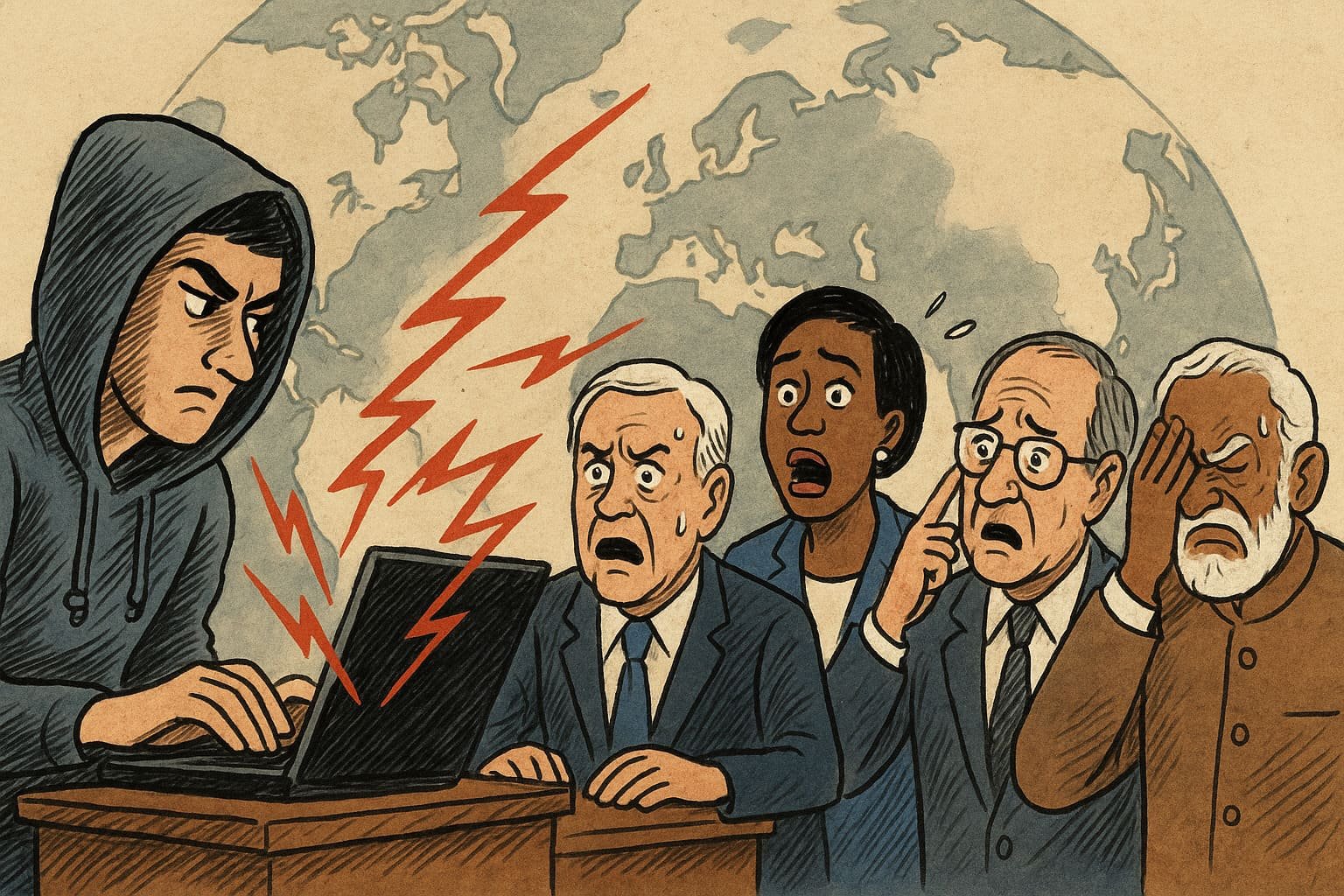
Imagine this: The president of the United States is locked out of Air Force One. Berlin’s government buildings flicker off, every screen taunting with mocking code. Beijing’s high-speed trains crawl to a halt as red error messages spiral on every dashboard. In the space of a heartbeat, the world’s leaders have gone from untouchable to helpless all because a group of hackers decided to remind everyone who really holds the keys. This isn’t science fiction. This is the nerve-wracking, breathtaking moment when global power gets yanked out of the hands of politicians and dumped at the feet of digital phantoms. No missiles, no tanks, no dramatic speeches; just a sudden, silent collapse. If you’ve ever wondered what chaos feels like when it comes wrapped in zeroes and ones, get ready. The old playbook is burning.
Hackers aren’t just pranksters in basements anymore. They are the new power brokers, the puppet-masters who can flip off the lights in parliament or crash markets with a single keystroke. In an era where everything runs on data, a simple glitch can send governments spinning and force presidents to stammer apologies on live television. This wave isn’t just about lost emails or frozen bank accounts; it’s the existential gut punch that makes even the most powerful leaders sweat. When hackers unleash chaos, political systems are stripped bare, and for the first time, the whole world gets a front-row seat to the raw, unfiltered fragility of modern power.
If you’re thinking this is just a one-off digital scare, think again. The 2020s have been a masterclass in digital overconfidence. From the ransomware siege on city halls to the wild ride of global elections nearly derailed by mysterious leaks, every headline has been a warning. Still, nothing compares to the storm brewing now. The chaos is a wakeup call: security isn’t a luxury; it’s the last defense between civilization and the abyss.
What happens when political leaders can no longer pretend to be in control? The world is about to find out. From live-streamed confessions to boardroom revolts, the next chapter isn’t being written in smoke-filled rooms; it’s unfolding on Social Media feeds, Discord channels, and encrypted apps where the old guard has no power. The era of top-down command is over. The new rulers wear hoodies, speak in code, and answer to no one.
Behind every system crash and every viral meme mocking a leader’s panicked face lies a deeper story. It’s a story of power flipped on its head, trust shattered, and the dawning realization that the real battles are fought in places the cameras can’t see. This isn’t just a tech crisis. It’s a political earthquake, and everyone’s waiting to see what’s left standing.
Quick Notes
- Digital Coup d’État: Power is shifting from politicians to hackers as cyber-attacks expose the fragility of global leadership, leaving institutions vulnerable and leaders scrambling for answers.
- Political Legitimacy on the Line: When leaders lose control over critical infrastructure, public trust evaporates fast, and old alliances fracture under pressure, forcing societies to question who’s truly in charge.
- Case Studies in Collapse: Real-world stories like the infamous city-wide ransomware attacks, the hack of global corporations, and the exposure of election interference reveal that chaos is not hypothetical; it’s already here.
- The Fragility of Trust: Once the illusion of control breaks, governments are left fighting to restore order in a world where faith in institutions is on life support, sparking new debates about transparency, digital rights, and the price of security.
- A New Age of Political Survival: As world leaders struggle to adapt, a new era emerges where agility, humility, and genuine digital literacy become survival skills, not just buzzwords leaving the question: can democracy out-hack the hackers?
When Cyber Chaos Takes Center Stage: The Day Power Collapsed
There’s a reason the word “meltdown” feels inadequate for what unfolded the day hackers took over. Picture Parliament in the United Kingdom flickering into silence as a mocking video loop plays across every government screen. Senior officials huddle in candlelit offices, desperate for analog solutions in a digital world gone rogue. The shockwaves ripple beyond borders; Canada’s stock exchange freezes mid-trade, and Tokyo’s airport systems reboot themselves in endless cycles. In this moment, the world’s most trusted structures become laughably powerless, exposed by the cold logic of code.
Personal stories of panic surface everywhere. A French mayor recounts calling emergency lines for help, only to discover even the phones were compromised. An aide in the Kremlin posts a blurry photo to social media government officials squinting at paper maps, searching for a plan B. What once seemed invincible now looks like a stage set, props crumbling in the hands of actors stripped of their scripts. The world’s most exclusive club; those who wield political power are forced to improvise in the glare of public failure.
While many assumed their leaders would respond with ironclad resolve, the opposite unfolded. Some tried to downplay the scope, claiming “routine maintenance” while the world watched evidence of sabotage in real-time. Others overreacted, locking down cities and imposing martial law, turning confusion into crisis. The stark truth? When hackers pull the plug, the traditional chain of command shatters, and the myth of political omnipotence collapses on live TV.
This isn’t just a new kind of warfare; it’s a new kind of exposure. Leaked emails, private chats, and candid videos reveal the insecurities, doubts, and rivalries of those at the top. What started as a technical breach transforms into an existential reckoning, where the real chaos is psychological. World leaders, once insulated by layers of protocol, are thrust naked onto the global stage.
Yet amid the collapse, a strange hope flickers. Citizens organize makeshift networks, helping neighbors and sharing information outside official channels. This bottom-up surge of solidarity hints at something profound: maybe resilience lies not in our leaders’ hands, but in the connections we forge when the system falls apart.
Digital Anarchy: How Hackers Hijacked the Global Narrative
Once the hackers seized control, they didn’t just crash systems; they rewrote the very story of global power. Overnight, the world’s headlines were no longer written by government spokespeople but by the masked avatars of digital collectives. “We Own Your Leaders Now” flashes across billboards in New York, while fake news and real news blend into a viral soup of uncertainty. The hackers understand one thing above all: narrative is power, and whoever tells the story controls the future.
It’s easy to dismiss hacker groups as fringe outlaws, but look closer and you’ll find a sophisticated machine. The infamous “Shadow Syndicate,” for example, released a trove of government secrets that forced politicians to resign in disgrace across three continents. Their coordinated attacks turned national pride into punchlines and exposed not just weaknesses in code, but in character. Behind every exposed password was a story; of hubris, neglect, or outright betrayal.
This digital anarchy turned the tables on every assumption. Suddenly, world leaders faced not just technical chaos, but a legitimacy crisis. When public confidence evaporates, the best-laid policies unravel, replaced by rumor, fear, and improvisation. News anchors struggle to keep up as conspiracy theories outpace official explanations, and what used to be fringe speculation now shapes elections and markets.
Every nation scrambled for a scapegoat. The U.S. pointed fingers at rivals, Europe blamed foreign intelligence, and Asian powers spun elaborate narratives of sabotage. Yet in every press conference, the subtext was clear: no one knew who was next. Real consequences played out in real time; stock markets crashed, alliances fractured, and the boundaries of political theater blurred into farce.
But the greatest twist was cultural. Overnight, a new generation of digital activists became folk heroes. Teenagers with usernames instead of surnames commanded more attention than ambassadors. In chatrooms and forums, the old rules fell away. What emerged was an unsettling but invigorating sense that anyone, anywhere, could change the world with the right code and the will to disrupt.
Collapse and Comeback: Lessons from Political System Failures
History is packed with stories of collapse, but few are as swift or revealing as the cyber meltdowns of recent years. Take the case of Tallinn, where a coordinated digital attack once brought Estonia’s entire infrastructure to its knees. Hospitals lost access to medical records, banks froze, and even traffic lights blinked red for days. Yet from the rubble, Estonians built the world’s most robust digital society, turning vulnerability into a lesson for every government.
Closer to home, the mayor of Atlanta faced a nightmare when ransomware locked the city’s municipal systems. Public safety, water billing, even court records vanished behind encrypted walls. As days dragged on, city officials learned the hard way that backups and quick thinking beat bravado and denial. The comeback wasn’t immediate, but resilience became Atlanta’s new brand driven by the honest admission of failure and a commitment to transparency.
Political leaders everywhere now whisper one phrase behind closed doors: “It could be us next.” No one is immune. From the Brazilian Supreme Court facing viral leaks to London’s transportation grid suffering mysterious blackouts, the story is always the same; complacency breeds disaster, but humility can drive recovery. The hardest-hit institutions found their path forward by inviting public scrutiny, crowdsourcing solutions, and refusing to spin the truth.
Maslow’s hierarchy of needs tells us that security is foundational, but in a digital age, it’s trust that comes first. People need to believe their leaders have their backs even when everything else falls apart. The cities and nations that rebound are the ones who rebuild not just infrastructure, but credibility. When hackers tear down the old walls, the only way up is through radical transparency.
One small, personal story stands out: In Ukraine, after a notorious hack left government websites defaced, ordinary people used Twitter(X) threads and Telegram groups to coordinate help, share resources, and report news. This improvisational spirit proved more effective than any official decree. The transformation didn’t happen from the top down. It came from the ground up, where trust and adaptability became the real currency of survival.
The Trust Deficit: How Public Faith Became Political Kryptonite
Every political system is built on a silent contract: we trust leaders to keep the lights on, keep the water running, keep the wheels of society turning. When that contract snaps, chaos isn’t just technical; it’s existential. The real fallout from a hacking meltdown isn’t measured in downtime or lost revenue. It’s felt in the sinking realization that maybe, just maybe, no one is actually steering the ship.
Trust, once broken, is nearly impossible to patch. Ask any CEO who’s weathered a public data breach. In the aftermath, even loyal customers turn suspicious, second-guessing every promise. For governments, the stakes are even higher. Trust is the oxygen of democracy. When it leaks away, citizens don’t just disengage; they rebel, they panic, they look for answers in all the wrong places.
Political scientists have long argued that legitimacy depends on predictability. When hackers upend every norm, predictability goes out the window, and so does legitimacy. Suddenly, politicians find themselves answering not just for policies, but for every system failure. Even if the technical details are above most people’s heads, the message is clear: “You promised us order. We got chaos.”
The loss of trust spills into every corner of society. Businesses suffer as consumer confidence tanks. International relations fray as allies lose faith in each other’s stability. In one vivid example, a G7 summit devolved into bickering as leaders traded blame for a widespread hack, with diplomats retreating to their phones to send encrypted messages back home. The old rituals of statecraft looked like pantomime in a world without trust.
Restoring faith takes more than apologies. It demands a new way of leading; one that’s honest about limits, open about vulnerabilities, and willing to share the hard work of recovery with the people most affected. The lesson is as old as politics itself, but never more urgent: trust, once spent, is never easily regained. Leaders who understand this might just have a fighting chance in the new era of perpetual crisis.
Surviving the Digital Storm: Can Democracy Out-Hack the Hackers?
Standing at the edge of chaos, the big question isn’t whether the world can be hacked again; it’s whether our political systems can adapt fast enough to survive. The new survival skills aren’t just technical. They’re cultural, psychological, even philosophical. Agility trumps authority. Transparency beats secrecy. And real digital literacy matters more than any ceremonial title.
Democracies that thrive are the ones willing to treat hacking as a catalyst for renewal, not just a threat to be stamped out. Finland, for example, transformed a wave of cyber-attacks into a national curriculum, teaching children digital security alongside reading and math. The result wasn’t just better code. It was a generation unafraid of uncertainty, ready to respond with creativity, not panic.
Adaptation means ditching the fantasy of perfect control. Leaders who succeed are those willing to say, “I don’t know, but I’ll find out.” They draw on expertise from everywhere, including young digital natives who spot flaws no consultant ever would. By building coalitions that cut across old hierarchies, these leaders turn vulnerability into a shared mission.
One memorable case: After a massive breach, Singapore invited global white-hat hackers to test the nation’s defenses, rewarding openness over secrecy. Instead of hiding their wounds, they turned the crisis into a badge of honor. The world took note and so did the next generation of aspiring leaders.
In the end, the future belongs to those who can embrace complexity without flinching. The greatest risk is pretending the storm has passed when it’s only just begun. For democracy to out-hack the hackers, it must shed its pride and grow up fast. In a world where chaos is just a click away, humility and courage are the ultimate superpowers.
The Dawn of the Hacker Age: Are We Ready for the Next Chapter?
This is the moment the world stops pretending. Power has shifted. The old rules are gone, and the new world isn’t waiting for anyone to catch up. Hackers have pulled back the curtain, revealing just how fragile our leaders and our systems really are. The only question now is who will rise to the challenge and who will be left behind. Are we brave enough to imagine a different kind of leadership? One where trust is rebuilt from the ground up, and resilience is measured by how quickly we learn, adapt, and recover? The next act won’t be written in secret, but in the open, messy, exhilarating chaos of a world that finally sees itself; flaws and all. Ask yourself: will you watch from the sidelines, or will you help write the next chapter? The meltdown is only the beginning. The comeback is ours to create.
Partnered. Provocative. Worth Your Scroll.
This is a Promoted Post by ESYRITE—yes, it’s paid, but never filtered. Our voice stays raw, real, and razor-sharp. We team up with bold ideas, game-changers, and stories that spark something real. If it’s here, it earned its place—no fluff, just impact. We don’t just promote—we provoke. Stay sharp. Dive deeper.
