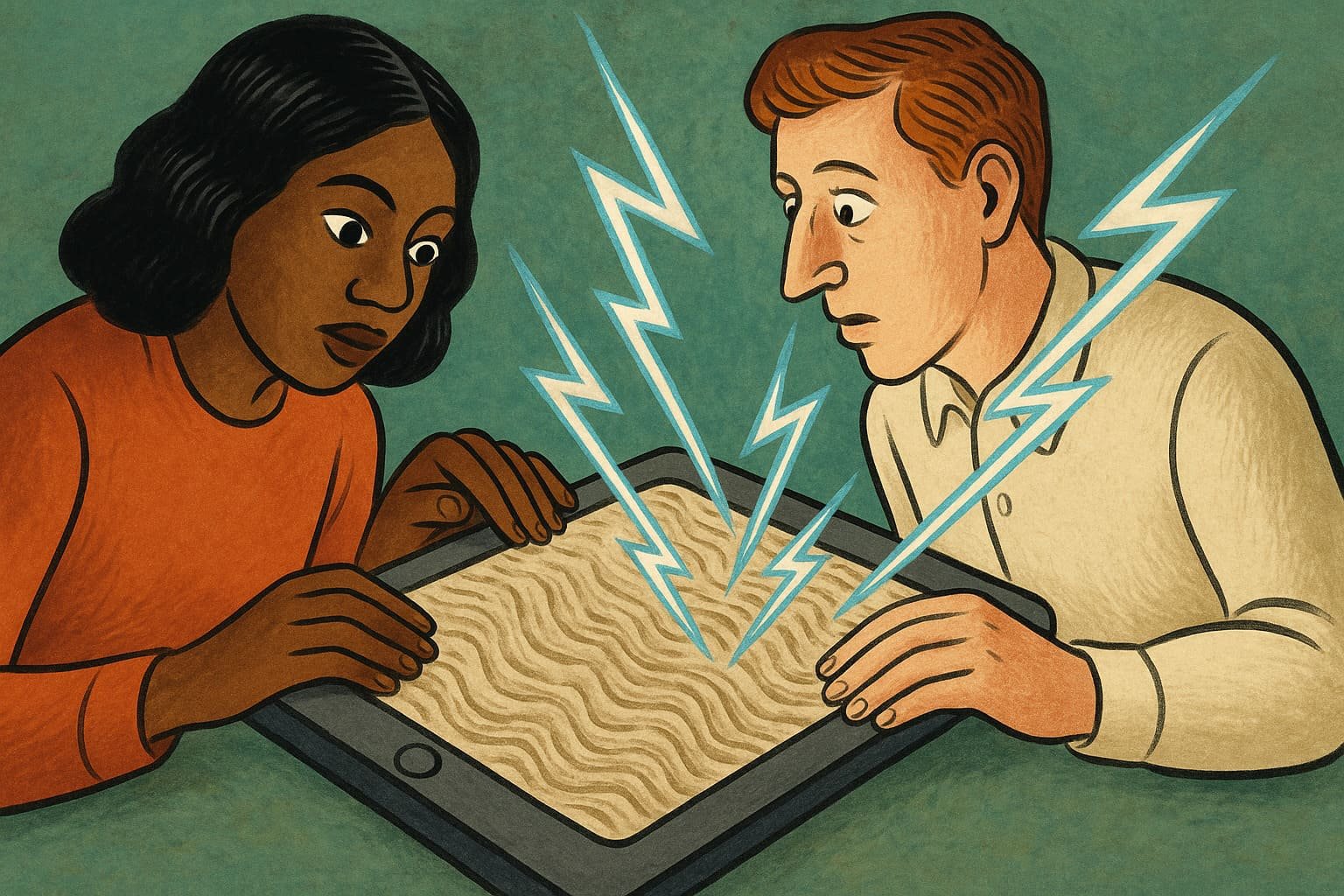
A thin curtain of rain flickers against a neon-lit storefront where a new tech boutique has just opened its doors. Through the glass, a lone shopper lingers by a display table, running their fingertips along the knurled, matte surface of a speaker. Each pass of their hand seems to anchor them, their pulse slowing with the simple act of touch. There is no loud sales pitch or viral TikTok jingle echoing through the room, just the soft friction of skin against polymer—a quiet conversation between material and memory. The scene could be mistaken for art, but in truth, it’s a revolution staged in silence.
Across the street, a founder in wrinkled chinos scribbles diagrams on a coffee-stained napkin. He isn’t mapping out code or crafting the next billion-dollar algorithm. Instead, he’s obsessed with the way people press elevator buttons, how rough concrete invites lingering, and how a cold glass bottle brings nostalgia to the lips. The startup world is drunk on speed, yet here, there’s a slower game at play: design that gets under your skin, literally.
A war is brewing in the design labs of global brands and kitchen-table startups alike. While venture capitalists argue over features, those who understand the future are stroking samples of leather, debating the merits of ridges versus grooves, and arguing over the emotional payload of velvet. Texture has slipped in through the side door, ready to electrify a world tired of slick glass rectangles and sterile sameness.
Apple’s obsession with chamfered edges, Tesla’s vegan leather, Dyson’s cool steel—every touchpoint whispers a promise to your nervous system. Marketers talk about “user journeys,” but few grasp that the journey isn’t digital; it’s under the skin, firing neurons, shaping trust before a word is read. Every entrepreneur chasing loyalty is missing the most primal trick: Touch builds memories faster than any brand story.
Jia Lee, founder of the cult-favorite phone case brand Groov, built her empire not with billboards but with a prototype that felt like river stones. “People come back because it feels like coming home,” she told Fast Company. It’s not rocket science, she laughs, it’s tactile magic. Today, in an age ruled by screens and infinite scroll, texture is the quiet rebellion that pulls us back into the world. The Touch Revolution is here, humming beneath our fingerprints, and it’s changing everything you thought you knew about design, trust, and the soul of modern business.
Quick Notes
- Texture Triggers Trust: People don’t buy brands—they crave the memory of a touch. The rough, the smooth, the cold, or the warm—all send primal signals of trust, quality, and comfort faster than any pitch deck.
- Experience is the Product: Every successful product feels different before it is different. From the ridged grip of a camera to the plush fabric of a luxury car seat, sensation sparks emotion before logic catches up. Texture sells what words cannot.
- Startup Superpower: Founders who obsess over surface win big. Small details—like a power button’s click or a matte finish—become viral, sticky differentiators. A single tactile moment can turn a passing glance into a lifelong customer.
- Contrarian Playbook: The next design disruptors won’t come from more features or faster apps, but from daring to make people feel. Texture’s ability to calm, excite, or trigger nostalgia flips the script on digital sameness and puts humanity back at the center of technology.
- Your Turn, Reader: If your product vanished tomorrow, would anyone miss the feeling it left behind? Texture is your silent brand ambassador. Ignore it, and you’re invisible. Master it, and you’ll electrify loyalty forever.
The Texture Code—Why Skin Never Forgets
Every business leader talks about “customer experience,” but few realize that the brain records texture before brand, before color, even before price. When you swipe the grooved side of a Sennheiser headphone, or press your thumb into a cork iPhone case, neurons fire off signals that last longer than any tagline. That jolt of memory isn’t marketing; it’s biology. Texture creates anchors in the mind that digital ads can only envy.
You remember the first time you held a Moleskine notebook—not because of its history, but because the velvety cover whispered of possibility. It’s the same principle behind the frosted plastic on Muji’s pens or the butter-soft leather of a well-loved wallet. The sensation burns itself into your story, forever tying emotion to object. Even in the minimalist world of software, designers fight for subtlety—think of the way Instagram’s logo once felt like a Polaroid in your mind’s eye, or the satisfying “pull” to refresh your feed.
This is more than nostalgia. It’s a competitive edge for entrepreneurs who see with their hands, not just their eyes. When Allbirds unleashed merino wool sneakers, competitors scoffed at the focus on “feel.” Yet fans didn’t just buy shoes—they bought a sensation that made them never want to go back to hard, plastic soles. Allbirds’ rise proves that people crave comfort and tactility as much as they crave status or innovation.
Designers at IKEA reportedly spend months perfecting the grain on kitchen countertops, even as rivals chase cost-cutting. Their insight? People subconsciously judge the quality of their whole home by how a drawer handle feels at 6 a.m. on a tired Monday. Small businesses miss this lesson at their peril. Texture is not a luxury; it is the code to the emotional loyalty vault.
Nina, a barista at a buzzing Berlin café, credits her shop’s success to the wooden counters. “People run their hands along them as they wait, like it’s an unconscious ritual,” she explains. That daily caress, repeated a thousand times, builds bonds no loyalty card could buy. In a world drowning in the digital, the Touch Revolution reminds us: skin remembers what the mind forgets.
Touch Sells What Words Cannot—The Startup Sensation Advantage
You can spend millions on advertising, but a single textured touchpoint can convert a skeptic faster than the slickest sales script. Texture is the original influencer, spreading word-of-mouth through sensation long before hashtags existed. Founders who bake tactility into their product DNA discover that people become fans for life, not just customers.
Consider the saga of Zip, a fintech startup struggling to stand out in a crowded market. Their secret weapon? The ridged, coin-like edges on their physical card. Customers began photographing the card, sharing stories of its fidget-worthy grip, and even started an online thread about “pocket satisfaction.” The tactile quirk turned a standard card into a cult object. No Google ad could have achieved this level of organic obsession.
People are wired for the unexpected. When Peloton upgraded its bike handles to a sweat-wicking, pebbled rubber, retention rates spiked. Athletes described the texture as “electric,” “motivating,” and “addictive.” That small design tweak transformed a fitness tool into a sensory ritual, deepening loyalty and stoking FOMO among new buyers.
Retailers now chase “Instagrammable” spaces, but the savviest entrepreneurs know that viral moments begin with touch. Remember the global craze for squishy stress toys? That market boomed not on novelty, but on the rush of squeezing, twisting, and feeling. It’s proof that touch triggers sharing, conversation, and—most importantly—repeat behavior.
Jules Tan, founder of Form & Function studio, puts it bluntly: “People buy with their fingers, then justify with their brains.” Every time a shopper runs a hand along a velvet jacket or chooses a coffee mug for its clay finish, the transaction begins. Texture whispers, “You belong here,” making the decision to buy not just logical but personal. In the Touch Revolution, the startups that make you feel win every time.
The Neuroscience of Touch—Trust Built in a Millisecond
Every handshake, every gentle pat, every sandpapered edge triggers a chemical cascade in the brain. Scientists call it “haptic memory”—the brain’s ability to store sensations long after the moment passes. Entrepreneurs who study this know that trust isn’t built through data, but through design. Touch activates oxytocin, the “bonding hormone,” forging connections deeper than any branding exercise.
Luxury auto brands have long weaponized texture. The satisfying click of a Porsche gearshift, the grain of a BMW steering wheel, or the cool weight of a Tesla key fob aren’t accidents. Engineers sweat every micro-detail, knowing that one moment of tactile delight can transform a buyer into a lifelong evangelist. These touches bypass the rational mind, speaking straight to the gut.
A case in point: Fable, a small Canadian furniture brand, exploded onto the scene with plates that felt slightly rough, echoing artisanal pottery. Customers described eating as “an event,” their hands lingering on every plate, creating a kind of culinary theater. The plates became conversation pieces, gifts, even heirlooms. Texture was not an afterthought; it was the brand’s story.
Skeptics may argue that “feel” can’t compete with “function.” But the neuroscience is clear: people trust what feels right. In the crowded world of e-commerce, touch is the differentiator nobody can copy online. When customers describe the “weight” of a pen or the “warmth” of a blanket, they are signaling emotional safety—a currency more powerful than any five-star review.
Nadia Rahim, a textile entrepreneur, summed it up at a design panel: “When my customers say ‘it just feels right,’ I know I’ve won.” No marketing campaign can outlast that simple truth. The Touch Revolution isn’t about gimmicks. It’s about understanding the way humans are wired and using that wisdom to build trust, one tactile spark at a time.
Texture as Brand Signature—Winning the Battle for Attention
Brands are desperate for attention, churning out louder ads and flashier features every year. Yet in the age of digital overload, the brands you remember most are those you can feel. Nike’s Flyknit sneakers are not just footwear—they are an experience of stretch, support, and breathability. The feel underfoot creates identity, turning buyers into walking billboards.
When Airbnb launched their “Bélo” keychains, it was the soft-touch finish that became a sensation. Hosts and guests alike began collecting and trading them, describing the keychains as “a handshake you could keep.” The tactile signature became shorthand for belonging, instantly recognizable in a sea of plastic.
The lesson is simple: people crave differentiation, not just innovation. Surface details—a matte bottle, a sandblasted metal laptop, a hand-wrapped soap—become silent brand ambassadors. In the chaos of choices, touch becomes the way a product introduces itself, shakes your hand, and says, “Remember me.” Forget to deliver a memorable sensation, and you fade into the background noise.
Startups that punch above their weight always have a “touch signature.” Blueland, a cleaning products disruptor, uses frosted glass bottles that cool the hand and feel heavier than expected, turning a chore into a daily luxury. Their founder, Maya Winston, said, “We wanted the bottle to say ‘quality’ before you even read the label.” Texture as narrative: every squeeze, twist, or grip tells the story of a brand.
Even digital brands can use texture to break through. UX designers now talk about “haptic feedback” as the new frontier, with the buzz of a phone notification or the resistance of a scroll bar providing micro-moments of delight. The future belongs to those who build identity not just on the screen, but in the palm of your hand.
Flipping the Script on the Digital Era
While tech giants promise frictionless experiences, the rebels are adding friction back on purpose. Texture is their secret weapon—an antidote to the forgettable sameness of smooth, cold glass. In an era obsessed with speed and automation, the contrarian entrepreneur asks: What if “friction” is the feature, not the bug?
The surge of analog hobbies—vinyl records, hand-bound books, artisanal bread—proves that people long for the real and the rough. When Notion added “drag-to-reorder” with a subtle haptic thump, users raved about the “physical” joy of digital order. The smallest dose of tactility can ignite nostalgia, create ritual, and slow people down in a world that never sleeps.
Think of Patagonia’s recycled fleece. Shoppers describe it as “wearing a memory.” It’s the opposite of disposable fashion: texture as a promise of durability and care. Patagonia’s loyalists don’t just buy jackets—they buy the story told through every soft fiber. That emotional bond can outlast trends, reviews, and price wars.
Entrepreneurs who lean into texture are betting on humanity’s deepest wiring. They see opportunity where others see mess. The Touch Revolution isn’t about going backward; it’s about bringing the best of the past into a wired future. The magic lies in the tension: between soft and hard, smooth and rough, memory and invention.
At a late-night founder meetup, Samir Patel of Glaze (a ceramic-tech startup) summed up the new playbook: “In a world racing to zero resistance, I’m building in bumps. That’s what people remember.” Texture, friction, sensation—these are now the rarest luxuries. The new rebels don’t just make products. They create moments that refuse to be forgotten.
Velvet Lightning—Where Touch Becomes Power
Rain lashes the city outside as a designer sits alone in a shadowy studio, fingertips pressed into a rough clay prototype. Each groove, each ridge, tells a story of risk—of choosing friction over ease, sensation over speed. The room is silent, but the electricity in the air is unmistakable: a pulse that skips from skin to heart, memory to meaning.
In the penthouse boardroom above, a CEO stares at a wall of market charts and wonders why loyalty keeps slipping away. The numbers flicker, but the answer sits quietly in the objects on her desk—a worn notebook, a cold metal pen, a silk scarf twisted absentmindedly through her fingers. Brands win not through noise, but through the feelings left in their wake. The best ones know that to touch is to be remembered.
A thousand miles away, in a crowded shop, a customer runs their palm across a leather bag, not realizing this act will haunt their next purchase, their next choice, their next search for belonging. Texture becomes memory, memory becomes loyalty, and loyalty becomes the only currency that endures. The room hums with invisible voltage: velvet lightning, striking softly, again and again.
The Touch Revolution is not a trend. It’s the soul of modern design, hidden in plain sight, waiting for those bold enough to reach out and claim it. The world is tired of sameness. In the war for attention, sensation wins.
You now stand at the threshold. The next thing you create—will anyone remember how it made them feel?
Partnered. Provocative. Worth Your Scroll.
This is a Promoted Post by ESYRITE—yes, it’s paid, but never filtered. Our voice stays raw, real, and razor-sharp. We team up with bold ideas, game-changers, and stories that spark something real. If it’s here, it earned its place—no fluff, just impact. We don’t just promote—we provoke. Stay sharp. Dive deeper.
