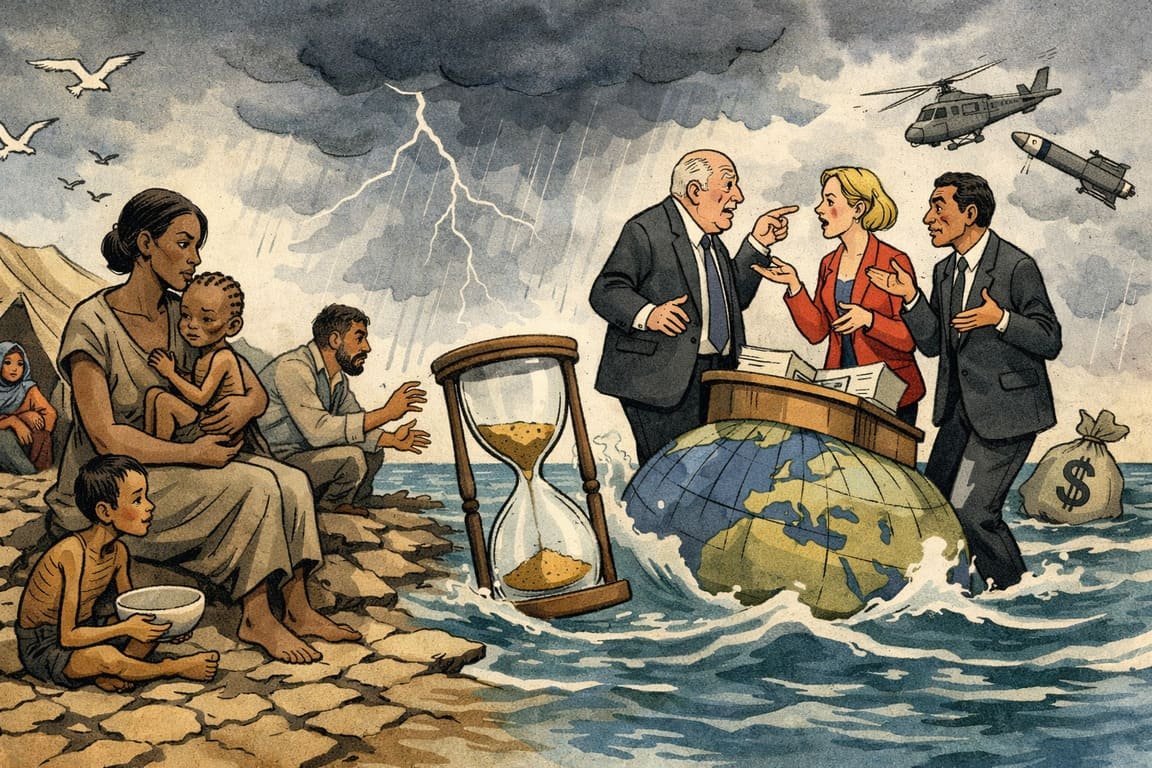
The market opens early, long before the heat settles in, yet the air already feels heavy. Stalls display less than they used to. Prices are written carefully, then erased, then written again higher. Conversations happen in fragments. Hunger changes how people speak. It shortens patience, sharpens memory, and turns routine choices into quiet calculations. Starvation does not announce itself as a crisis at first. It enters gradually, meal by missed meal, until politics can no longer pretend it belongs somewhere else.
Modern hunger is rarely caused by a lack of food. Fields still produce. Ships still move grain across oceans. The paradox sits in plain sight. People starve not because food does not exist, but because access collapses. Conflict blocks roads. Markets price out the poor. Policy decisions tilt supply toward profit rather than need. Starvation today is less a natural disaster and more a governance failure wearing many disguises.
War accelerates this failure brutally. When farmland becomes a frontline, harvests vanish overnight. Storage silos turn into targets. Food routes become bargaining chips. Civilians feel the impact long before diplomats issue statements. Hunger becomes a weapon because it works quietly and efficiently. It weakens bodies, breaks morale, and forces movement. Political language struggles to keep pace with that reality.
Climate pressure deepens the strain. Floods wash away crops. Heat scorches soil until yields collapse. These events do not respect borders or election cycles. They hit regions already stretched thin, pushing fragile systems past breaking point. Emergency aid arrives late, often framed as generosity rather than obligation. Recovery plans promise resilience while rebuilding the same vulnerabilities that failed before.
Economic policy shapes hunger more than most people realize. Subsidies favor export crops over local nutrition. Trade rules flood markets with cheap imports, undercutting small farmers who cannot compete. Currency shifts inflate food prices overnight. None of this is labeled starvation policy, yet each decision nudges the scale. Hunger thrives in these gaps between intention and impact.
A health worker once described watching a clinic queue lengthen as funding tightened. Children arrived thinner each week. Parents asked for supplements with visible shame. Forms were filled. Targets were reported. The system functioned on paper. Reality told a different story. Politics hovered over every step, determining supply chains, budgets, and priorities without ever entering the room.
Public narratives often frame hunger as a charity problem. Donate. Volunteer. Send aid. These actions matter, but they also shrink ambition. Charity treats symptoms. Politics determines structure. When leaders lean on aid without reforming systems, dependence deepens. Dignity erodes. Hunger becomes normalized, managed rather than solved.
Some policies demonstrate a different path. School meal programs anchor nutrition to education, improving attendance and health together. Cash transfers restore agency, allowing families to buy food locally rather than wait in line. Land reforms empower farmers to invest in soil and community. These approaches work because they trust people rather than control them. Scaling them requires political courage more than technical innovation.
The philosophical tension beneath starvation is uncomfortable. Who holds responsibility when someone cannot eat. Markets deflect blame to prices. Governments cite constraints. International bodies issue statements heavy with concern. Responsibility diffuses until it feels abstract. Hunger never feels abstract to those living it. That gap fuels anger, resignation, and instability.
Media attention spikes during famines, then fades. Images shock briefly, then disappear. Chronic hunger lacks spectacle. It unfolds slowly, resisting headlines. This invisibility suits systems that prefer gradual suffering to urgent reform. When starvation becomes background noise, accountability dissolves.
Political will often appears only after unrest. Protests erupt over food prices. Migration accelerates. Conflict follows. Suddenly hunger is reframed as a security issue. Resources unlock. The tragedy lies in waiting for chaos before acting. Prevention costs less, financially and morally, yet it lacks drama.
Technology offers tools, from crop forecasting to supply tracking, but tools do not choose priorities. Data can predict shortages. It cannot decide who eats first. Algorithms optimize logistics. They do not weigh justice. Without ethical direction, innovation risks reinforcing existing inequality rather than reducing it.
Power dynamics shape outcomes relentlessly. When elites remain insulated from hunger, urgency fades. When shortages reach middle classes, policy shifts suddenly. This pattern repeats across history. Starvation forces change only when it threatens stability, not when it merely harms the marginalized. That reality exposes uncomfortable truths about whose lives count politically.
Some leaders experiment with cooperation, regional grain reserves, climate-adaptive agriculture, and early warning systems. These efforts rarely dominate headlines, yet they matter. They suggest hunger is not inevitable. It is chosen through neglect or prevented through foresight. The difference lies in priorities.
As evening settles, a family stretches a pot of food thinner than the night before. Conversation dims as portions shrink. This moment carries more political meaning than most speeches ever will. Hunger strips systems down to their truth. It reveals values without rhetoric. Whether politics can fix this mess depends less on capability than courage. And the question lingers, heavy and unresolved, pressing quietly against the conscience of anyone willing to look closely: if leadership is measured by who gets to eat, what judgment is already being passed in silence?
