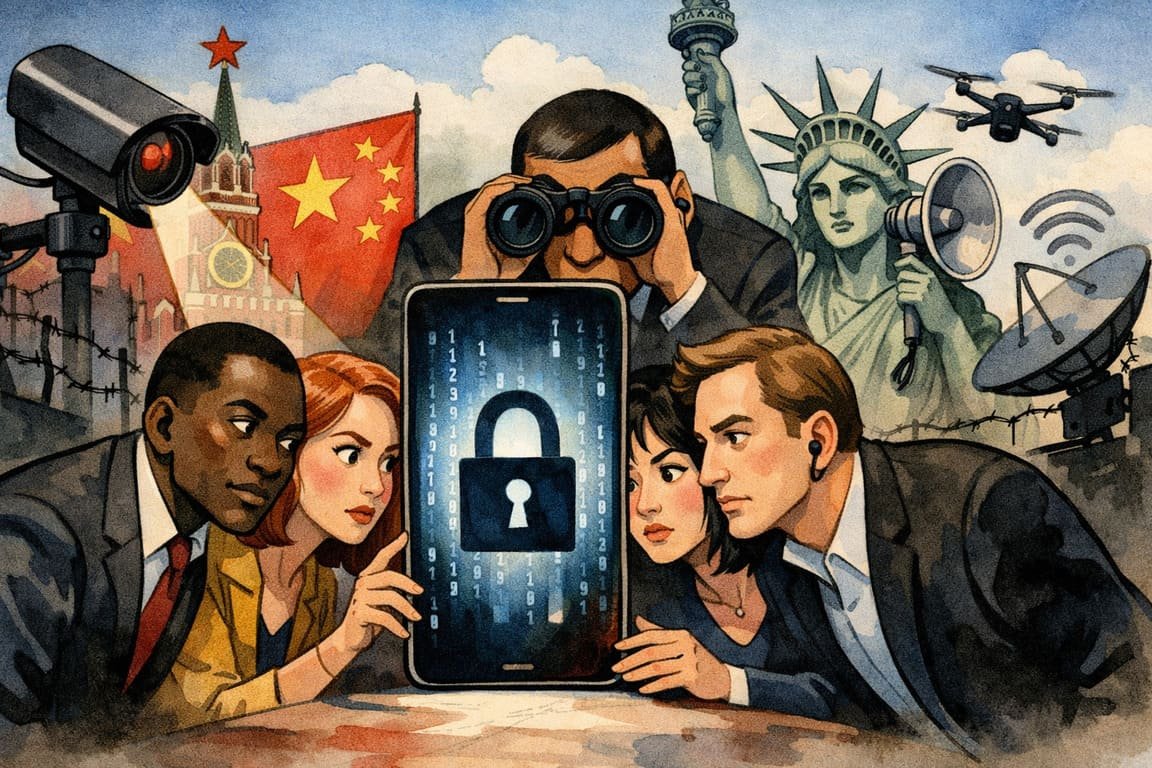
The room had no windows, only racks of machines breathing steadily in the dark. Small lights blinked in disciplined rhythm, indifferent to borders, languages, or intent. Somewhere far from that room, a person paused before sending a message, thumb hovering, wondering if the words were worth leaving a trace. Privacy did not collapse in a single moment. It thinned, quietly, until hesitation became routine.
Power has always followed information, but the modern era perfected the exchange. Data became the most portable form of influence. Governments framed collection as protection. Corporations sold it as convenience. International agreements quietly normalized sharing at scale. Each step felt logical in isolation. Together, they built an environment where observation became ambient rather than exceptional.
Crises accelerated acceptance. Terror attacks widened mandates. Health emergencies expanded tracking. Cyber threats justified deeper access. Each emergency arrived with urgency, and urgency has a way of suspending reflection. Tools introduced as temporary safeguards lingered, not from malice, but from institutional habit. Systems built to watch rarely volunteer retirement.
Global politics sharpened the stakes. Nations discovered leverage in information flows. Intelligence sharing expanded faster than public oversight. Jurisdiction blurred. Data crossed borders more easily than people ever could. When harm occurred, responsibility scattered across agencies, treaties, and private contractors, leaving citizens facing a maze instead of an answer.
Technology firms occupied a strange middle ground. They held intimate records of daily life while insisting neutrality. Encryption became a battleground. Backdoors were proposed as compromise. Privacy was reframed as indulgence in a dangerous world. The argument sounded reasonable until danger began to define everything.
Ordinary life absorbed the change subtly. Ads mirrored private conversations too closely. Travel required disclosures once unimaginable. A journalist named Lina noticed sources growing cautious, not because laws demanded silence, but because digital footprints lingered indefinitely. Trust frayed in the gaps between intention and exposure.
Culturally, adaptation arrived quickly. Younger generations normalized visibility, not from apathy, but from inheritance. They grew up inside systems where withholding felt impractical. Sharing became default. Silence raised suspicion. Resistance required imagination of alternatives many had never known.
Privacy fractured along political lines. Those aligned with authority felt protected. Those outside it felt targeted. Surveillance rarely distributes evenly. Scrutiny lands first on the margins and relaxes last. Safety promised collectively often materializes selectively, eroding legitimacy from within.
Philosophically, privacy anchors autonomy. It allows thought to wander unobserved. It creates space for dissent before language forms. When that space contracts, conformity expands without coercion. Constant visibility invites performance. Performance exhausts authenticity. Over time, people begin shaping thoughts for approval before they even surface.
The familiar refrain insists that those with nothing to hide have nothing to fear. History rejects that comfort. Data remains neutral only until context changes. Power shifts. Intent evolves. Records endure. What seems harmless today can become leverage tomorrow under a different political weather.
Resistance exists, fragmented but persistent. Courts draw lines, sometimes late. Encryption advocates push back. Citizens adopt quiet habits of digital self defense. These actions rarely trend. They matter anyway. They signal that observation without consent carries moral weight even when legality lags behind ethics.
International law struggles to keep pace. Frameworks built for territory strain against networks without borders. Verification proves difficult. Trust erodes quietly. Cooperation becomes fragile when secrecy rewards advantage. Peace depends on restraint exercised without applause.
The machines keep breathing. The lights keep blinking. Data continues its silent journey across institutions and continents. Whether privacy survives depends less on technology than on collective memory, because once people forget what unobserved life feels like, reclaiming it may become harder than protecting it ever was.
