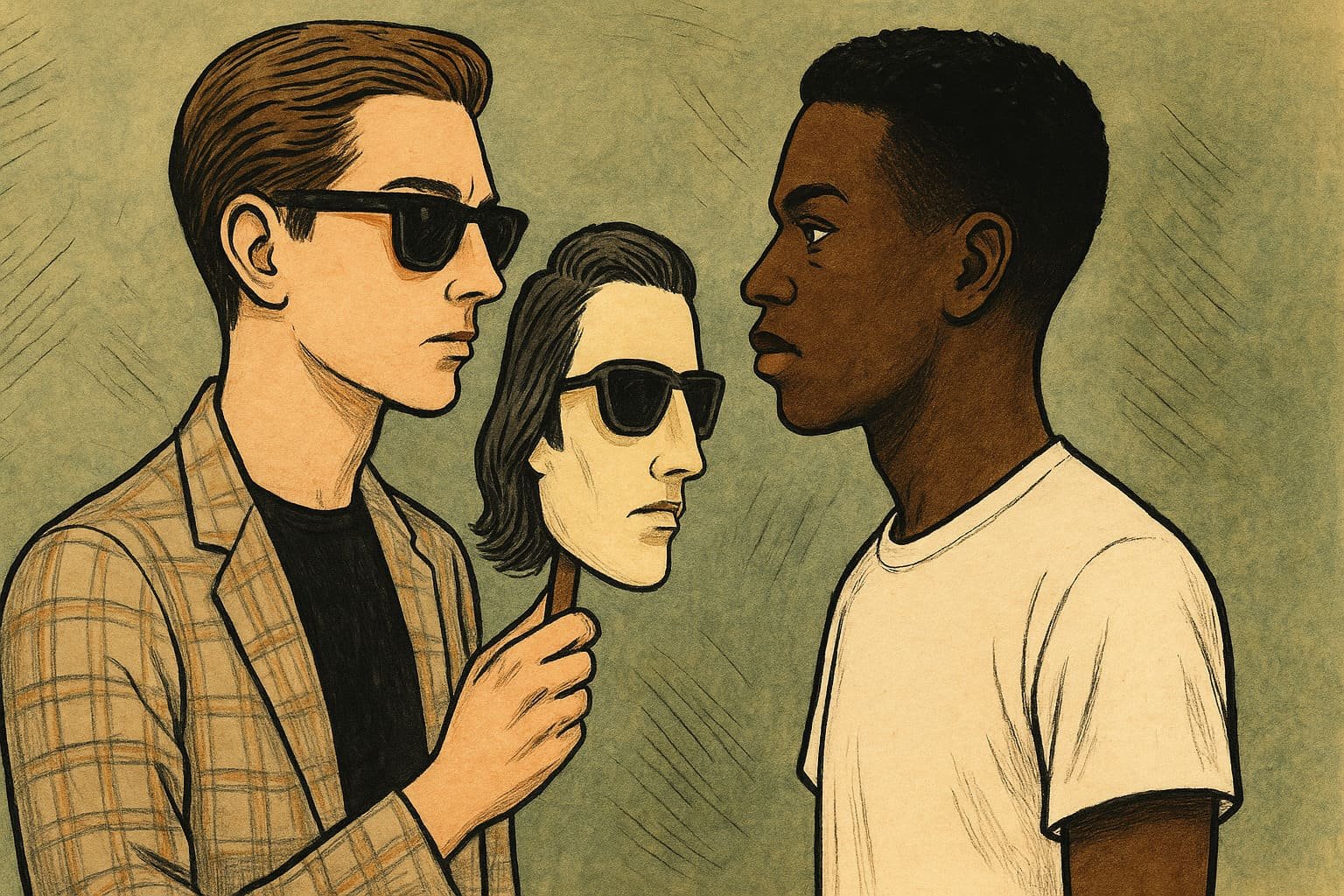
Under the blue glow of a luxury hotel lobby, a thousand glimmering screens pulse with silent tension. Armani suits mingle with hoodies. The air sizzles with espresso shots, silent rivalries, and barely veiled ambition. Every face looks perfect—until the smallest detail betrays the mask: a nervous laugh, a blank LinkedIn brag, a sweaty handshake that lingers too long. This is the dance floor of modern status, where everyone’s profile is a performance and every introduction is a sales pitch. The room is heavy with the scent of power and something sweeter: the fear of being found out.
In one corner, a startup founder named Lila sips burnt coffee, rolling her eyes at a VC whose watch costs more than her entire runway. Across the room, an “influencer” angles her phone for the fiftieth time, desperate to catch the light that will make her feed look effortless. The scene is hypnotic, almost theatrical—an endless masquerade of cool. Yet the real currency here isn’t hype or hustle. It’s something rawer, sharper: the undeniable gravity of someone who doesn’t need to pretend.
The crowd hushes as a quiet outsider walks in, dressed in jeans and old sneakers, trailing stories and battle scars instead of hashtags. Heads turn. The music falters. For a heartbeat, the entire ecosystem pauses, haunted by a question: What if the people who matter most are the ones who have nothing left to prove?
Outside, a neon-lit rideshare idles at the curb. The driver, a former coder named Mario, scrolls through endless “fake it till you make it” memes, thinking of his own failed app and the friends who ghosted him after launch. He wonders what it’s like to be truly seen in a world obsessed with filters. In that moment, the hotel’s revolving doors frame the paradox of the age: Everyone is desperate to be noticed, but no one knows what real actually looks like anymore. Welcome to the unmasking.
Quick Notes
- Realness Outranks the Highlight Reel: Flashy status fades, but consistent authenticity has a gravitational pull no algorithm can outgame. Think of Patagonia’s founder quietly giving away the company: the story outshone a thousand “hustle culture” headlines.
- Tech’s Mirage of Prestige: Next-gen tools are only as cool as the humans behind them. No AI-generated “vibe” can replicate a genuine Steve Jobs moment—because substance, not spectacle, moves culture.
- Design: Form Follows Honesty: Every viral logo fades, but honest design builds trust and legend. Why do people line up for a minimalist sneaker over a sponsored collab? Because the story sticks when the surface fades.
- Status, Unfiltered: Social proof is a party trick until someone shows up with receipts. Billie Eilish made anti-fame cool; so did countless founders and creators who refused to play the status game.
- Entrepreneurship’s Secret Weapon: Companies built on status games may spike, but those built on real connection endure. Case in point: the world’s most beloved brands aren’t always the loudest—they’re the ones that feel like home.
Hype Machines, Broken Dreams: How Status Became a Trap
When you chase status, the game never ends. Each win only buys you a fleeting ticket to the next audition. Social media pours fuel on the fire, selling everyone a front-row seat to an endless parade of glossy highlight reels. You scroll, compare, and wonder why your behind-the-scenes feels like chaos while others seem to live in perpetual golden hour. The pressure to perform eats at your confidence, turning potential into anxiety and connection into competition.
In business, hype can be a double-edged sword. The WeWork saga became legendary not for its innovation, but for the way it turned a promising startup into a punchline overnight. Adam Neumann’s rockstar persona and Silicon Valley bravado seemed invincible—until the details got real and investors saw through the smoke. There’s a cautionary tale in every headline that celebrates flash over substance: sooner or later, the crowd demands receipts.
Designers face their own status trap. Fads change as fast as TikTok trends, and what’s “cool” one season is passé the next. The true icons—think Dieter Rams, Virgil Abloh, or Rei Kawakubo—became legends not by chasing trends, but by making statements nobody dared before. They built communities, not cliques, and their work endures because it feels honest in a world addicted to spin.
People crave belonging. That’s why hype cycles are so addictive. But the same cycles chew up their stars, leaving talented people burnt out and disillusioned. It’s a brutal irony: the harder you try to “make it,” the less human you become. The world doesn’t need another cardboard cutout with a blue checkmark. It needs voices willing to risk honesty, even if it means stepping off the stage.
Mario, the rideshare driver, tried building an app to help gig workers find fair gigs. It flopped. The night he deleted his company’s Instagram, he felt free for the first time in months. His story isn’t viral, but it’s real—and for everyone stuck in the status trap, it’s the only story that matters.
Tech Without Soul: When Cool Becomes a Commodity
You’ve seen it a thousand times: some new “game-changing” app rockets to fame, only to vanish when the hype fades. The race for viral moments turns technology into a contest of who can look the coolest, not who solves real problems. Pitch decks get loaded with jargon, buzzwords, and fake demo videos that barely work. Real users get left behind, replaced by growth hackers chasing the next vanity metric.
The tech industry loves status symbols. Keynotes become rock concerts, and every product launch is treated like a moon landing. Yet true innovation rarely looks sexy in the moment. Amazon’s early website was ugly. WhatsApp was famously simple. The companies that shape the world usually start as underdogs, ignored by the cool crowd until their impact can’t be denied.
Authenticity in tech isn’t about aesthetics; it’s about solving real problems for real people. That’s what made Zoom’s rise so profound during a global crisis—it didn’t matter if the interface was clunky. What mattered was connection. If you focus on people instead of prestige, you become the builder, not the brand.
Tech leaders who win respect aren’t always the ones with the loudest keynote. Often, they’re the quiet ones in the back, fixing bugs nobody else will touch or supporting teammates when the spotlight is off. The late Tony Hsieh at Zappos made company culture legendary not through viral stunts but by treating people with dignity. His impact lasted because it was built on trust, not trends.
The difference between a status play and a legacy is simple: the former vanishes when the cool kids move on, while the latter shapes the world long after the hashtags stop trending.
Design Detox: Why Honest Creativity Beats Imitation
You don’t need a designer label to create work that matters. Honest design comes from a willingness to be vulnerable, to show flaws and let the story speak for itself. Apple’s first logo wasn’t cool by today’s standards. It was cluttered, hand-drawn, and filled with meaning. Today’s minimalist icons only work because they’re anchored in stories that stretch back decades. Copycats can mimic the look, but they’ll never steal the legend.
Every creative team faces the temptation to play it safe, copy what’s trending, or hire influencers to lend borrowed cool. The brands that endure do something radical: they ignore the algorithm and trust their gut. Nike’s “Just Do It” didn’t need a trend. It needed belief. Every time a company chooses a path nobody else would risk, the world gets something new to believe in.
There’s a cost to real creativity. It means pushing back against “best practices,” defying market research, and taking risks that might fail. Honest design offends the gatekeepers but resonates with people searching for something real. When everyone zigs, zagging feels dangerous—and essential.
Designers like Lila know that the market is flooded with fake originality. She once lost a client because her proposal was “too risky.” The same client called her back a year later, tired of blending in. Real stories win, even if the payoff takes time.
In a culture that rewards likes and instant gratification, honest design asks a harder question: What will people remember in ten years? For those willing to answer, the payoff is legacy, not just virality.
Social Proof is a Party Trick: Belonging Without Pretending
You’ve probably felt it: the subtle tension of walking into a room where everyone is performing. Status signaling is a universal sport, from high school cafeterias to startup conferences. Brands, influencers, and even governments play the same game—shaping culture through manufactured consensus. But true belonging happens when the curtain falls and the masks slip.
Pop culture loves a status rebel. Billie Eilish made baggy clothes and anti-glamour the new cool. Rihanna’s Fenty Beauty won hearts by refusing to play by old beauty rules. These icons broke through by making realness aspirational, not just achievable. They invited people to see themselves, not someone else’s fantasy.
Organizations that obsess over perception often end up losing touch with their mission. The brands that inspire cult followings don’t chase status—they build community. Patagonia’s anti-corporate ethos, LEGO’s commitment to creativity, and Ben & Jerry’s activism all prove the same point: you can win loyalty by showing up with values, not vanity.
The problem with social proof is that it turns every interaction into a transaction. You start asking, “How do I look?” instead of “Who am I helping?” Yet, behind every viral success is a network of quiet believers, loyal customers, and genuine advocates. Their stories rarely make headlines, but they move mountains.
One night, Mario picked up a passenger, an exhausted nurse named Priya, who told him about a support group she started for frontline workers. No hashtags. No cameras. Just real connection. That ride changed Mario’s view of success. Sometimes the biggest impact comes from the smallest moments.
The Startup Illusion: Building for Connection, Not Clout
Every founder starts out wanting to change the world. Along the way, status can become a drug. You win a pitch, land a headline, score an invite to a closed-door summit. For a moment, you feel immortal. But hype fades, markets crash, and the applause gets quieter. What endures is the work: the products, teams, and stories that touch lives long after the buzz is gone.
Startup culture is obsessed with “winning.” The founder as hero. The pitch as theater. The “crush it” mindset that leaves no room for doubt or humility. Yet history’s most respected entrepreneurs built their legacy by serving people, not playing the status game. Think Yvon Chouinard giving away Patagonia, or Jan Koum coding WhatsApp to keep families connected. Real wins aren’t measured in headlines; they’re measured in trust.
Building for connection means saying no to shortcuts. It’s refusing to fake growth for investors or chase trends for quick cash. Companies that put people first—whether employees, customers, or communities—outlast the flashiest upstarts. Authenticity isn’t just a moral stance; it’s a competitive advantage.
The fall always comes for the status chasers. Elizabeth Holmes, once the darling of Silicon Valley, saw her empire dissolve overnight. Meanwhile, companies that build on honesty become part of the culture’s DNA. They survive storms because their roots go deeper than perception.
Lila’s new design agency doesn’t have a massive following or viral campaigns. But every client who walks through her door feels seen, heard, and understood. In a world obsessed with fake status, her story proves the coolest legacy is built on something no algorithm can touch: trust.
Cool is What’s Left When You Stop Pretending
The ballroom is empty now. Glitter sticks to the soles of forgotten shoes. The stage lights flicker, casting shadows on chairs where the beautiful and the powerful once rehearsed their roles. The air feels lighter, almost holy, as if every ghost of performance has drifted away. A single janitor sweeps the floor, humming an old tune—unbothered by the titles, the drama, or the buzz that haunted the night.
A designer’s sketchbook sits open on a windowsill, filled with messy notes and dreams that never made it to market. The echo of real laughter lingers in a quiet hallway where a nurse once shared her story with a stranger. The ghost of a founder paces a rooftop, watching the city below—her reflection blurred in glass, unfiltered, honest, and finally at peace. These are the scenes no camera ever captures, the true moments that endure after every mask has fallen.
In this stillness, something strange happens: the old games lose their grip, and realness—soft, persistent, unforgettable—takes center stage. The currency of cool becomes a heartbeat, a memory, a promise to show up even when the spotlight fades. Legacy is written in these invisible spaces, where people choose each other over performance, meaning over image, connection over applause.
Somewhere, far from the noise, Mario’s phone vibrates with a message from a friend he hasn’t seen in years. Lila, too, gets a call: her latest client doesn’t want a pitch or a portfolio—just a story. The janitor finishes his song. The city exhales.
You are not defined by the masks you wear or the stages you conquer. You are remembered for the truth you risk, the belonging you create, and the lives you touch when nobody’s watching.
So ask yourself: When the music stops and the lights go out, who are you—really?
Partnered. Provocative. Worth Your Scroll.
This is a Promoted Post by ESYRITE—yes, it’s paid, but never filtered. Our voice stays raw, real, and razor-sharp. We team up with bold ideas, game-changers, and stories that spark something real. If it’s here, it earned its place—no fluff, just impact. We don’t just promote—we provoke. Stay sharp. Dive deeper.
