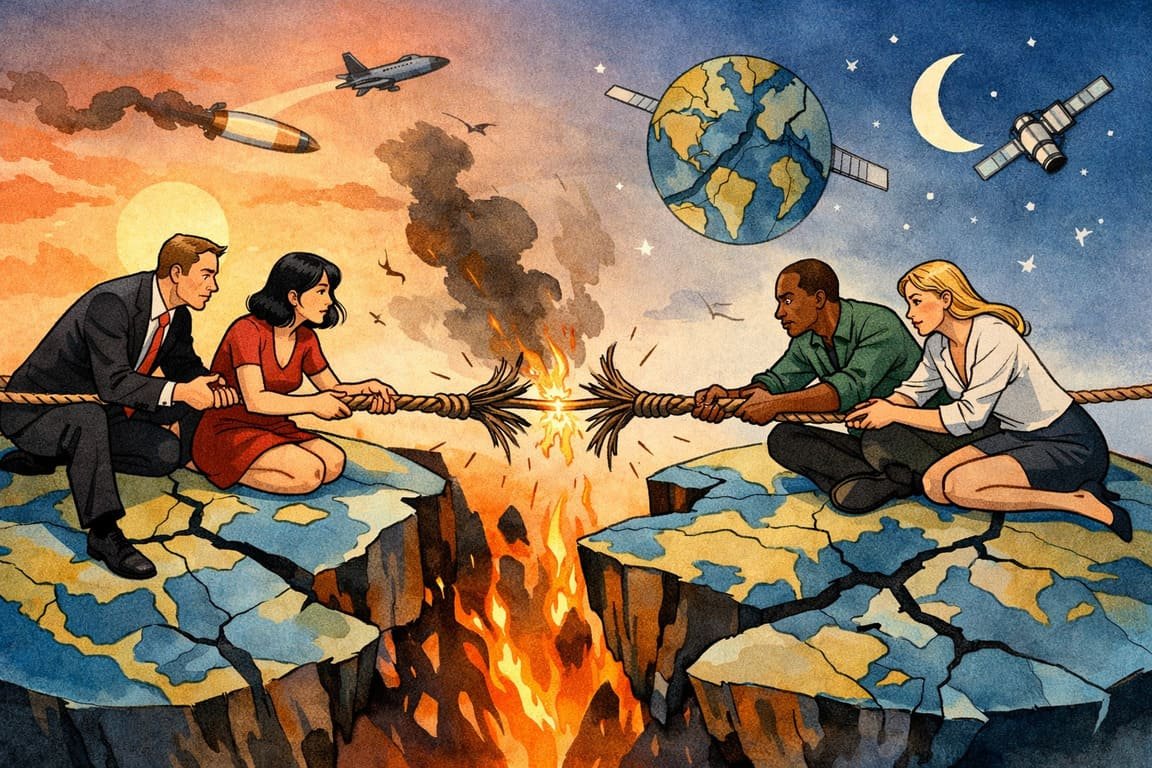
Airports still hum. Cables still carry data across oceans. Ships still crowd ports under flags from everywhere. On the surface, globalization looks intact. Beneath it, something loosens. Trust erodes softly. Cooperation feels conditional. Agreements carry escape clauses written between the lines. The world does not shatter dramatically. It separates politely, one cautious decision at a time. Nations hedge. Companies diversify away from dependence. Alliances hold while preparing for strain. The break, if it comes, will feel less like collapse and more like drifting, slow enough to deny until distance becomes undeniable.
Globalization once promised shared prosperity through connection. It delivered growth unevenly. Winners integrated. Losers adapted reluctantly. Over time, cracks appeared. Supply chains optimized efficiency over resilience. Crises exposed fragility. A delayed shipment halted entire industries. A factory shutdown rippled globally. Leaders noticed. So did voters. A trade official once admitted that the system worked beautifully until it did not, and when it failed, it failed everywhere at once. Confidence never fully returned.
Politics responds to vulnerability instinctively. Strategic autonomy replaces openness. National interest reasserts itself. Trade becomes security. Technology becomes sovereignty. Governments reframe interdependence as risk rather than strength. Policies follow fear. Restrictions multiply. Cooperation requires reassurance rarely available. A policy advisor once described global forums as rooms full of polite speeches masking deep suspicion. Everyone listens. Few trust. Agreements narrow. Expectations shrink.
Culture mirrors this retreat. Narratives harden. Outsiders feel riskier. Borders symbolize protection again. Media amplifies conflict more than collaboration. Shared challenges feel distant when framed as competition. A student exchange coordinator once noticed declining participation, not from lack of curiosity, but parental anxiety. The world feels less safe to explore. That fear travels faster than opportunity. Curiosity contracts.
Economics accelerates fragmentation. Friend shoring replaces free trade. Redundancy replaces efficiency. Costs rise quietly. Inflation absorbs blame. Consumers feel strain without seeing cause. A manufacturing executive once explained that building resilience meant duplicating systems, accepting inefficiency as insurance. The shift felt prudent. It also felt like retreat. Growth slows. Stability replaces ambition. Global integration loses momentum not through rejection but exhaustion.
Technology sharpens divides. Digital ecosystems splinter. Standards diverge. Data flows face scrutiny. Platforms localize. Innovation slows across borders. A software engineer once described rewriting products for different regulatory worlds that barely spoke to each other. Progress felt fragmented. Creativity bent to compliance. The promise of a connected digital commons dimmed into a patchwork of controlled spaces.
Philosophically, the unraveling challenges assumptions about human cooperation. Interdependence demands trust. Trust requires reciprocity. When trust falters, systems regress toward self preservation. A political philosopher once warned that globalization advanced faster than the ethics needed to sustain it. Shared rules lagged shared markets. Without fairness, connection breeds resentment. The backlash feels inevitable in hindsight.
Global institutions strain under this weight. Designed for consensus, they struggle with divergence. Enforcement weakens. Credibility erodes. Smaller nations feel abandoned. Larger ones bypass multilateralism when convenient. A development economist once observed that global governance now resembles crowd management rather than leadership. Coordination survives. Vision falters.
Conflict adapts to fragmentation. Economic coercion replaces diplomacy. Information warfare replaces dialogue. Sanctions proliferate. Retaliation becomes normalized. The line between competition and hostility blurs. A security analyst once described the era as permanent tension without resolution. Peace feels procedural rather than relational. Stability depends on avoidance rather than trust.
Yet the world does not fully disengage. Problems force contact. Climate crises demand coordination. Pandemics ignore borders. Financial shocks propagate instantly. Fragmentation collides with necessity. Cooperation returns under pressure, awkward and fragile. A public health official once described emergency coordination as effective but resentful, partners cooperating while preparing to disengage again afterward. The cycle repeats.
History suggests fragmentation precedes realignment. Systems break before they rebuild. New orders emerge from old failures. The danger lies in unmanaged transition. Without shared frameworks, miscalculation grows. Retreat breeds misunderstanding. Silence replaces dialogue. Distance magnifies fear. The longer ties fray, the harder repair becomes.
Somewhere between a trade deal paused and an alliance questioned, the world hesitates. Connection still exists. Commitment weakens. The question is not whether globalization ends but what replaces it. Fragmentation offers control at the cost of possibility. Integration offers growth at the cost of vulnerability. The path forward remains unsettled. What matters now is whether societies choose deliberate redesign or drift into separation so gradual it feels like choice, until one day the distance feels permanent and the memory of cooperation sounds like a story from another age.
