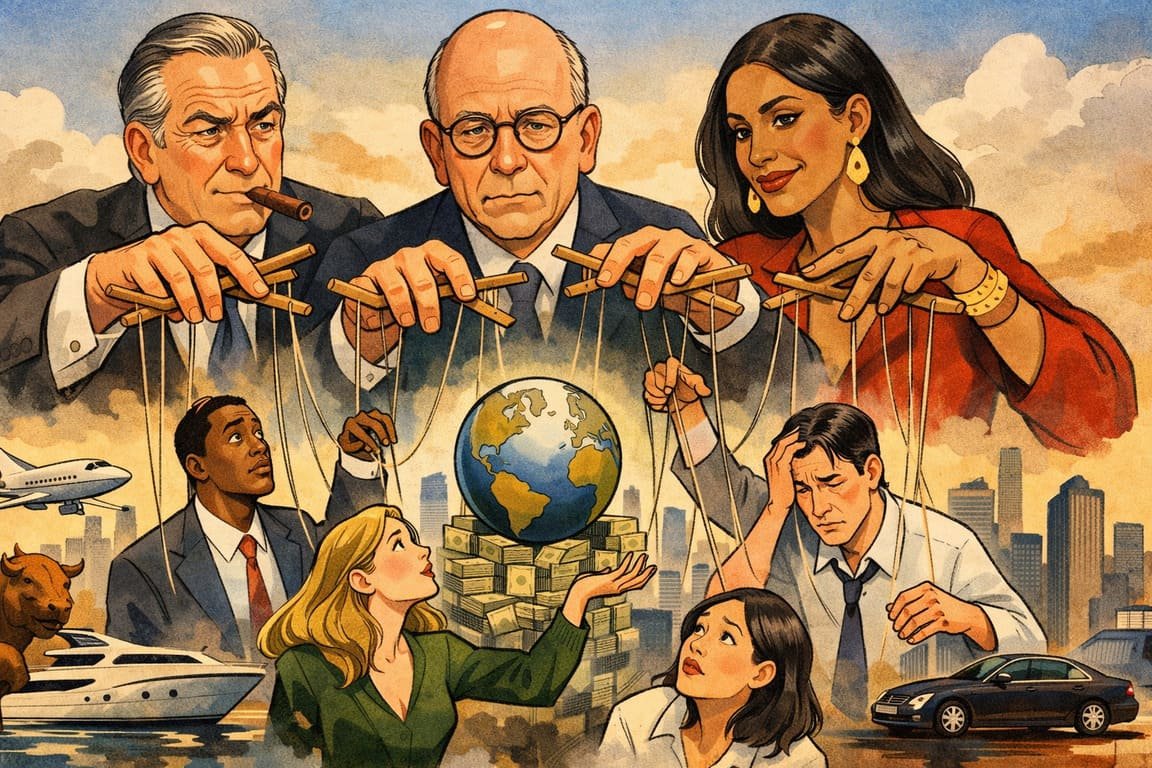
The trading floor never sleeps, but it does something stranger. It breathes. Screens flicker in steady rhythms. Voices rise, then flatten. Decisions happen without ceremony, yet their consequences travel far beyond the glass and steel that contain them. Pensions shift. Housing markets tilt. Entire industries feel pressure without ever seeing the hands responsible. The mystery is not whether power lives here. It is how thoroughly it hides in plain sight.
Finance learned long ago that complexity is a shield. Language does much of the work. Liquidity, derivatives, hedging, risk models. These words create distance. They signal expertise while quietly discouraging scrutiny. When systems feel too technical to question, authority hardens without needing to announce itself. Power becomes procedural rather than personal.
The popular image of finance imagines a few figures pulling levers behind closed doors. Reality is both less dramatic and more unsettling. Influence is embedded in structures, incentives, and feedback loops that reward the same outcomes repeatedly. No single actor controls the machine, yet the machine reliably concentrates advantage. That consistency raises harder questions than any conspiracy ever could.
Capital allocation is where the real leverage sits. What receives funding expands. What does not shrinks or disappears. These decisions shape cities, labor markets, and technological priorities without passing through public debate. An investment memo can determine whether a neighborhood gentrifies, whether a clean technology scales, or whether a factory closes quietly.
Politics and finance orbit each other closely while insisting on independence. Regulations promise guardrails, yet exceptions emerge with impressive speed. Expertise flows through revolving doors, carrying assumptions and priorities across institutional lines. This relationship is rarely illegal. It is normalized, which makes it harder to confront honestly.
Crises expose the imbalance most clearly. When markets falter, intervention arrives quickly. Stability is invoked as justification. Ordinary people absorb consequences through layoffs, foreclosures, and shrinking savings. Institutions receive support to prevent collapse. Each cycle reinforces a lesson, risk is rewarded upward, cost is distributed downward.
A regional bank story captures the human texture. During a downturn, branch employees spent days calming anxious customers while executives negotiated relief far above them. The frontline absorbed fear they did not create. The decisions shaping outcomes were made elsewhere, shielded by necessity and scale. That gap defines modern financial power.
Technology deepens the opacity. Algorithms trade faster than comprehension. Models shape behavior while remaining inaccessible to those affected. Automation promises efficiency, yet it concentrates influence among those who design and maintain the systems. When failures occur, accountability dissolves into technical explanation, leaving frustration without a target.
Philosophically, finance forces a reckoning with value itself. Money began as a tool to facilitate exchange and trust. Over time, it became an end, optimized for its own growth. When returns eclipse social outcomes, success detaches from wellbeing. The consequences surface later as unaffordable housing, fragile supply chains, and underfunded public goods.
Many within finance believe sincerely in market discipline and long term growth. Intent is not the core problem. Design is. Systems reward short term extraction and penalize restraint. Even ethical actors struggle inside architectures that convert caution into competitive disadvantage.
Public anger grows because transparency lags behind impact. People sense that decisions shaping their lives are made far away by actors they never elected. Populist narratives feed on that truth, sometimes distorting it, sometimes sharpening it. Ignoring the resentment only deepens the divide.
Signs of discomfort appear inside the industry itself. Conversations about responsibility, stakeholder impact, and long term risk gain traction. Younger professionals question norms once treated as inevitable. These shifts matter, even if they move slowly against entrenched incentives.
Unmasking finance titans does not require villains. It requires clarity. Power thrives where systems feel inevitable and unchangeable. It weakens when structures are understood and debated openly. The glow of the trading floor will not fade soon, but the deeper question lingers beyond the screens. Will money remain an invisible architect deciding whose future is funded and whose is postponed, or will societies reclaim the authority to ask what finance is actually for before the next crisis answers the question for them.
