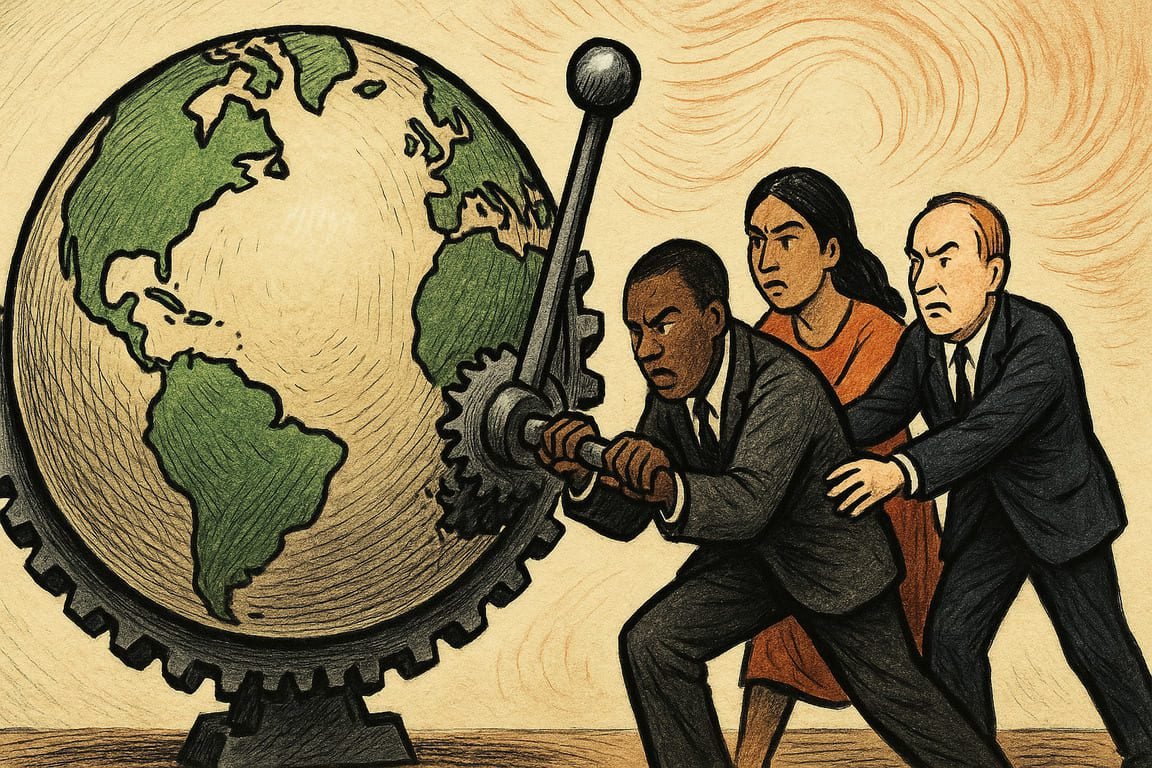
Fog drapes the avenues of the capital as a convoy of black cars slides toward a stately building humming with anticipation. Inside, ministers and advisors shuffle papers thick with clauses and caveats. Across the city, shopkeepers watch televised debates, eyes darting between price tags and parliamentary sound bites. From the quiet corners of small towns to trading floors lit by a thousand monitors, the world waits for a signal. In this theater, a single policy can tilt the scales—one vote, one signature, a whisper that sends ripples across continents. For the powerful and the powerless alike, the stakes are personal: a new law, a tax break, a sudden tariff that turns a market into a maze.
No other force shapes the global economy as relentlessly as government policy. The laws crafted in ornate chambers reach into every transaction and every household, sometimes as rescue, sometimes as wrecking ball. Today, the pace of policy change outstrips prediction. Businesses scan the horizon, hungry for any sign of what tomorrow’s rules might bring. The era of slow-moving governance is over. Markets now turn on a headline, a rumor, a tweet from a finance minister halfway across the globe.
You feel the consequences immediately, even if you’ve never heard of Basel III or antitrust reform. A small change in regulation can raise the price of bread or collapse a currency. Every entrepreneur, whether hustling in a Nairobi market or running numbers in a Shanghai boardroom, learns quickly: survive the policy storms or be swept aside. Policy isn’t abstract. It’s rent, payroll, the price of medicine, the risk of hiring. When governments shift gears, businesses must choose—adapt or falter.
Research becomes the lifeline. The best leaders don’t gamble on hunches. They commission scenario analyses, map regulatory risks, and maintain direct lines to policymakers. Consider the micro-case of a Dutch logistics firm facing sudden tariffs after a surprise trade spat. By leveraging real-time policy research, the firm rerouted supply chains overnight, dodging millions in losses. “We can’t afford to wait for consensus,” their strategy chief told a forum. “We make policy research a daily ritual, not a quarterly fire drill.” The lesson is clear: ignorance of government thinking is a luxury nobody can afford.
Government policy is no longer a domestic affair. Globalization has tied fortunes together in ways nobody imagined. A tax reform in Paris can shake investments in Lagos. A digital privacy law in Brussels ripples through Silicon Valley’s playbook. Businesses must now master a kind of diplomatic agility, tracking not just their own government’s intentions, but a constellation of foreign policies, each pulling at different threads of the same economic tapestry.
Some companies thrive in this complexity. Pharmaceutical giants, for example, assemble battalions of policy analysts who track everything from clinical trial regulations to patent reforms. The stakes aren’t just profits. In a crisis, policy determines how fast a vaccine reaches a remote village or whether a lifesaving drug can cross a border. In 2020, the story of multiple pharmaceutical firms collaborating with governments to accelerate COVID-19 responses became a template for public-private synergy. The pace was relentless, but the result was historic: research teams guided by policy, companies adapting in real time, lives saved through the art of negotiation.
Not all policies are born equal. Some are crafted as lifelines—stimulus packages, business relief funds, new education incentives. Others land like lightning bolts, with unintended fallout. Recall the shockwaves of a sudden tech crackdown in China, or the global tremors when the United States revisited its trade partnerships. Small businesses and global brands alike scrambled to adjust. Those who survived had invested early in research teams able to model policy scenarios and act with speed.
Every policy leaves behind a story. In Greece, austerity measures reshaped entire industries, forcing a new wave of entrepreneurship that saw digital startups rise from the ruins of old manufacturing. “We became economists overnight,” recalls Sofia Laskari, founder of an Athens-based fintech startup. Her team’s success was built on a mix of streetwise adaptation and relentless policy monitoring. They watched legislation like weather forecasters, ready to pivot at the first sign of a new storm.
Employees feel the policy winds too. Labor reforms change working hours, benefits, even job security. In countries rolling out universal basic income pilots, workers navigate new choices—and companies scramble to model the impact on productivity and morale. Internal research becomes vital. Businesses who open honest conversations about policy changes earn trust, reduce churn, and find unexpected advantages in the shifting ground. Workers no longer accept, “That’s just how it is.” They expect companies to be partners in navigating the new normal.
The new frontier in policy research isn’t just about reacting. It’s about shaping the future. Many organizations are building alliances—think tanks, advocacy groups, academic partners—to influence the very laws that will govern tomorrow’s markets. “We don’t just forecast policy,” explains Rahul Mehta, policy director at a renewable energy firm. “We help write it.” His team’s work with international coalitions led to groundbreaking reforms that opened new markets while setting environmental standards. Their secret? Pairing deep research with relentless coalition-building.
Technology is accelerating the game. AI-driven policy trackers, sentiment analytics, and cross-border data tools now arm even small companies with the insights once reserved for the powerful. The playing field isn’t level, but it’s wider. Startups and family businesses now watch policy changes in real time, alert to opportunities and threats. This democratization of information gives the underdog a fighting chance, turning policy research into a core business skill, not a luxury for the boardroom elite.
Business is now a conversation between policy and possibility. Leaders who ignore this dialogue do so at their peril. The difference between thriving and vanishing often comes down to who understands the new rules first—and who can bend without breaking. The global economy will always shift gears. The winners will be those who never stop researching the next curve in the road.
A silent lobby glows in the predawn chill. Two security guards sip coffee, scanning the morning’s policy briefings, aware that a single headline could change everything by noon. Upstairs, an accountant stares at a spreadsheet that’s already obsolete, waiting for news of a bill that will decide whether bonuses are paid or jobs are lost. Across the world, a farmer in Brazil, an engineer in Germany, a coder in Kenya all feel the tremor as the machinery of law grinds forward, indifferent to sleep or sentiment. In the flicker of screens and the shifting language of legislation, the world remakes itself—always faster than you expect.
You hold the remote to your own future. Will you watch the rules change, or help write them?
